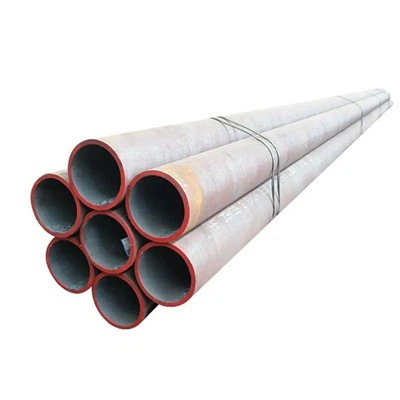
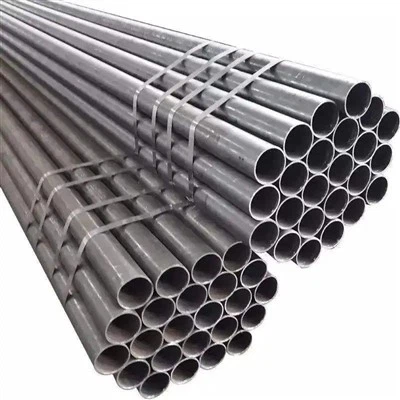
Hey there! As a supplier of LSAW Steel Gas Pipe, I'm super stoked to chat with you about the different surface treatments available for these pipes. LSAW (Longitudinal Submerged Arc Welded) steel gas pipes are crucial in various industries, especially in gas transmission. And the right surface treatment can significantly enhance their performance and lifespan.


First off, let's talk about one of the most common treatments: hot-dip galvanizing. This process involves dipping the LSAW steel gas pipes into a bath of molten zinc. The zinc forms a protective layer on the surface of the pipe, which acts as a barrier against corrosion. It's like giving your pipes a suit of armor! This treatment is great because it provides long - term protection, even in harsh environments. For instance, if you're using the pipes in an area with high humidity or near the coast where there's a lot of salt in the air, hot - dip galvanizing can prevent rust and corrosion from eating away at the pipes.
Another popular option is epoxy coating. Epoxy is a type of polymer that can be applied to the surface of the pipes. It creates a smooth, hard, and chemical - resistant layer. Epoxy coatings come in different types, such as fusion - bonded epoxy (FBE). FBE is applied as a powder and then heated to form a continuous film on the pipe. This coating is excellent for protecting the pipes from both internal and external corrosion. It can withstand high pressures and is resistant to abrasion, making it ideal for gas transmission applications. If you're looking for a reliable solution for your gas pipeline project, pipes with epoxy coating, like our LSAW EN10219 Q355B Carbon Steel Pipe For Chemical Park Circulating Water System 273mm, are a great choice.
Polyurethane coating is also worth considering. Polyurethane is known for its flexibility and durability. It can be applied in multiple layers to provide a thick and tough protective coating. This type of coating is resistant to UV rays, which means it won't break down easily when exposed to sunlight. It's also resistant to impact and abrasion, making it suitable for pipes that are going to be installed in areas where there's a risk of physical damage. For natural gas transmission, our Natural Gas Transmission LSAW API 5L GR.B PSL1 114.3 - 1422 Steel Pipe with a proper polyurethane coating can ensure a long - lasting and reliable gas delivery system.
Now, let's move on to a more high - tech option: ceramic coating. Ceramic coatings are made from ceramic materials that have excellent heat resistance and hardness. When applied to LSAW steel gas pipes, they can provide a high - performance protective layer. Ceramic coatings can withstand extremely high temperatures, which is useful if the pipes are going to be used in applications where there's a lot of heat involved. They also have low friction coefficients, which can reduce the energy required to transport gas through the pipes. For offshore platform oil supply, our LSAW API 5L X70 Carbon Steel Pipe For Offshore Platform Oil Supply DN700 with a ceramic coating can offer enhanced performance and protection.
In addition to these coatings, there's also cathodic protection. This is not exactly a surface treatment in the traditional sense, but it's an important method for protecting the pipes from corrosion. Cathodic protection works by making the pipe the cathode in an electrochemical cell. This can be done in two ways: sacrificial anode cathodic protection and impressed current cathodic protection. In sacrificial anode cathodic protection, a more reactive metal (like magnesium or zinc) is connected to the pipe. The more reactive metal corrodes instead of the pipe. In impressed current cathodic protection, an external power source is used to supply a direct current to the pipe, preventing corrosion.
When choosing the right surface treatment for your LSAW steel gas pipes, there are several factors to consider. First, think about the environment where the pipes will be installed. If it's a corrosive environment, like a coastal area or an industrial zone with a lot of chemicals in the air, you'll need a more robust protection method. Second, consider the type of gas that will be transported. Some gases may be more corrosive or reactive than others, and the surface treatment should be able to handle that. Third, think about the budget. Different surface treatments have different costs, and you need to find a balance between cost and performance.
We understand that choosing the right surface treatment can be a bit overwhelming. That's why our team of experts is here to help. We have years of experience in the LSAW steel gas pipe industry and can provide you with professional advice on which surface treatment is best for your specific project. Whether you're working on a small - scale gas distribution project or a large - scale offshore gas transmission system, we've got you covered.
If you're interested in our LSAW steel gas pipes and want to learn more about the surface treatments or place an order, don't hesitate to get in touch. We're always ready to have a chat and discuss your requirements. Let's work together to ensure your gas pipeline project is a success!
References:
- "Corrosion Protection of Steel Structures" by some experts in the field.
- "Surface Coating Technologies for Metal Pipes" from industry research reports.