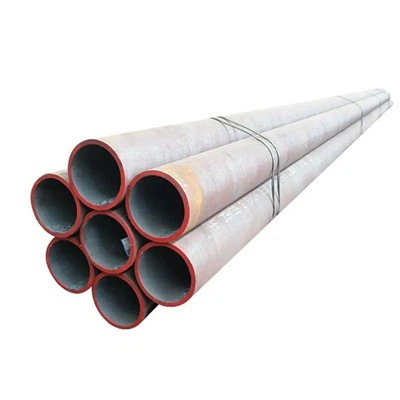
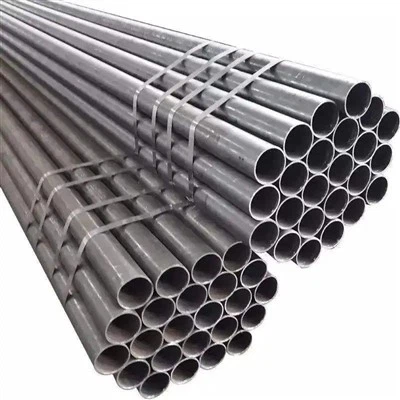
Hey there! I'm a supplier of LSAW Steel Gas Pipe, and today I wanna chat about how to evaluate the fatigue resistance of these pipes. Fatigue resistance is super important for LSAW Steel Gas Pipes, as they often have to withstand repeated loading and stress during their service life. So, let's dig into it!
Understanding Fatigue in LSAW Steel Gas Pipes
First off, we need to understand what fatigue is. Fatigue happens when a material is subjected to cyclic loading, which means the stress on the pipe keeps changing over time. This can be due to things like pressure fluctuations in the gas pipeline, vibrations, or temperature changes. Over time, these cyclic loads can cause tiny cracks to form in the pipe material. As these cracks grow, they can eventually lead to the failure of the pipe.


Factors Affecting Fatigue Resistance
There are several factors that can affect the fatigue resistance of LSAW Steel Gas Pipes.
Material Properties
The quality of the steel used in the pipe is crucial. High - quality steels with good mechanical properties, like high strength and toughness, tend to have better fatigue resistance. For example, S355JR LSAW Steel Pipe is made from S355JR steel, which has relatively good strength and ductility. This means it can better withstand the cyclic loads without cracking easily.
Weld Quality
Since LSAW pipes are longitudinally submerged arc welded, the quality of the weld is a major factor. A well - made weld has fewer defects, such as porosity, lack of fusion, or slag inclusions. These defects can act as stress concentrators, which means they increase the local stress in the pipe and make it more likely for cracks to form. So, proper welding techniques and quality control during the welding process are essential for good fatigue resistance.
Pipe Geometry
The shape and dimensions of the pipe also matter. Pipes with a smooth internal and external surface have less stress concentration compared to pipes with rough surfaces or irregular geometries. For instance, a pipe with a uniform wall thickness will distribute the stress more evenly under cyclic loading than a pipe with thickness variations.
Operating Conditions
The environment in which the pipe operates can have a big impact on its fatigue resistance. High - pressure gas flow can increase the stress on the pipe. Also, if the gas contains corrosive substances, it can cause corrosion on the pipe surface. Corrosion can create pits and other surface irregularities, which act as stress concentrators and accelerate the fatigue process.
Evaluation Methods
Now, let's talk about how we can evaluate the fatigue resistance of LSAW Steel Gas Pipes.
Laboratory Testing
One of the most common ways is through laboratory fatigue testing. In this method, small specimens are cut from the pipe material. These specimens are then subjected to cyclic loading in a testing machine. The machine applies a controlled amount of stress to the specimen at a certain frequency. The number of cycles the specimen can withstand before failure is recorded. This data can be used to generate an S - N curve (stress - number of cycles curve), which shows the relationship between the applied stress and the number of cycles to failure.
Finite Element Analysis (FEA)
FEA is a computer - based simulation method. We can create a 3D model of the LSAW Steel Gas Pipe in a FEA software. Then, we define the material properties, the loading conditions, and the boundary conditions. The software will then calculate the stress distribution in the pipe under cyclic loading. By analyzing the stress distribution, we can identify the areas where the stress is highest and where cracks are most likely to form. This helps us to predict the fatigue life of the pipe.
In - Service Monitoring
Another way is to monitor the pipe during its actual service. We can use sensors to measure the stress, strain, and vibration of the pipe in real - time. By analyzing the data collected from these sensors, we can detect any signs of fatigue damage early. For example, an increase in vibration levels or a change in the stress pattern may indicate the development of cracks in the pipe.
Importance of Evaluating Fatigue Resistance
Evaluating the fatigue resistance of LSAW Steel Gas Pipes is of great importance. For us as suppliers, it helps us to ensure the quality of our products. By accurately evaluating the fatigue resistance, we can provide pipes that meet the requirements of our customers and can operate safely for a long time.
For the end - users, such as gas companies, it is crucial for safety and cost - effectiveness. A pipe with good fatigue resistance is less likely to fail during its service life, which reduces the risk of gas leaks, explosions, and other safety hazards. Also, it can save costs on maintenance and replacement.
Our Product Range
We offer a wide range of LSAW Steel Gas Pipes, such as LSAW EN10219 Carbon Steel Pipe DN550 and European Standard Straight Seam Steel Pipe. All our pipes are manufactured with high - quality materials and strict quality control to ensure good fatigue resistance.
Let's Connect
If you're in the market for LSAW Steel Gas Pipes and want to learn more about our products and their fatigue resistance, don't hesitate to reach out. We're here to answer all your questions and provide you with the best solutions for your gas pipeline projects.
References
- "Metallurgy and Mechanics of Welding" by David A. Thomas
- "Fatigue of Structures and Materials" by Suresh S.