How to calculate the load - bearing capacity of a structural steel pipe?
As a supplier of structural steel pipes, I often encounter customers who are concerned about the load - bearing capacity of the pipes they are purchasing. Understanding how to calculate this capacity is crucial for ensuring the safety and efficiency of any construction or engineering project. In this blog post, I will walk you through the key factors and methods involved in calculating the load - bearing capacity of a structural steel pipe.
1. Understanding the Basics of Structural Steel Pipes
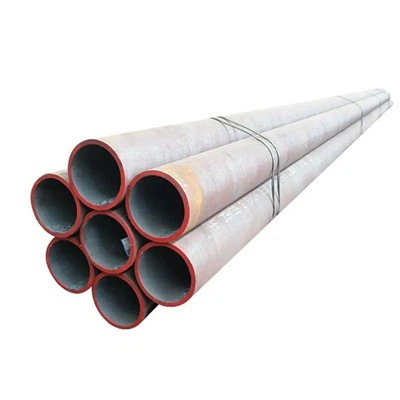
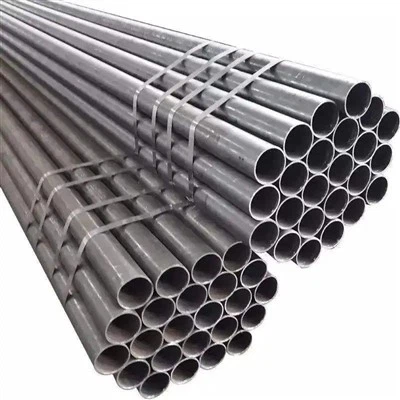
Structural steel pipes are widely used in various industries, including construction, infrastructure, and manufacturing. They come in different types, such as seamless and welded pipes, and different materials, like carbon steel. For example, our Carbon Steel Seamless High Strength Structural Pipe is known for its excellent strength and durability.
The load - bearing capacity of a steel pipe refers to the maximum amount of load or force that the pipe can withstand without experiencing excessive deformation or failure. This capacity is influenced by several factors, including the material properties, dimensions, and the type of loading (e.g., axial, bending, or torsional).
2. Material Properties
The material of the steel pipe is a fundamental factor in determining its load - bearing capacity. The most common material for structural steel pipes is carbon steel, which has good strength and ductility. The yield strength ($f_y$) and ultimate strength ($f_u$) of the steel are two important parameters.
The yield strength is the stress at which the steel begins to deform plastically. For example, the Q235B steel used in our Q235B Structural Steel Pipe has a specified yield strength. When calculating the load - bearing capacity, we usually base our calculations on the yield strength to ensure that the pipe remains within the elastic range under normal working conditions.


The ultimate strength is the maximum stress that the steel can withstand before fracture. Although the pipe should not be designed to reach this point, it is still an important consideration for safety margins.
3. Dimensions of the Steel Pipe
The dimensions of the steel pipe, including the outer diameter ($D$), wall thickness ($t$), and length ($L$), also play a significant role in determining its load - bearing capacity.
- Outer Diameter and Wall Thickness: A larger outer diameter and thicker wall generally result in a higher load - bearing capacity. For instance, our Large Diameter Structural Steel Pipe can carry more load compared to a pipe with a smaller diameter and thinner wall. The cross - sectional area ($A$) of the pipe, which is calculated as $A=\pi\left(\frac{D^2-(D - 2t)^2}{4}\right)$, is an important parameter in load - bearing calculations.
- Length: The length of the pipe affects its stability. Longer pipes are more prone to buckling under axial loads. The slenderness ratio ($\lambda$), which is defined as $\lambda=\frac{L}{r}$ (where $r$ is the radius of gyration of the cross - section), is used to assess the stability of the pipe. A higher slenderness ratio indicates a greater risk of buckling.
4. Types of Loading
There are several types of loading that a structural steel pipe may be subjected to, and each type requires a different approach for calculating the load - bearing capacity.
- Axial Loading: Axial loading occurs when the load is applied along the longitudinal axis of the pipe. The axial load - bearing capacity ($P$) of a pipe can be calculated using the formula $P = A\times f_y$, where $A$ is the cross - sectional area and $f_y$ is the yield strength of the steel. However, if the pipe is long and slender, buckling may occur, and the critical buckling load ($P_{cr}$) needs to be calculated using Euler's formula for columns: $P_{cr}=\frac{\pi^2EI}{L^2}$, where $E$ is the modulus of elasticity of the steel and $I$ is the moment of inertia of the cross - section.
- Bending Loading: Bending loading occurs when the pipe is subjected to a transverse load that causes it to bend. The bending moment capacity ($M$) of the pipe can be calculated using the formula $M = \sigma\times S$, where $\sigma$ is the allowable bending stress and $S$ is the section modulus of the cross - section. The section modulus is a geometric property that depends on the dimensions of the pipe.
- Torsional Loading: Torsional loading occurs when the pipe is subjected to a twisting force. The torsional load - bearing capacity ($T$) can be calculated using the formula $T=\frac{\tau\times J}{r}$, where $\tau$ is the allowable shear stress, $J$ is the polar moment of inertia of the cross - section, and $r$ is the outer radius of the pipe.
5. Safety Factors
In practice, safety factors are always applied to ensure that the pipe can withstand unexpected loads or variations in material properties. A safety factor ($\gamma$) is a multiplier that is used to reduce the calculated load - bearing capacity. For example, if the calculated axial load - bearing capacity of a pipe is $P_{calc}$, the allowable axial load ($P_{allow}$) is given by $P_{allow}=\frac{P_{calc}}{\gamma}$.
The value of the safety factor depends on various factors, such as the type of structure, the importance of the pipe in the overall system, and the level of uncertainty in the design parameters.
6. Calculation Example
Let's consider an example of calculating the axial load - bearing capacity of a Q235B structural steel pipe. Suppose the outer diameter $D = 100$ mm, the wall thickness $t = 5$ mm, and the length $L = 3000$ mm.
First, we calculate the cross - sectional area:
[
\begin{align*}
A&=\pi\left(\frac{D^2-(D - 2t)^2}{4}\right)\
&=\pi\left(\frac{100^2-(100 - 10)^2}{4}\right)\
&=\pi\left(\frac{10000 - 8100}{4}\right)\
&=\pi\times\frac{1900}{4}\
&\approx1492.26\mathrm{mm}^2
\end{align*}
]
The yield strength of Q235B steel is $f_y = 235$ MPa. The axial load - bearing capacity without considering buckling is $P = A\times f_y=1492.26\times235 = 350681.1$ N $\approx350.7$ kN.
To check for buckling, we calculate the radius of gyration $r=\sqrt{\frac{I}{A}}$, where the moment of inertia $I=\frac{\pi}{64}(D^4-(D - 2t)^4)$. After calculating $I$ and $r$, we find the slenderness ratio $\lambda=\frac{L}{r}$. If $\lambda$ is large, we need to use the buckling formula to adjust the load - bearing capacity.
7. Conclusion
Calculating the load - bearing capacity of a structural steel pipe is a complex process that involves considering multiple factors, including material properties, dimensions, and types of loading. As a supplier of structural steel pipes, we are committed to providing high - quality products and technical support to our customers.
If you are involved in a construction or engineering project and need to select the appropriate structural steel pipe, or if you have any questions about load - bearing capacity calculations, please feel free to contact us for further discussion and procurement. We have a wide range of products, such as Carbon Steel Seamless High Strength Structural Pipe, Large Diameter Structural Steel Pipe, and Q235B Structural Steel Pipe, to meet your specific requirements.
References
- "Structural Steel Design" by Jack C. McCormac and Russell H. Brown
- "Mechanics of Materials" by Ferdinand P. Beer, E. Russell Johnston Jr., and John T. DeWolf