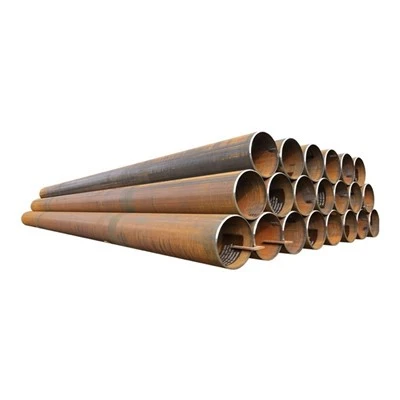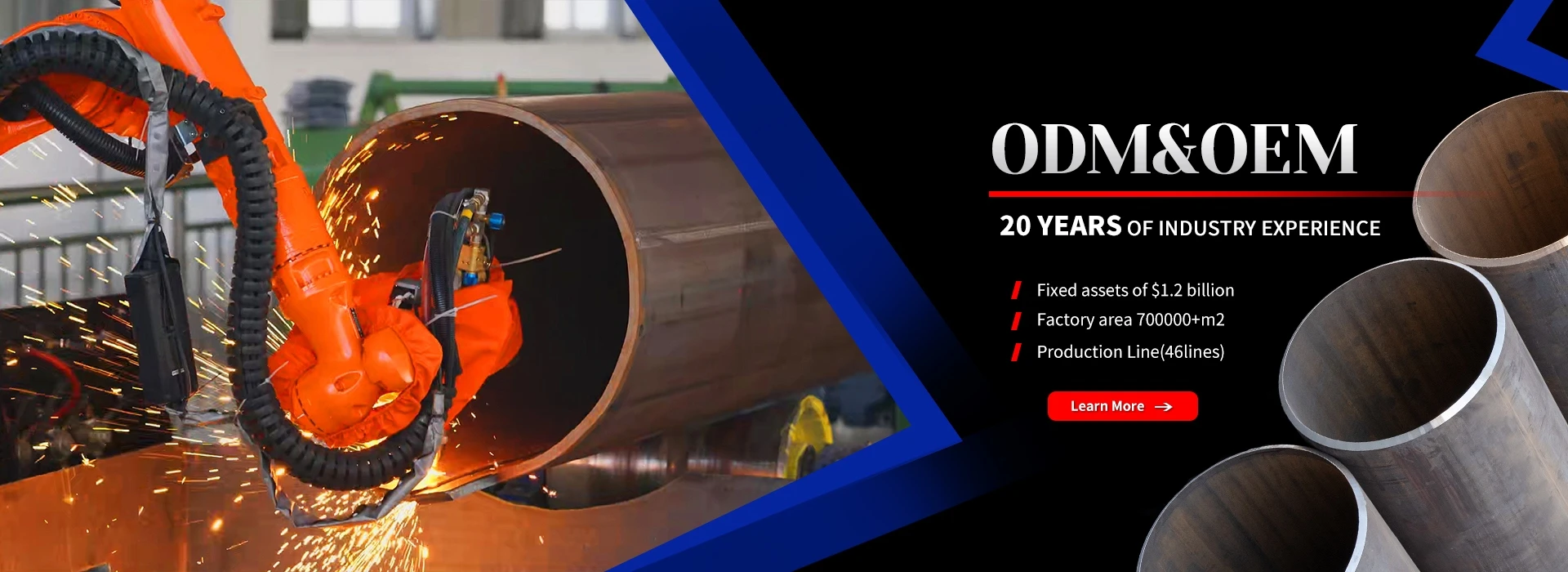

Choosing a genuine steel pipe manufacturer can give buyers better control over product quality, production schedules, technical communication, and order traceability. Unlike a supplier that relies entirely on external factories, a manufacturer with its own production facilities can directly manage key stages such as pipe forming, welding, coating, inspection, and fabrication. For overseas buyers, verifying these capabilities before placing an order is an important part of supplier evaluation, particularly for oil and gas pipelines, infrastructure, and other projects with strict technical requirements.
Why Does Buying Directly from a Steel Pipe Manufacturer Matter?
Buying directly from a manufacturer matters because it gives buyers a more direct connection to the production process and the people responsible for technical execution. In international steel pipe procurement, the supplier's role affects more than the quoted price. It also influences how accurately technical requirements are communicated, how production progress is monitored, and how quality issues are handled.
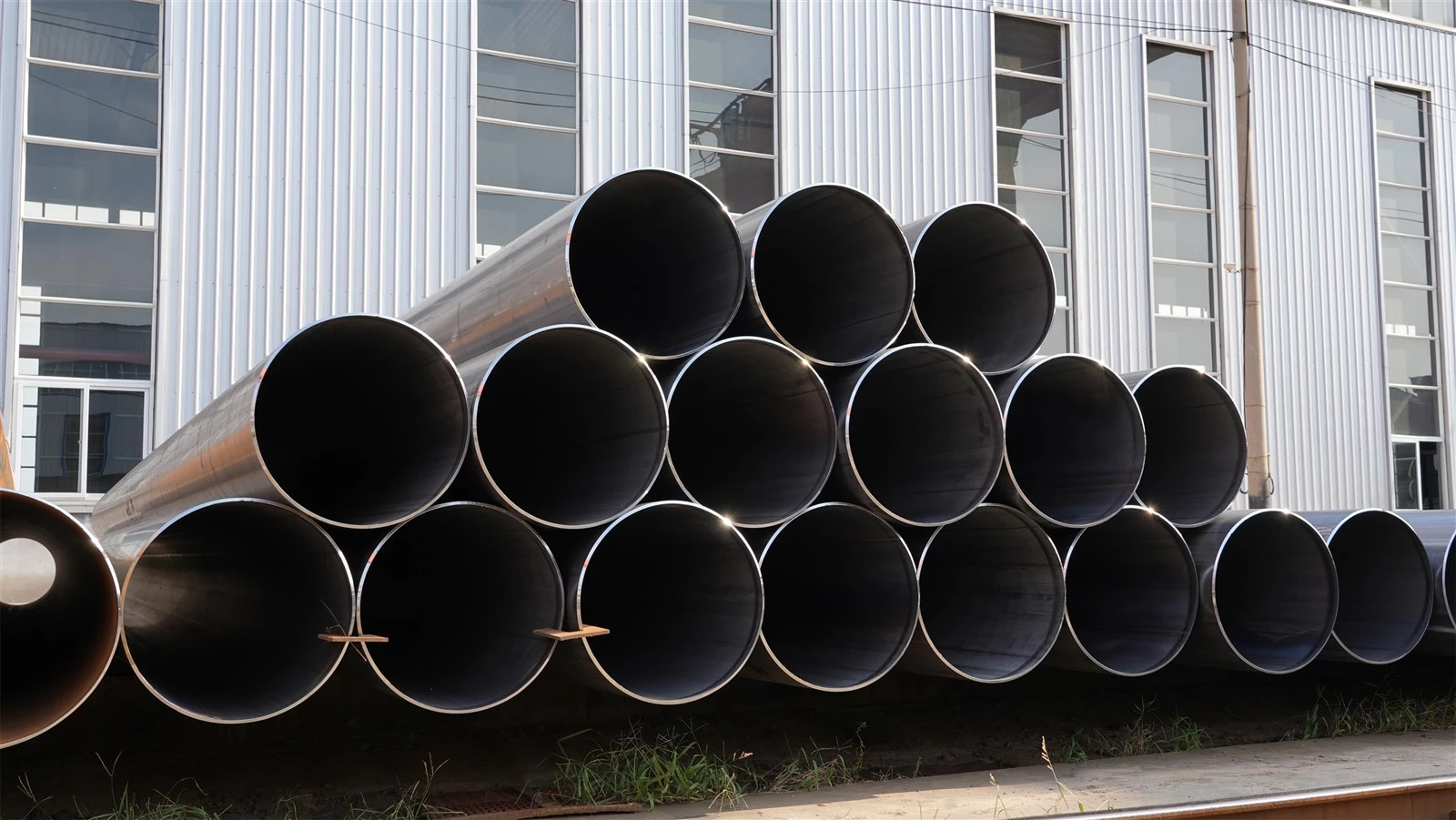
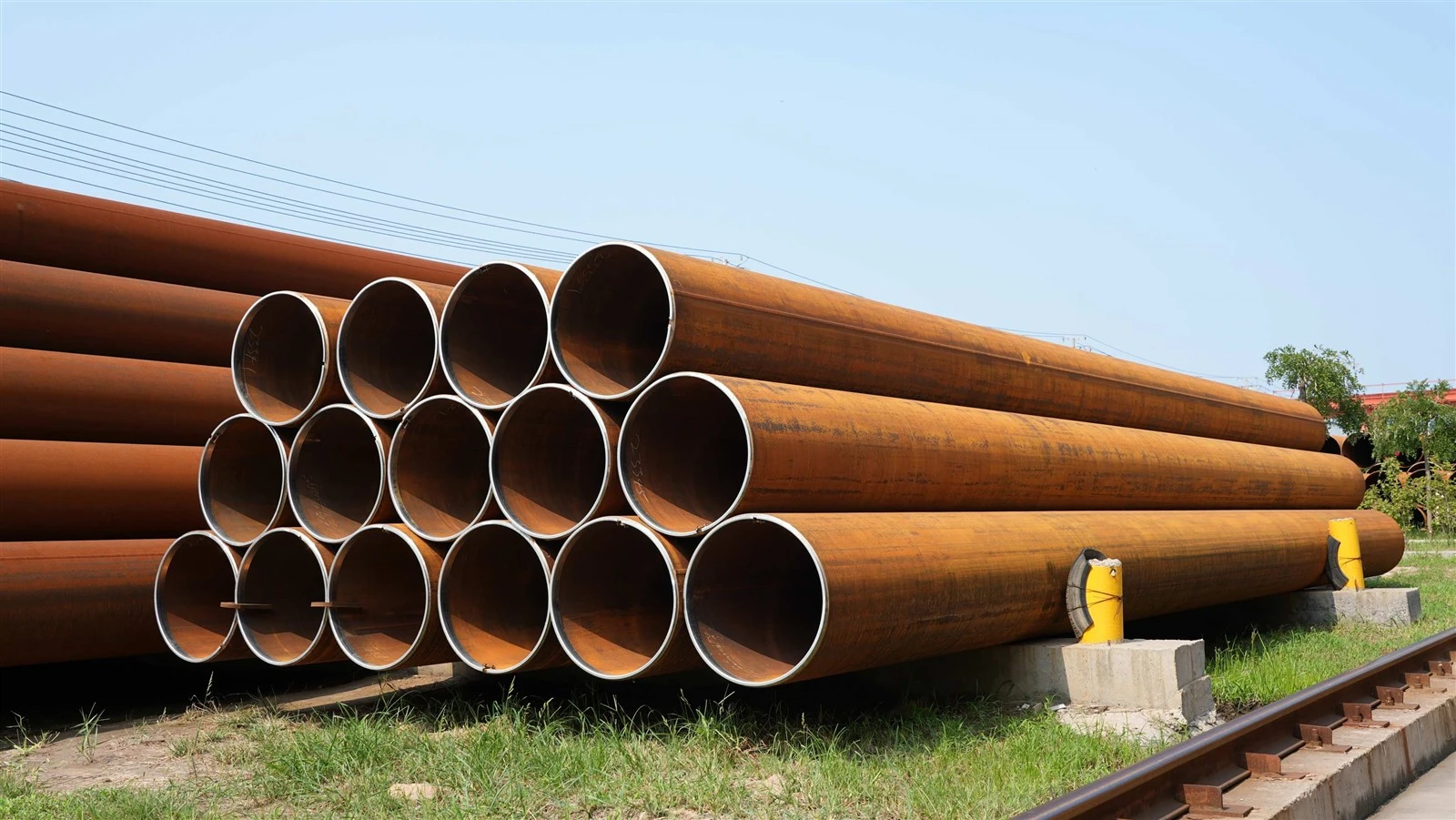
When an order involves specific outside diameters, wall thicknesses, steel grades, delivery lengths, or inspection requirements, information must pass accurately from the buyer to the production team. A direct manufacturing relationship can reduce communication gaps between sales representatives, technical personnel, and workshop operators. It also makes it easier to discuss adjustments when drawings, specifications, or project requirements change.
A genuine manufacturer may also offer greater visibility into production scheduling. Buyers can confirm whether the required production line is available, whether raw materials have been prepared, and whether the order is progressing according to the agreed plan. This does not automatically guarantee on-time delivery, but it provides a clearer basis for monitoring and coordination.
For large-volume or technically demanding projects, these factors are particularly relevant. Buyers should therefore evaluate a supplier's actual manufacturing capability rather than relying only on company introductions, product catalogues, or price quotations.
What Production Capabilities Should Buyers Verify?
Buyers should verify whether a supplier has the production equipment, workshop capacity, and processing capabilities required for the specific steel pipe products in their order. A company may describe itself as a manufacturer, but the actual range of products it can produce depends on its forming processes, welding equipment, available dimensions, and supporting facilities.
Check the Main Steel Pipe Production Processes
Different steel pipe manufacturing processes serve different dimensional and application requirements. HFW and LSAW production lines, for example, are not interchangeable. Buyers should check whether the supplier operates the relevant production lines and whether the requested specifications fall within their actual operating ranges.
High-frequency welded steel pipes are commonly used in structural applications, fluid transportation, and other industrial services. Typical manufacturing capabilities may cover outside diameters from 48 mm to 660.4 mm, wall thicknesses from 2.0 mm to 22 mm, and lengths from 6 m to 27 m.
LSAW steel pipes are often selected for larger-diameter applications, including oil and gas transportation, water transmission, and structural engineering. Depending on the forming process and equipment, production ranges can extend from 406.4 mm to 2,800 mm in outside diameter, with wall thicknesses of 7–50 mm and lengths of 6–12.5 m. Roll Bending and Expansion (RBE) is another forming method used for large-diameter pipes, with a maximum diameter of 2,800 mm and wall thicknesses of up to 25 mm in the relevant production setup.
Evaluate Supporting Processing Facilities
A manufacturer's capability should not be judged by pipe-forming equipment alone. Additional processes such as hot expansion, anti-corrosion coating, cutting, beveling, and other fabrication work may be necessary to meet project specifications.
For example, hot-expanded steel pipes can cover outside diameters of approximately 230–920 mm and wall thicknesses of 5–20 mm. Anti-corrosion processing may cover pipes with outside diameters of 159–1,626 mm, wall thicknesses of 4–40 mm, and lengths of 8–16 m, depending on the coating system and production arrangement.
The following table summarizes representative manufacturing and processing ranges that buyers can use as a reference when evaluating a supplier. Actual availability should always be confirmed against the manufacturer's equipment configuration and the order specification.
| Production or processing category | Representative capability |
|---|---|
| HFW steel pipe | OD 48–660.4 mm; wall 2.0–22 mm; length 6–27 m |
| LSAW steel pipe | OD 406.4–2,800 mm; wall 7–50 mm; length 6–12.5 m |
| RBE steel pipe | Maximum OD 2,800 mm; wall thickness up to 25 mm |
| Hot-expanded steel pipe | OD 230–920 mm; wall 5–20 mm |
| Anti-corrosion processing | OD 159–1,626 mm; wall 4–40 mm; length 8–16 m |
When reviewing these figures, buyers should also ask whether the dimensions represent regular production capability or a maximum limit under specific conditions. A published size range does not necessarily mean that every combination of diameter, wall thickness, steel grade, and length can be produced on the same line.
How Can Buyers Evaluate a Manufacturer's Quality Control and Qualifications?
Buyers can evaluate a manufacturer's quality control by checking its inspection facilities, testing procedures, quality records, and the validity and scope of its certifications. A production facility alone does not demonstrate that every delivered pipe meets the required technical specification. Quality assurance must be supported by inspection activities and documented results.
Review the Testing and Inspection Facilities
A manufacturing facility may operate an internal laboratory to conduct or support material and product inspections. Common testing activities include tensile testing, metallographic examination, ultrasonic testing, and hydrostatic testing. These methods provide different types of information and should be selected according to the applicable product standard and purchase specification.
Tensile testing evaluates mechanical properties such as yield strength, tensile strength, and elongation. Metallographic examination helps assess material microstructure and, where relevant, weld-related characteristics. Ultrasonic testing is used to identify internal discontinuities, while hydrostatic testing checks the pipe's ability to withstand the specified test pressure without leakage.
Not every order requires the same inspection scope. For example, the applicable requirements under API 5L, ISO 3183, ASTM, EN, or GOST standards may differ according to product type, grade, PSL level, and project specification. Buyers should request the inspection and test plan, relevant test records, and material test certificates rather than assuming that all tests are automatically included.
Confirm Certification Scope and Project Approvals
International certifications and owner approvals can provide useful evidence of a supplier's management systems, product qualifications, or eligibility for specific projects. However, buyers should distinguish between a company's general management certification, a product or manufacturing qualification, and an approval issued by an individual project owner.
| Qualification or document | What buyers should verify |
|---|---|
| API 5L | Applicable manufacturing scope, product type, and certification validity |
| CE-related documentation | Relevant product scope and applicable conformity requirements |
| GOST-related qualifications | Applicable standards and product grades |
| ADNOC or KOC approval | Approved supplier status and relevant product or project scope |
| CNAS laboratory accreditation | Accredited testing scope and applicable test methods |
| Material Test Certificate | Heat number, chemical composition, mechanical properties, and inspection results |
A certificate should never be treated as a blanket guarantee for every product manufactured by a company. Buyers should check the issuing organization, certificate number, validity period, and scope. For project-specific approvals, it is also important to confirm whether the approval covers the required product category and manufacturing location.
How Can a Factory Audit Help Confirm a Genuine Manufacturer?
A factory audit helps buyers compare a supplier's stated capabilities with its actual production conditions. It allows them to examine equipment, workshop operations, inspection procedures, personnel responsibilities, and production records instead of relying solely on documents or promotional materials.
During an on-site audit, buyers can check whether the production lines shown in the supplier's company profile are operating at the stated facility. They can also review raw material storage, production identification, in-process inspection, finished pipe storage, and packaging arrangements. For orders requiring traceability, the audit should examine how heat numbers, pipe markings, inspection records, and material certificates are linked throughout production.
A live video factory tour can serve as an alternative or preliminary verification method when international travel is difficult. Buyers can request a real-time walkthrough of the relevant workshops, production equipment, testing laboratory, and finished-product storage areas. Asking specific questions during the tour is more useful than watching a pre-recorded promotional video.
A practical supplier audit should focus on several questions: Does the company operate the production lines required for the order? Can it demonstrate the specified dimensional range? Are inspection activities supported by records? Can certificates and owner approvals be independently verified? Are outsourced processes clearly identified where applicable?
These checks help establish whether a supplier's manufacturing claims are consistent with its actual operations. They also help buyers identify potential gaps before production begins.
What Should Buyers Consider Before Placing an Order?
Before placing an order, buyers should compare the supplier's production capability, technical compliance, quality documentation, and delivery arrangements against the project requirements. A low quotation or an extensive product catalogue cannot replace verification of the actual manufacturing process.
The purchase specification should clearly define the applicable standard, steel grade, outside diameter, wall thickness, length, quantity, pipe ends, inspection requirements, coating system, marking, and packaging. If special fabrication or additional testing is required, these items should be confirmed in writing before production.
Buyers should also establish how production updates will be communicated and what documents will be provided before shipment. Depending on the project, these may include approved drawings, inspection and test plans, material test certificates, dimensional inspection reports, NDT records, hydrostatic test reports, and coating inspection records.
For overseas procurement, choosing a genuine manufacturer is ultimately about improving transparency and reducing uncertainty across the supply chain. A supplier with identifiable production facilities, relevant testing capabilities, verifiable qualifications, and an open audit process gives buyers a more reliable basis for evaluating project suitability.
For buyers sourcing HFW, LSAW, hot-expanded, or anti-corrosion steel pipes, checking these details before order confirmation is essential. Manufacturers such as Hebei Huayang Steel Pipe Co., Ltd., with production and processing facilities covering these product categories, can be evaluated through document review, on-site audits, or live factory tours. Buyers can contact the manufacturer directly to discuss product specifications and arrange a factory visit or online inspection.