


Understanding Pipe Beveling in Welding
Pipe beveling refers to the process of cutting an angled edge or slope on the end of a pipe before welding. This edge, known as the bevel, allows for deeper weld penetration and a stronger joint between connected pipes. In industrial applications - from oil and gas pipelines to structural steel systems - proper beveling ensures weld integrity, reduces risk of joint failure, and improves productivity.
For manufacturers like Huayang Steel Pipe, beveling is not just a finishing process. It's an essential step in achieving precision assembly and long-term reliability in both ERW (Electric Resistance Welded) and SAW (Submerged Arc Welded) pipes.
Why Beveling Is Necessary Before Welding
Beveling plays a crucial role in preparing pipe ends for welding. Without it, weld metal cannot fully penetrate the joint, resulting in weak spots that can cause leaks or fractures. The purpose of beveling includes:
- Creating the optimal groove angle for filler material
- Ensuring complete fusion between pipe edges
- Reducing stress concentration at the weld zone
- Allowing for easier alignment and fit-up during welding
Below is a simplified comparison showing how beveled and non-beveled ends behave during welding:
| Aspect | Beveled Pipe End | Square (Non-Beveled) Pipe End |
|---|---|---|
| Weld Penetration | Deep and uniform | Shallow and uneven |
| Joint Strength | High due to full fusion | Weak, prone to cracking |
| Fit-Up Time | Easier alignment | More difficult |
| Common Application | High-pressure pipelines, pressure vessels | Low-pressure or threaded systems |
In high-pressure or large-diameter pipelines, un-beveled ends are rarely acceptable because they compromise the mechanical performance of the joint.

Common Bevel Types and Angles
There are multiple types of bevels depending on project requirements, pipe thickness, and welding method. The most commonly used include V bevel, J bevel, and U bevel.
| Bevel Type | Shape Description | Typical Angle | Applications |
|---|---|---|---|
| V Bevel | Straight angle on both sides | 30°–37.5° | Standard welding joints |
| J Bevel | Curved inner edge | 20°–25° | Thick-wall pipes |
| U Bevel | Double-curved design | 20°–25° | Pressure-resistant pipelines |
| Compound Bevel | Combination of angles | Variable | Custom welding requirements |
The correct bevel type improves the efficiency of the welding process and minimizes material waste during filler metal deposition.
Equipment and Techniques for Pipe Beveling
Pipe beveling can be done using various tools depending on pipe size, material hardness, and production volume. The methods range from manual grinding to advanced automated beveling machines.
| Beveling Method | Description | Advantages | Limitations |
|---|---|---|---|
| Manual Grinding | Hand-held tools used to shape the edge | Low cost, flexible | Low precision, labor-intensive |
| Lathe Beveling | Pipe rotated against cutting tool | High precision | Limited to small diameters |
| Flame Cutting | Heat used to remove material | Fast for thick pipes | Heat distortion risk |
| CNC Beveling Machine | Computer-controlled cutting | Consistent accuracy, automation | Higher setup cost |
At Huayang Steel Pipe, beveling is performed using automated CNC and plasma beveling machines, ensuring consistent angles, smooth edges, and compliance with international standards such as API 5L, ASTM A106, and EN10219.
Standards and Specifications for Beveled Pipe Ends
International standards define specific beveling requirements to maintain uniformity across industries. For instance:
- API 5L: Recommends a 30° bevel angle ±5° for line pipes.
- ASTM A53/A106: Specifies bevels at 37.5° ±2.5° for seamless and welded pipes.
- ASME B16.25: Covers dimensions, tolerances, and surface finish of beveled ends for welding.
| Standard | Recommended Bevel Angle | Typical Tolerance | Applicable Pipe Type |
|---|---|---|---|
| API 5L | 30° ±5° | ±1° | Line pipe, oil & gas |
| ASTM A53/A106 | 37.5° ±2.5° | ±1° | Seamless & welded |
| ASME B16.25 | 30°–37.5° | ±1° | Pressure piping systems |
Huayang Steel Pipe strictly follows these specifications to ensure its ERW and SAW pipes are ready for direct welding on-site, saving customers additional preparation time.
Advantages of Proper Pipe Beveling
- Improved Weld Strength – Correct beveling creates space for filler material to bond effectively, ensuring full penetration.
- Reduced Defects – Minimizes porosity, lack of fusion, and inclusions during the weld process.
- Faster Welding Time – Properly prepared bevels allow for smoother alignment and faster production.
- Better Aesthetic Finish – Consistent bevels result in visually clean, uniform joints.
- Safety Assurance – Beveled pipes maintain structural integrity under extreme conditions.
These advantages are especially critical in sectors like oil & gas, shipbuilding, and infrastructure construction, where welded joints face high pressure and temperature fluctuations.
Beveling and the Welding Process
In the welding sequence, beveling comes immediately after cutting and edge cleaning. The beveled edges are then tack-welded to maintain alignment before final welding. This ensures that molten metal penetrates uniformly through the bevel groove, achieving a sound and leak-free joint.
| Welding Stage | Key Operation | Importance of Beveling |
|---|---|---|
| Preparation | Pipe cutting and cleaning | Provides smooth, contamination-free surface |
| Fit-Up | Aligning pipes | Ensures precise joint gap |
| Tack Welding | Temporary welds for positioning | Prevents misalignment |
| Final Welding | Complete weld pass | Guarantees full fusion through beveled groove |
Huayang Steel Pipe's Beveling Capability
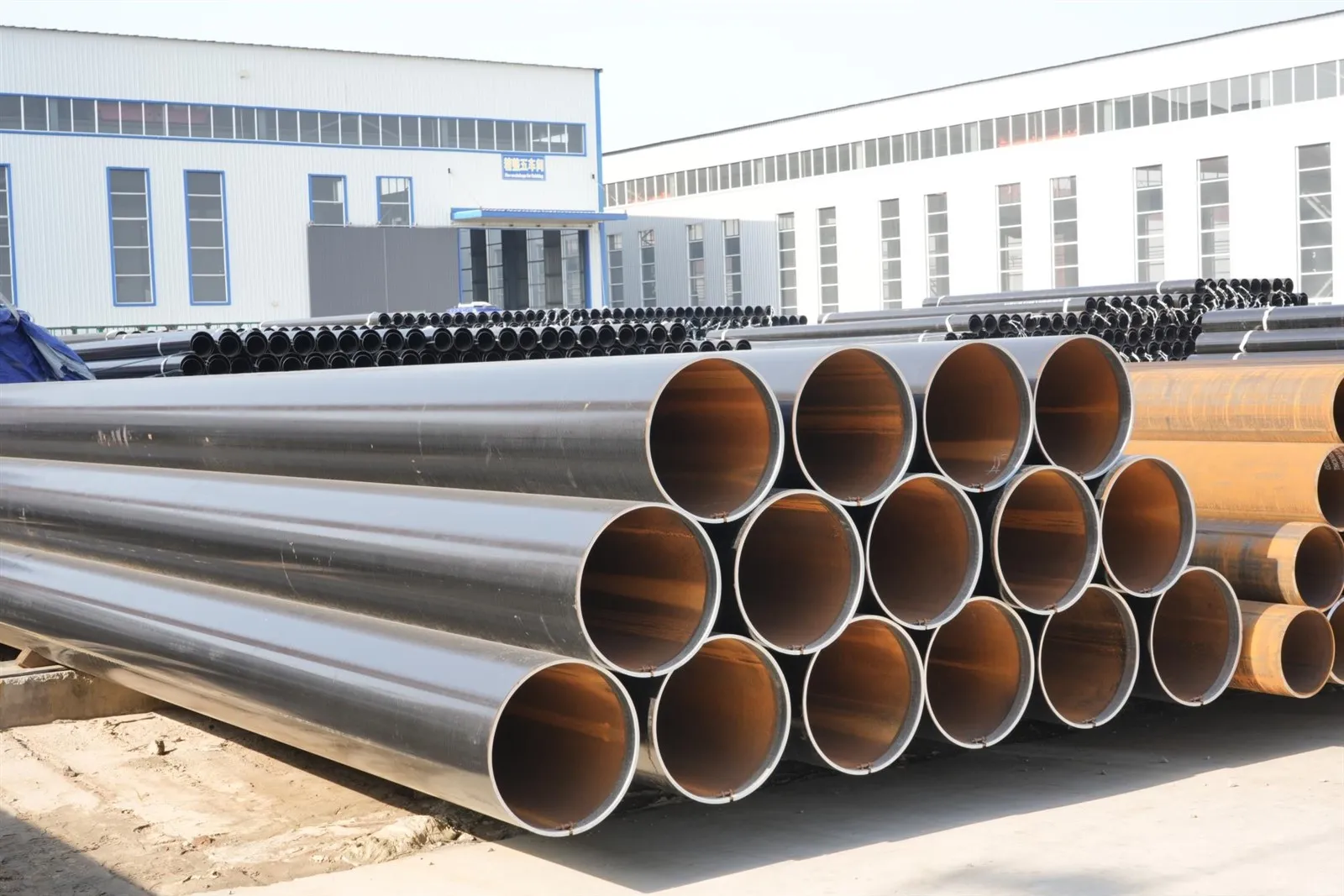
Huayang Steel Pipe, one of China's leading manufacturers of ERW, SSAW, and LSAW carbon steel pipes, operates advanced beveling and finishing lines capable of handling pipe diameters from Φ73mm to Φ1422mm and wall thicknesses up to 50mm.
Each pipe undergoes strict quality inspection - including ultrasonic testing, hydrostatic pressure testing, and visual bevel angle verification - before shipment.
Customers can request custom bevel types and angles to match specific project standards, ensuring seamless installation across global applications in oil & gas, construction, water transport, and power generation.
Conclusion
Pipe beveling is not a minor step; it is a critical preparation process that determines the success of a welded joint. By creating the correct groove geometry, it enhances weld strength, reduces material waste, and ensures long-term reliability.
As a professional manufacturer, Huayang Steel Pipe combines precision machining, advanced testing, and strict adherence to international standards to provide ready-to-weld pipes that perform reliably in every environment.
For more insights on related topics, see our articles:
What Does ERW Mean in Welding?
Welded vs. Seamless Steel Pipe
Difference Between Seamless Pipe and Seam Pipe


