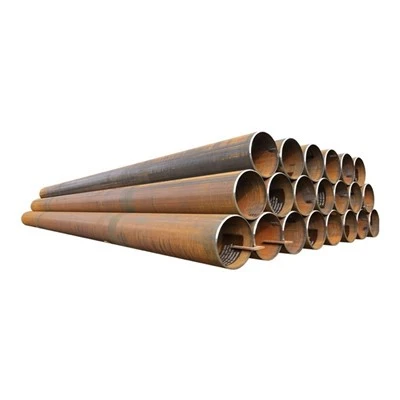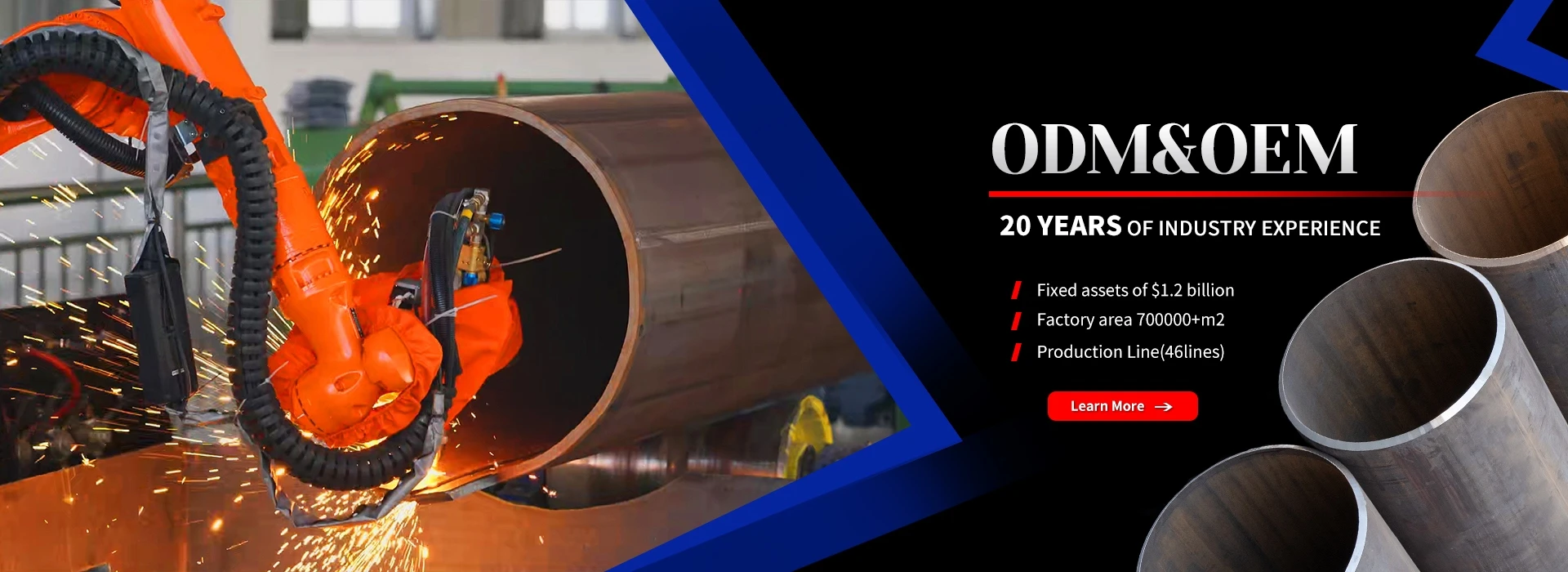

High-Frequency Welded (HFW) steel pipes are widely used in structural engineering, construction, industrial equipment, and other applications that require reliable mechanical performance. During manufacturing, high-frequency welding generates intense localized heat at the edges of the steel strip, which are then brought together under pressure to form a continuous longitudinal weld seam.
Although this process enables efficient production, the rapid heating and cooling associated with welding can create localized microstructural changes and residual stresses. Depending on the steel grade and welding conditions, the weld zone and adjacent heat-affected zone may exhibit different hardness and mechanical properties from the base material. These differences can become important when pipes undergo bending, forming, or other secondary processing.
Intermediate frequency annealing is a heat-treatment process used in HFW steel pipe manufacturing to control these effects. When properly designed and applied, it can help improve the uniformity of the weld zone's microstructure and mechanical properties. For engineering applications, this process is an important part of manufacturing quality control.
What Is Intermediate Frequency Annealing in HFW Steel Pipe Production?
Intermediate frequency annealing uses electromagnetic induction to heat a designated section of the steel pipe. An induction coil generates an alternating electromagnetic field, which induces electrical currents in the steel and produces heat within the material.
In HFW steel pipe production, this treatment is commonly applied to the weld seam and its surrounding region. The objective is to establish a suitable thermal cycle that modifies the weld area's microstructure and properties according to the steel grade and manufacturing requirements.
Why Does High-Frequency Welding Create Localized Stress?
During high-frequency welding, the edges of the steel strip are heated rapidly and pressed together to form the weld. The temperature distribution is highly localized, and the weld zone experiences a different thermal history from the surrounding base metal.
As the material cools, nonuniform contraction and microstructural transformations may contribute to residual stresses and localized differences in hardness and toughness. The precise effects depend on the steel composition, welding parameters, cooling conditions, and production process.
If these differences are not adequately controlled, the weld region may respond differently from the surrounding pipe body during bending or forming. In demanding applications, this can increase the risk of processing difficulties or cracking under unfavorable conditions.
How Does Intermediate Frequency Annealing Work?
During induction annealing, the pipe passes through an induction heating zone where the temperature and heating duration are controlled according to the specified process. The treatment may modify the weld-zone microstructure and reduce certain hardness differences between the weld and the surrounding material.
The effectiveness of annealing depends on the selected temperature range, heating rate, holding conditions where applicable, cooling method, and material characteristics. It is therefore important to establish process parameters appropriate to the steel grade and intended application.
Intermediate frequency annealing should not be understood as simply heating every pipe to the same temperature. A suitable thermal cycle must be developed and controlled to achieve the required metallurgical results without compromising other material properties.


What Benefits Does Intermediate Frequency Annealing Provide?
Intermediate frequency annealing can help improve the consistency of HFW steel pipe properties, particularly in applications involving secondary forming or demanding service conditions. Its benefits depend on the material, treatment parameters, and verification methods used.
Reducing Hardness Differences and Improving Ductility
The weld zone and heat-affected zone can have different hardness levels from the base material because of their distinct thermal histories. Properly controlled annealing can modify the microstructure and help reduce undesirable differences in hardness and mechanical response.
Improved ductility and a more suitable balance of mechanical properties can be beneficial when pipes are bent, formed, or processed into structural components. However, annealing does not automatically eliminate all residual stress or guarantee that cracking will never occur. The final properties must be verified against the applicable requirements.
Supporting Secondary Processing and Structural Reliability
For steel pipes used in trusses, building frameworks, and fabricated structures, the ability to withstand subsequent processing is an important consideration. During bending or forming, the weld region may experience localized strain. If its properties differ significantly from those of the surrounding material, the risk of processing defects may increase.
A suitable annealing process helps control the weld area's properties and can improve manufacturing consistency. The following table summarizes the relationship between common production concerns and the role of intermediate frequency annealing.
| Production concern | Potential effect | Role of intermediate frequency annealing |
|---|---|---|
| Localized hardness differences | Uneven deformation during forming | Helps regulate weld-zone microstructure and hardness |
| Residual stresses from welding | Potentially unfavorable stress distribution | Can reduce certain residual stresses when the thermal cycle is appropriate |
| Limited ductility in the weld region | Increased sensitivity to bending or forming | May improve ductility depending on the steel and treatment |
| Variations in weld-zone properties | Inconsistent performance between production batches | Supports process consistency when parameters are controlled |
| Demanding structural applications | Greater need for verified mechanical performance | Forms part of a broader manufacturing quality control system |
Annealing is not a substitute for proper welding. Inadequate fusion, unacceptable weld discontinuities, incorrect material selection, or other manufacturing defects cannot simply be corrected by applying a heat treatment. The welding process, annealing procedure, and inspection plan must work together.
How Is Intermediate Frequency Annealing Controlled in Production?
Consistent results require more than installing induction heating equipment. Manufacturers must establish appropriate process parameters, monitor operating conditions, and verify that the treated pipe meets the required mechanical and metallurgical specifications.
Controlling Temperature and Heating Conditions
The temperature reached by the weld zone is one of the most important variables in induction annealing. Heating that is insufficient for the intended metallurgical objective may produce limited benefits, while an unsuitable thermal cycle can lead to undesirable microstructural changes or mechanical properties.
Heating speed, induction power, pipe travel speed, coil configuration, and cooling conditions can all influence the treatment. These parameters must be matched to the steel grade, wall thickness, pipe dimensions, and production requirements.
Why Is Process Monitoring Essential?
Process monitoring helps identify deviations that could affect treatment consistency. Stable equipment operation and controlled production parameters reduce unnecessary variation between pipes and production batches.
Nevertheless, process records alone do not prove that the required material properties have been achieved. Where specified, hardness testing, tensile testing, metallographic examination, or other verification methods may be needed to evaluate the effectiveness of the heat treatment.
How Can Manufacturers Verify Annealing Quality?
Verification should follow the applicable product standard and purchase specification. Depending on the application, inspection may include checking hardness in the weld and adjacent regions, reviewing mechanical test results, and confirming compliance with specified heat-treatment requirements.
Ultrasonic testing and other non-destructive testing methods may also be required to assess weld integrity, but they serve a different purpose from mechanical testing. A pipe can undergo annealing and still require separate examination for weld discontinuities.
A comprehensive quality control system therefore considers welding parameters, annealing conditions, dimensional conformity, weld inspection, and material performance together.
How Does Huayang Steel Pipe Apply Intermediate Frequency Annealing?
Hebei Huayang Steel Pipe manufactures HFW steel pipes for structural engineering, construction, and industrial applications. Its HFW product range covers outside diameters from 48 mm to 660.4 mm, wall thicknesses from 2.0 mm to 22 mm, and lengths from 6 m to 27 m, subject to the relevant production line and order requirements.
Standardized Heat Treatment for Engineering Applications
Huayang Steel Pipe incorporates intermediate frequency annealing into its HFW manufacturing process to support the control of weld-zone properties. The treatment is particularly relevant when customers require consistent performance for fabrication, bending, and other downstream operations.
The specific heat-treatment requirements should be aligned with the steel grade, product specification, and intended application. Depending on the order, relevant quality verification may include dimensional inspection, weld examination, hardness checks, mechanical testing, and the documentation required by the applicable standard.
For buyers, confirming heat-treatment requirements during technical discussions helps ensure that manufacturing procedures and inspection arrangements are appropriate for the intended use.
Whether HFW steel pipes are destined for structural frameworks, pipe trusses, or other engineered applications, reliable performance depends on the entire manufacturing process rather than a single operation. Welding, intermediate frequency annealing, dimensional control, and final inspection must be coordinated to achieve the required product quality.
Is Intermediate Frequency Annealing Necessary for Every HFW Steel Pipe?
The need for intermediate frequency annealing depends on the steel grade, manufacturing route, product standard, and intended service conditions. It should not be assumed that every HFW pipe requires the same treatment. Some specifications may prescribe particular heat-treatment conditions, while others establish performance requirements that must be met through an appropriate manufacturing process.
For pipes used in bending, fabrication, or demanding structural applications, annealing may play an important role in controlling weld-zone properties. Buyers should confirm the applicable requirements and verify that the selected manufacturing process can achieve them.
At Huayang Steel Pipe, standardized production control and appropriate heat treatment help support consistent HFW steel pipe quality. Reliable steel pipe performance starts with controlled welding, suitable heat treatment, and verifiable inspection results. By considering these factors together, manufacturers and buyers can make better-informed decisions for engineering projects that demand dependable mechanical performance.
Read More:
What Does Ultrasonic Testing Check in HFW Steel Pipe Welds?
Why Does Marine Steel Pipe Need Classification Society Approval?