How Do Modern Irrigation Systems Depend on Steel Pipe Infrastructure?
Agricultural irrigation systems have become increasingly important as global demand for stable food production continues growing. Large-scale farms, water diversion projects, and regional irrigation networks require durable pipeline systems capable of transporting water efficiently across long distances and varying environmental conditions.
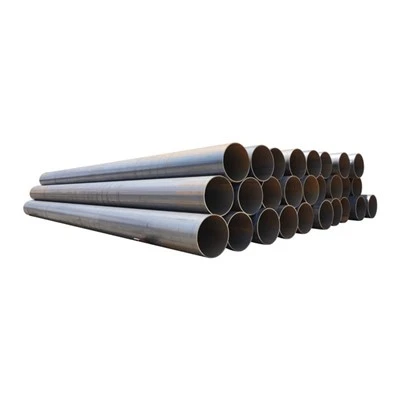
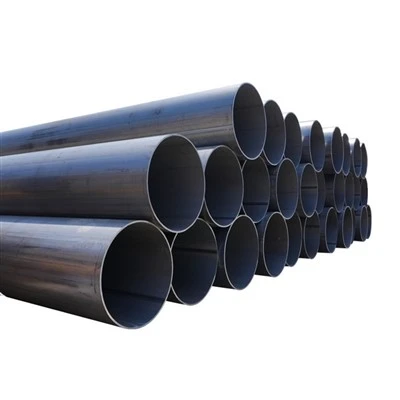
Among the many pipeline materials available today, ERW steel pipe has become a widely used solution in agricultural irrigation and water supply projects because of its strength, dimensional consistency, and economic advantages. ERW, or Electric Resistance Welded steel pipe, is manufactured through a continuous forming and high-frequency welding process that creates a stable weld seam and smooth pipe surface.
Compared with some traditional piping materials, ERW steel pipes provide higher structural strength and better resistance against external pressure. This makes them suitable for underground irrigation systems, pumping stations, and large water transportation networks operating in demanding environments.
| Property | ERW Steel Pipe Specification |
|---|---|
| Manufacturing Process | High-frequency electric resistance welding |
| Diameter Range | DN15 – DN800 |
| Surface Treatment | Bare, galvanized, FBE, 3PE |
| Typical Applications | Irrigation, water transmission, drainage |
| Dimensional Accuracy | High |
| Service Performance | Stable and durable |
These characteristics help ERW steel pipes meet the operational requirements of modern irrigation infrastructure projects.


Why Are ERW Pipes Suitable for Water Transportation?
Water transportation systems require pipelines that can maintain stable flow performance while resisting environmental exposure and long-term operational stress. ERW steel pipes provide smooth internal surfaces that help reduce water flow resistance and improve transportation efficiency.
Another important advantage is dimensional precision. Accurate outer diameter and wall thickness help improve pipeline connection quality and simplify field installation procedures during construction.
Many agricultural irrigation systems also require underground installation across large rural areas. ERW steel pipes can be combined with anti-corrosion technologies such as galvanization, FBE coating, and 3PE coating to improve resistance against soil moisture and environmental corrosion.
In regions with large-scale irrigation infrastructure, pipeline durability directly affects agricultural productivity and water management efficiency. Reliable pipeline systems therefore play an important role in supporting long-term agricultural development.
How Does ERW Manufacturing Improve Cost Efficiency?
Agricultural and municipal water projects often involve significant pipeline quantities, making cost control an important factor in project planning. ERW steel pipes provide strong economic advantages because the manufacturing process allows efficient large-scale production with reduced material waste.
ERW pipes are produced from steel coils using automated forming and welding systems. This continuous production process improves manufacturing efficiency while maintaining stable product quality.
Compared with some alternative pipe manufacturing methods, ERW production supports faster delivery schedules and more competitive project costs. These advantages are especially important for irrigation systems covering large geographic areas.
The balance between mechanical reliability and economic performance has made ERW steel pipe one of the most practical choices for water infrastructure construction worldwide.
How Does Anti-Corrosion Protection Improve Pipeline Durability?
Water transportation systems are often exposed to moisture, underground chemicals, and varying environmental conditions that may gradually damage ordinary steel surfaces. To improve long-term performance, ERW steel pipes are commonly supplied with protective coatings and anti-corrosion systems.
Galvanized coatings provide zinc surface protection for water and irrigation applications, while FBE and 3PE coatings offer stronger resistance against underground corrosion and external moisture.
Proper anti-corrosion protection helps reduce maintenance frequency, minimize leakage risks, and extend pipeline operational lifespan. In large irrigation projects, these advantages can significantly improve overall infrastructure reliability and reduce future repair costs.
As water infrastructure investment continues increasing globally, demand for durable anti-corrosion ERW pipeline systems remains strong across international markets.
How Does Huayang Steel Pipe Supply ERW Products for Water Infrastructure?
Huayang Steel Pipe manufactures ERW steel pipes for agricultural irrigation, municipal water transportation, industrial fluid systems, and infrastructure projects worldwide. The company produces pipes according to API, ASTM, EN, and GB international standards.
Huayang supports customized production based on project requirements including diameter, wall thickness, steel grade, and anti-corrosion treatment. Available coating options include galvanization, FBE coating, and 3PE systems.
The company maintains strict quality control throughout manufacturing, including weld seam inspection, hydrostatic testing, dimensional verification, and coating inspection procedures. Huayang ERW steel pipes are exported to multiple international markets for water and infrastructure projects.
Conclusion
ERW steel pipe has become an important material in agricultural irrigation and water supply infrastructure because of its reliable weld quality, smooth flow performance, and cost-effective manufacturing process.
Combined with modern anti-corrosion technologies, ERW pipes provide durable and efficient solutions for long-distance water transportation systems. As global demand for reliable water infrastructure continues growing, ERW steel pipes will remain a key component supporting modern irrigation and water management projects.