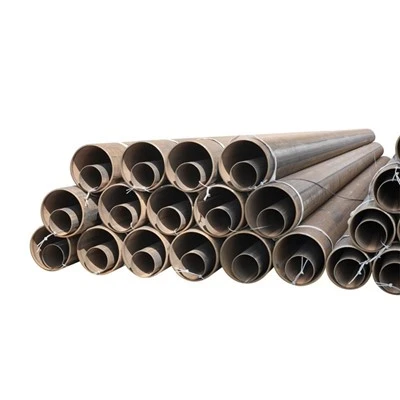
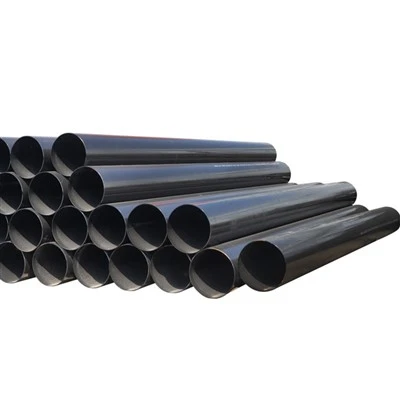
ERW steel pipe, short for Electric Resistance Welded steel pipe, is widely used in industrial infrastructure because it combines efficient manufacturing, consistent dimensions, reliable weld performance, and flexible specification options. Compared with many other steel pipe manufacturing methods, ERW production is well suited to continuous and high-volume manufacturing, making it an important choice for projects that require large quantities of steel pipe with consistent quality.
From a buyer's perspective, the value of ERW steel pipe is not limited to its production efficiency. The pipe must also satisfy requirements related to steel grade, diameter, wall thickness, applicable standards, weld integrity, pressure resistance, corrosion protection, and delivery. For manufacturers, maintaining stable quality throughout the entire production batch is essential, particularly when ERW steel pipe is supplied for international oil, gas, water, industrial, and infrastructure projects.


| Item | ERW Steel Pipe Characteristics | Engineering Value |
|---|---|---|
| Manufacturing | Electric resistance welding | Efficient continuous production |
| Pipe Diameter | Approx. Φ48–Φ660.4 mm | Covers many industrial pipeline sizes |
| Wall Thickness | Approx. 2.0–22 mm | Adaptable to different design conditions |
| Length | Approx. 6–27 m | Supports different installation requirements |
| Steel Grades | Grade B, X42, X52, X60 and others | Selected according to project design |
| Standards | API 5L, ASTM, EN, GB/T and others | Suitable for international procurement |
| Applications | Oil, gas, water, industry and structures | Broad engineering application |
| Protection | FBE, 3PE, 3PP and other coatings | Helps resist external corrosion |
Why Does ERW Steel Pipe Manufacturing Support High Production Efficiency?
ERW steel pipe production starts with steel coil or strip. The raw material is uncoiled, leveled, inspected, and prepared before entering the forming section. A series of forming rolls gradually changes the flat strip into a cylindrical shape.
How Does Electric Resistance Welding Join the Pipe?
Once the edges of the formed strip approach each other, high-frequency electrical energy generates heat at the edges. Pressure is then applied to join the heated edges and create the longitudinal welded seam.
This process allows manufacturers to produce pipe continuously rather than manufacturing each pipe section individually. As a result, ERW production can achieve high output while maintaining controlled dimensions and repeatable welding conditions.
What Happens After Welding?
After the longitudinal seam is formed, excess material may be removed from the weld area, depending on the manufacturing process. The pipe then passes through sizing equipment to achieve the required outside diameter and geometry.
The finished pipe is subsequently cut into specified lengths and transferred through inspection and testing procedures.
Why Is Steel Coil Quality Important for ERW Pipe Performance?
Although ERW steel pipe is manufactured efficiently, its final quality depends heavily on the consistency of the incoming steel coil. Chemical composition, yield strength, tensile strength, thickness tolerance, surface condition, and edge quality can all influence production stability.


How Does Raw Material Affect Welding?
The longitudinal edges of the strip become the welded seam, so their condition is particularly important. Uneven edges, contamination, excessive surface defects, or inconsistent material properties can interfere with stable heat generation and weld formation.
A professional manufacturer therefore checks raw material documentation and performs incoming inspection before the coil enters production.
Why Is Traceability Important?
Heat numbers and material certificates help manufacturers connect the finished ERW steel pipe with the original steel coil. This provides an important foundation for quality documentation, especially when the project requires third-party inspection or detailed material traceability.
Why Is Dimensional Accuracy Important for ERW Steel Pipe?
Dimensional consistency can have a direct influence on transportation, field installation, and connection efficiency. Outside diameter, wall thickness, roundness, straightness, and length are all controlled according to the applicable specification.
How Does Accurate Diameter Improve Installation?
When pipe sections have consistent dimensions, field fit-up and connection can be more predictable. This is particularly useful when a project requires hundreds or thousands of pipe sections to be installed in the same pipeline system.
Consistent dimensions can also help contractors reduce unnecessary adjustments during construction.
How Does Wall Thickness Affect Pipe Selection?
Wall thickness is normally determined according to pressure, mechanical loading, corrosion allowance, installation conditions, and engineering calculations. A thicker wall can provide additional structural capacity, but it may also increase material weight and project cost.
For this reason, wall thickness should be selected according to actual project requirements rather than simply choosing the thickest available product.
Why Is ERW Steel Pipe Suitable for Water Pipeline Projects?
Water transmission is one of the major application areas for ERW steel pipe. Municipal water systems, industrial water pipelines, irrigation networks, water treatment facilities, and utility projects may use ERW pipe when the selected specification meets the required design conditions.
What Should Buyers Consider for Water Applications?
Pipe diameter is related to required flow capacity, while wall thickness is influenced by internal pressure and external loading. The water quality and surrounding environment can also influence corrosion protection requirements.
For buried pipelines, external coating can provide an important protective barrier between the steel surface and surrounding soil.
Which Coatings Can Be Applied?
Depending on the project, ERW steel pipe can be supplied with FBE, 3PE, 3PP, or other specified external coatings. Internal epoxy coating can also be used when additional protection of the internal surface is required.
The coating system should be selected according to operating conditions, soil environment, transported medium, temperature, and expected service life.
Why Is ERW Steel Pipe Used in Oil and Gas Applications?
ERW steel pipe can be used in oil and gas transportation systems when it meets the applicable line pipe specification. For international pipeline projects, API 5L is an important standard used to define requirements for line pipe.
How Does API 5L Apply to ERW Pipe?
API 5L covers line pipe used in pipeline transportation systems and establishes requirements related to material, mechanical properties, dimensions, testing, and other characteristics.
Depending on project requirements, ERW steel pipe may be supplied in grades such as Grade B, X42, X52, X60, or other specified grades.
Why Should Buyers Check PSL1 and PSL2?
API 5L PSL1 and PSL2 establish different levels of technical requirements. PSL2 generally includes additional controls for chemical composition, mechanical properties, toughness, testing, and traceability.
The required PSL should therefore be confirmed during the quotation stage so that the manufacturer can organize appropriate raw materials, production procedures, inspection, and documentation.
Why Is Weld Quality a Key Consideration When Buying ERW Pipe?
The longitudinal seam is an essential part of ERW steel pipe. Even when the pipe has excellent external appearance, weld integrity must be verified through appropriate inspection.
How Do Manufacturers Inspect the Weld?
Depending on the applicable standard and customer specification, manufacturers may use ultrasonic testing, visual inspection, hydrostatic testing, and other non-destructive examination methods.
Ultrasonic inspection can identify potential internal discontinuities, while hydrostatic testing evaluates the pressure resistance of the completed pipe.
What Is the Role of Hydrostatic Testing?
During hydrostatic testing, water is introduced into the pipe and the pipe is subjected to a specified pressure. The test helps verify that the finished pipe can withstand the required internal pressure without leakage.
Testing parameters should always follow the applicable standard and approved project requirements.
Why Can ERW Steel Pipe Be Suitable for Industrial Utility Systems?
Industrial facilities often contain numerous utility pipelines for water, air, gas, steam, cooling systems, and other services. ERW steel pipe can be suitable for many of these systems because of its manufacturing efficiency and range of available dimensions.
How Does ERW Pipe Support Industrial Construction?
Consistent pipe dimensions can simplify fabrication, prefabrication, transportation, and field installation. When a project requires a large quantity of identical pipe specifications, ERW production can also provide stable batch consistency.
How Should Service Conditions Be Evaluated?
Industrial pipeline selection should consider pressure, temperature, fluid characteristics, corrosion potential, external loads, and connection method. The applicable standard should then be selected according to these service conditions.
Why Should Buyers Evaluate the Manufacturer's Production Capability?
A competitive price alone does not guarantee successful steel pipe procurement. Buyers should evaluate production capacity, raw material control, welding technology, inspection equipment, laboratory capabilities, certifications, coating facilities, quality documentation, and delivery experience.
For large international orders, production stability is particularly important. The manufacturer should be capable of maintaining consistent quality from the first batch through the final shipment.
Why Does ERW Steel Pipe Project Experience Matter?
The Turkmenistan Kiyanly 1574 MW Combined Cycle Power Plant Project is a practical example of large-scale welded steel pipe supply. The project involved approximately 538 tons of ERW and LSAW steel pipe, including API 5L Grade B PSL1 and ASTM A672 Grade B60 Class 22, with pipe sizes ranging from approximately 508 to 1016 mm.
For a large power generation facility, steel pipe procurement requires coordination between material specifications, dimensions, welding quality, inspection, documentation, and delivery schedules. This project demonstrates the importance of selecting a manufacturer capable of supplying welded steel pipe according to different international standards and engineering requirements.