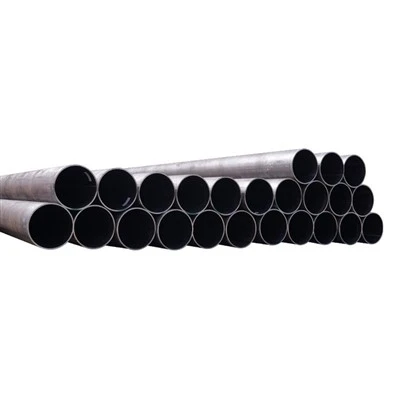
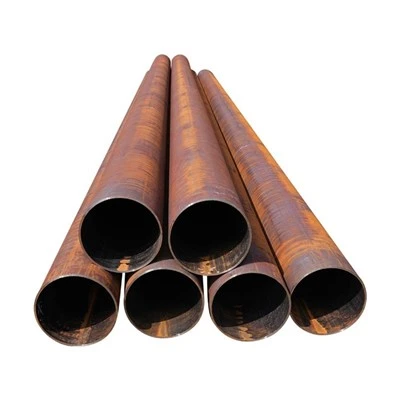
Industrial production relies heavily on reliable pipeline systems for transporting various fluids such as water, oil, natural gas, steam, and chemical solutions. In manufacturing plants, power stations, refineries, and processing facilities, pipeline reliability directly affects operational safety and production efficiency. The selection of pipe materials therefore becomes a critical engineering decision. Electric Resistance Welded carbon steel pipes are widely used in industrial fluid transportation systems because they offer balanced mechanical strength, stable dimensional accuracy, and good adaptability to various operating environments.
ERW pipes are manufactured by forming hot rolled steel coils into cylindrical shapes and welding the seam using high frequency electrical resistance. This production process allows continuous manufacturing with consistent wall thickness and uniform mechanical properties. As a result, ERW carbon steel pipes can meet the operational requirements of industrial pipeline systems where stable pressure resistance and structural reliability are necessary.
Mechanical Performance for Industrial Pipeline Systems
Common Steel Grades Used in Industrial Fluid Pipelines
| Steel Grade | Standard | Minimum Yield Strength MPa | Typical Industrial Application |
|---|---|---|---|
| ASTM A53 Grade B | ASTM standard | ≥240 | General industrial fluid pipelines |
| API 5L Grade B | Pipeline transmission | ≥245 | Oil and gas transportation |
| Q235B | GB standard | ≥235 | Industrial water pipelines |
| Q355B | GB structural standard | ≥355 | High strength pipeline systems |
Industrial pipeline systems often operate under continuous internal pressure. The pipes used in these systems must therefore provide sufficient yield strength and tensile strength to prevent deformation or failure during operation. ERW carbon steel pipes manufactured with grades such as ASTM A53 Grade B or API 5L Grade B are capable of meeting these mechanical requirements.
Yield strength determines the pipe's ability to resist permanent deformation when subjected to internal pressure or external loads. In industrial pipelines transporting fluids under moderate pressure, carbon steel grades with yield strength above 235 MPa are commonly considered adequate for reliable performance.
Another important mechanical property is tensile strength, which indicates the pipe's capacity to withstand stress before fracture. ERW pipes typically exhibit stable tensile properties due to the controlled manufacturing process. The high frequency welding method produces a narrow weld seam with mechanical properties comparable to the base metal when properly controlled.
The balanced mechanical properties of ERW pipes also contribute to good structural stability during installation and operation. Pipelines may experience temperature fluctuations, vibration from equipment, or occasional pressure changes. Carbon steel pipes with appropriate ductility can absorb these stresses without sudden failure.


Dimensional Consistency and Flow Efficiency
Dimensional Characteristics of ERW Pipes
| Pipe Feature | Manufacturing Control | Benefit for Fluid Transportation |
|---|---|---|
| Outer diameter accuracy | Controlled by sizing rolls | Reliable pipe connection |
| Uniform wall thickness | Derived from consistent steel strip | Predictable pressure resistance |
| Smooth internal surface | Formed during roll shaping | Reduced flow resistance |
| Stable pipe roundness | Achieved during sizing process | Balanced internal stress distribution |
Dimensional consistency is an important factor in industrial fluid transportation systems. Pipes with accurate outer diameter and uniform wall thickness allow for reliable connections during pipeline installation. ERW pipes are produced using automated roll forming equipment that ensures stable pipe geometry.
Accurate pipe diameter is essential when connecting pipes through welding or flange joints. When pipe dimensions are consistent, alignment during installation becomes easier, reducing the likelihood of joint misalignment or leakage.
Uniform wall thickness is equally important because it ensures that the pipe can withstand internal pressure evenly across the entire cross section. In fluid transportation systems where pressure may vary, pipes with stable wall thickness provide predictable mechanical performance and improve overall pipeline safety.
The internal surface condition of a pipe can also influence fluid flow efficiency. ERW pipes generally have relatively smooth internal surfaces due to the continuous forming process used during production. Smooth pipe walls reduce friction between the pipe surface and the flowing fluid, which can improve flow efficiency and reduce energy consumption in pumping systems.
Adaptability to Different Industrial Fluids
Industrial pipeline systems transport a wide range of fluids, including water, petroleum products, compressed air, steam, and certain chemical solutions. ERW carbon steel pipes can be adapted to many of these applications through appropriate material selection and protective measures.
In industrial water systems, ERW pipes are commonly used because carbon steel provides sufficient strength and durability. These pipelines may serve cooling water systems, process water networks, or fire protection systems within industrial facilities.
In oil and gas related applications, ERW pipes manufactured according to pipeline standards such as API 5L can be used for transporting hydrocarbons under controlled pressure conditions. The consistent weld seam quality produced by high frequency welding ensures reliable structural performance in these environments.
For applications involving corrosive fluids or humid environments, protective coatings and linings can be applied to ERW pipes. External coatings such as epoxy or polyethylene help protect the pipe from environmental corrosion, while internal linings may improve resistance to fluid related corrosion.
Installation and Maintenance Advantages
Another reason ERW pipes are widely used in industrial fluid transportation systems is their practicality during installation and maintenance. Because ERW pipes maintain consistent dimensions, they can be fabricated and installed efficiently within industrial facilities.
Pipeline construction often requires cutting, welding, and assembling numerous pipe sections within limited space. Carbon steel ERW pipes provide good weldability, allowing engineers to connect pipe segments securely through standard welding techniques.
The availability of ERW pipes in a wide range of diameters also allows engineers to design pipeline systems that match the required fluid flow capacity. Smaller diameter pipes may be used for auxiliary fluid lines, while larger pipes can be installed for high volume transportation systems.
Maintenance considerations are also important in industrial operations. Pipes with reliable mechanical properties and stable weld seams are easier to inspect and maintain during routine maintenance programs. This contributes to long term operational safety within industrial plants.
Importance of ERW Pipes in Industrial Fluid Systems
Industrial production depends on stable and efficient fluid transportation networks. Selecting appropriate pipeline materials is therefore essential for maintaining operational safety and production continuity.
ERW carbon steel pipes provide a combination of mechanical strength, dimensional accuracy, and economic efficiency that makes them suitable for many industrial pipeline systems. Their ability to operate under pressure, maintain stable flow conditions, and adapt to different industrial environments contributes to their widespread use in fluid transportation applications.
As industrial infrastructure continues to expand and modernize, ERW pipes will remain an important component of pipeline systems used in power generation, manufacturing, petrochemical processing, and other industrial sectors.