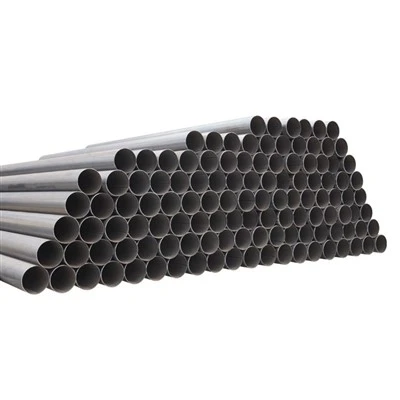
High-Frequency Welded (HFW) steel pipes are a cornerstone of modern pipeline infrastructure, widely used for transporting oil, gas, and water, as well as in structural applications. The HFW manufacturing process is highly efficient, producing pipes with a strong, clean weld seam. However, the rapid heating and cooling cycles inherent in the welding process can introduce metallurgical changes in the weld area, potentially affecting the pipe's overall performance. This is where weld seam heat treatment becomes critically important. But what is the importance of weld seam heat treatment in HFW steel pipe, and how does it ensure the integrity and longevity of these essential components? Hebei Huayang Steel Pipe Co., Ltd., a leading manufacturer of HFW steel pipes, explains the science and necessity behind this crucial post-welding process.
Understanding the HFW Welding Process and Its Metallurgical Impact
The HFW process involves continuously forming a steel strip into a cylindrical shape and then heating the edges to forging temperature using high-frequency current. These heated edges are then forced together by squeeze rolls, creating a forge weld without the addition of filler metal. While highly efficient, this process creates a Heat Affected Zone (HAZ) and a Weld Zone (WZ) that experience rapid thermal cycles.
•Rapid Heating and Cooling: The edges are heated to over 1200°C in milliseconds and then rapidly cooled by the surrounding cooler material and external quench. This can lead to the formation of undesirable microstructures, such as martensite or bainite, which are harder and more brittle than the parent material.
•Grain Coarsening: The intense heat can cause grain coarsening in the HAZ, reducing toughness.
•Residual Stresses: Differential cooling rates can induce residual stresses in the weld area.
These metallurgical changes can result in a weld seam that is harder, less ductile, and more susceptible to brittle fracture or stress corrosion cracking compared to the parent pipe body. To counteract these effects and restore optimal properties, weld seam heat treatment is applied.


The Role of Weld Seam Heat Treatment
Weld seam heat treatment, typically performed by induction annealing or normalizing, is a controlled thermal process applied specifically to the weld seam and its adjacent HAZ. Its primary objectives are:
1. Restoring Microstructure and Toughness
The main goal of heat treatment is to refine the coarse grain structure and temper any hard, brittle microstructures (like martensite) that may have formed during welding. By reheating the weld area to a specific temperature (above the critical transformation temperature for normalizing, or below for tempering/annealing) and then controlling the cooling rate, the steel's microstructure is transformed back into a finer, more ductile, and tougher state, similar to that of the parent material.
2. Reducing Hardness and Enhancing Ductility
Hardness in the weld seam and HAZ can make the pipe susceptible to cracking, especially during subsequent forming operations (like bending) or under service conditions (e.g., hydrogen-induced cracking in sour service). Heat treatment effectively reduces this hardness, increasing the ductility and flexibility of the weld area, making it more resistant to fracture and easier to work with.
3. Relieving Residual Stresses
The controlled heating and cooling cycles of heat treatment help to relax and redistribute the residual stresses introduced during welding. This stress relief is crucial for improving the pipe's fatigue life, preventing distortion, and enhancing its resistance to stress corrosion cracking.
4. Ensuring Uniform Mechanical Properties Across the Pipe
Ultimately, weld seam heat treatment aims to homogenize the mechanical properties across the entire pipe cross-section. This means the weld seam and HAZ should exhibit similar strength, toughness, and ductility as the parent material, ensuring the pipe performs as a single, unified structure under operational loads.
Types of Heat Treatment for HFW Pipes
•Full Body Normalizing: The entire pipe is heated to a normalizing temperature and then air-cooled. This provides the most uniform properties but is more energy-intensive.
•Weld Seam Normalizing/Annealing: Only the weld seam and HAZ are heated to the normalizing or annealing temperature using induction coils, followed by controlled cooling. This is the most common method for HFW pipes, offering targeted treatment and efficiency.
•Weld Seam Tempering: If a full normalizing treatment is not performed, or if the steel grade requires it, the weld seam may be reheated to a lower temperature (tempering range) to further reduce hardness and improve toughness.
Hebei Huayang: Commitment to Weld Seam Integrity
At Hebei Huayang Steel Pipe Co., Ltd., we understand that the quality of the weld seam is paramount to the overall performance of HFW steel pipes. Our advanced HFW production lines are equipped with state-of-the-art online induction heat treatment systems that precisely control the heating and cooling cycles of the weld seam.
We rigorously monitor and control the heat treatment parameters to ensure optimal microstructure restoration, hardness reduction, and stress relief. Coupled with comprehensive Non-Destructive Testing (NDT) of the heat-treated weld seam, our process guarantees that every HFW pipe we produce meets the highest international standards for strength, toughness, and reliability. This commitment to weld seam integrity ensures that our HFW pipes deliver consistent, long-lasting performance in the most demanding applications.
Key Benefits of Weld Seam Heat Treatment in HFW Steel Pipes
|
Benefit |
Description |
Impact on Pipe Performance |
|
Microstructure Restoration |
Refines coarse grains, tempers hard phases (e.g., martensite). |
Enhances toughness and ductility, reduces brittleness. |
|
Hardness Reduction |
Lowers the hardness of the weld seam and HAZ. |
Improves resistance to cracking (e.g., HIC, SSC) and facilitates field work. |
|
Residual Stress Relief |
Redistributes and reduces internal stresses from welding. |
Increases fatigue life, prevents distortion, improves SCC resistance. |
|
Homogenized Properties |
Ensures uniform mechanical properties across the pipe. |
Guarantees consistent strength, toughness, and ductility throughout the pipe. |
|
Enhanced Ductility |
Improves the ability of the weld area to deform without fracture. |
Critical for pipe bending, installation, and resistance to external forces. |
|
Improved Service Life |
Mitigates risks of premature failure due to weld-related issues. |
Extends the operational lifespan and reliability of the pipeline. |
In conclusion, weld seam heat treatment is an indispensable step in the manufacturing of high-quality HFW steel pipes. It is the process that transforms a potentially vulnerable weld area into a robust, ductile, and stress-relieved component, ensuring that the entire pipe meets the stringent performance requirements of modern industrial applications. Hebei Huayang Steel Pipe Co., Ltd.'s dedication to precise weld seam heat treatment underscores our commitment to delivering HFW pipes of superior integrity and reliability, providing our clients with peace of mind for their critical projects. Contact us to learn more about our advanced HFW manufacturing capabilities.