What Does ASTM A53 Standard Mean for Steel Pipe Manufacturing?
Steel pipe standards play an important role in ensuring product quality, safety, and reliability in engineering projects. Among various international standards, ASTM A53 is one of the most widely recognized specifications for carbon steel pipe used in mechanical, structural, and pressure applications.
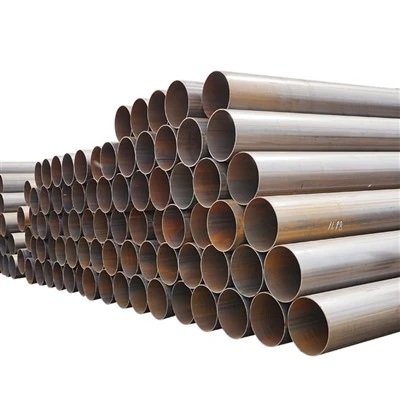
ASTM A53 steel pipe is a standard developed by ASTM International and covers seamless and welded carbon steel pipes. These pipes are designed for applications involving pressure, mechanical usage, and general industrial services.
In the welded pipe category, ASTM A53 is commonly associated with ERW steel pipe production. However, depending on project requirements, certain large diameter applications may also use LSAW steel pipe manufactured according to similar material and performance requirements.
ERW, or Electric Resistance Welded steel pipe, is produced by forming steel strip into a round shape and welding the longitudinal seam through electric resistance heating. This process provides high production efficiency, good dimensional accuracy, and consistent weld quality.
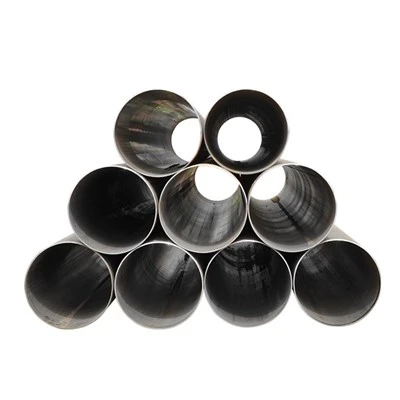
LSAW, or Longitudinal Submerged Arc Welded steel pipe, is produced from steel plates through forming and submerged arc welding. It is mainly used for larger diameters and thicker wall applications where higher structural strength is required.
| Item | ASTM A53 Steel Pipe Requirements |
|---|---|
| Standard | ASTM A53 |
| Material Type | Carbon Steel |
| Production Type | Seamless and Welded |
| Common Welded Pipe | ERW Steel Pipe |
| Surface Options | Black, Galvanized, Coated |
| Applications | Water, gas, mechanical, structural |
ASTM A53 provides a reliable foundation for producing steel pipes that meet industrial requirements across different sectors.


What Are the Main Types of ASTM A53 Steel Pipe?
ASTM A53 steel pipe is commonly divided into three types based on manufacturing method and material requirements.
Type F refers to furnace butt welded pipe, while Type E represents electric resistance welded pipe. Type S refers to seamless steel pipe.
Among these categories, ASTM A53 Type E ERW steel pipe is widely used because of its efficient production process and stable performance. ERW technology allows manufacturers to produce pipes with accurate outside diameter and wall thickness control.
For projects requiring larger diameters, LSAW steel pipes may be selected due to their ability to handle bigger sizes and thicker walls. LSAW pipes are especially common in pipeline construction, infrastructure projects, and heavy-duty engineering applications.
The choice between ERW and LSAW depends on factors such as pipe diameter, wall thickness, operating pressure, and project requirements.
Why Is ASTM A53 ERW Steel Pipe Popular in Industrial Applications?
ASTM A53 ERW steel pipe is widely used because it provides a balanced combination of strength, weldability, and cost efficiency.
ERW pipes are manufactured by continuously forming steel coils into a cylindrical shape. The edges are heated and welded together using electrical resistance. After welding, the pipe undergoes sizing and inspection to ensure dimensional accuracy.
This production method makes ERW pipes suitable for applications requiring large quantities of reliable steel pipe.
Common applications include water transportation, low pressure fluid systems, structural frameworks, mechanical components, and general industrial pipelines.
The smooth surface and accurate dimensions of ERW pipes also make them easier to connect and install during construction.
For many engineering projects, ASTM A53 ERW steel pipe provides an economical and dependable solution.
How Are ASTM A53 LSAW Steel Pipes Used in Large Projects?
Although ERW is more commonly associated with ASTM A53 welded pipe production, large diameter welded steel pipes with similar carbon steel requirements are often manufactured using LSAW technology.
LSAW steel pipes are especially suitable for applications requiring large diameters and strong load-bearing performance.
In infrastructure projects, large diameter steel pipes are needed for water transmission, piling, structural supports, and industrial systems. The submerged arc welding process creates strong longitudinal welds, providing excellent mechanical performance.
LSAW pipes can also be combined with anti-corrosion coatings such as 3PE, FBE, and epoxy systems to improve durability in harsh environments.
This makes large diameter welded steel pipes valuable for long-term infrastructure development.
What Are the Advantages of ASTM A53 Carbon Steel Pipe?
ASTM A53 carbon steel pipe offers several important advantages.
The material provides good mechanical strength and excellent weldability, making it suitable for fabrication and installation. It can also be used in various environments where reliability and durability are required.
Another advantage is its wide availability and compatibility with different connection methods. ASTM A53 pipes can be welded, threaded, or mechanically connected depending on application needs.
The standard also provides clear requirements for chemical composition, mechanical properties, dimensions, and testing, helping ensure consistent product quality.
For engineers and contractors, using ASTM A53 steel pipe simplifies material selection and project management.
How Does Huayang Steel Pipe Supply ASTM Standard Products?
Huayang Steel Pipe manufactures ERW and LSAW steel pipes for global infrastructure, energy, and industrial projects.
The company produces carbon steel pipes according to international standards including ASTM specifications, API standards, and customer requirements.
Huayang provides ERW steel pipes with excellent dimensional accuracy and reliable weld performance. For large diameter applications, LSAW steel pipes are manufactured using advanced forming and submerged arc welding technologies.
Quality control covers raw material inspection, welding inspection, dimensional measurement, and final product testing.
With professional manufacturing capabilities, Huayang supplies reliable steel pipe solutions for water systems, energy projects, construction, and industrial applications.
Conclusion
ASTM A53 steel pipe is an important carbon steel pipe standard widely used in industrial and construction applications. ERW steel pipes manufactured under ASTM A53 requirements provide efficient and reliable solutions for many projects, while large diameter welded pipes support demanding infrastructure applications.
With strong manufacturing technology and strict quality control, ASTM A53 steel pipes continue to play an important role in global engineering development.