


Modern architecture and civil engineering constantly push the boundaries of design, demanding materials that offer exceptional strength, aesthetic appeal, and structural versatility. Steel, particularly in tubular forms, has become a material of choice for large-scale structures due to its high strength-to-weight ratio and design flexibility. Among various steel pipe types, Electric Resistance Welded (ERW) and Longitudinal Submerged Arc Welded (LSAW) steel pipes stand out for their versatility and critical role in constructing large-scale steel structures, ranging from iconic stadiums and bridges to expansive industrial sheds and commercial complexes. Their distinct manufacturing processes and resulting properties make them suitable for different structural applications, contributing to both the integrity and visual impact of modern infrastructure. Hebei Huayang Steel Pipe Co., Ltd. provides a comprehensive range of ERW and LSAW steel pipes, engineered to meet the diverse and stringent requirements of structural applications worldwide.
The Evolution of Steel in Structural Engineering
The use of steel in construction has revolutionized structural engineering, enabling the creation of lighter, stronger, and more aesthetically pleasing designs. Tubular steel sections, in particular, offer several advantages:
•High Strength-to-Weight Ratio: Efficiently carries loads with less material, reducing overall structural weight.
•Excellent Torsional Resistance: Ideal for columns and bracing members subjected to twisting forces.
•Aesthetic Appeal: Clean lines and smooth surfaces often preferred for exposed architectural elements.
•Design Flexibility: Can be easily fabricated, bent, and connected to form complex geometries.
•Corrosion Resistance: Can be easily coated or painted for enhanced durability and appearance.
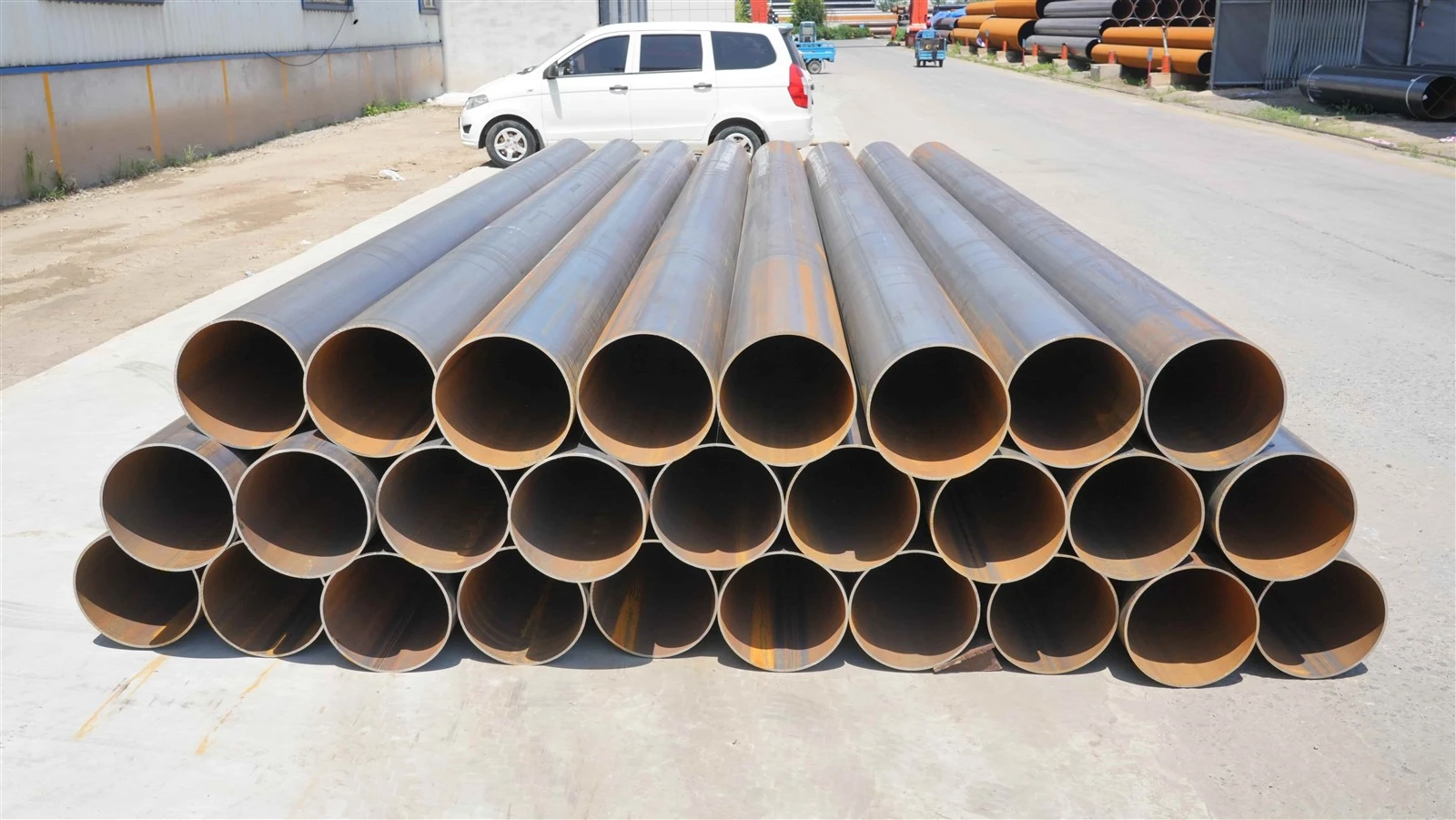
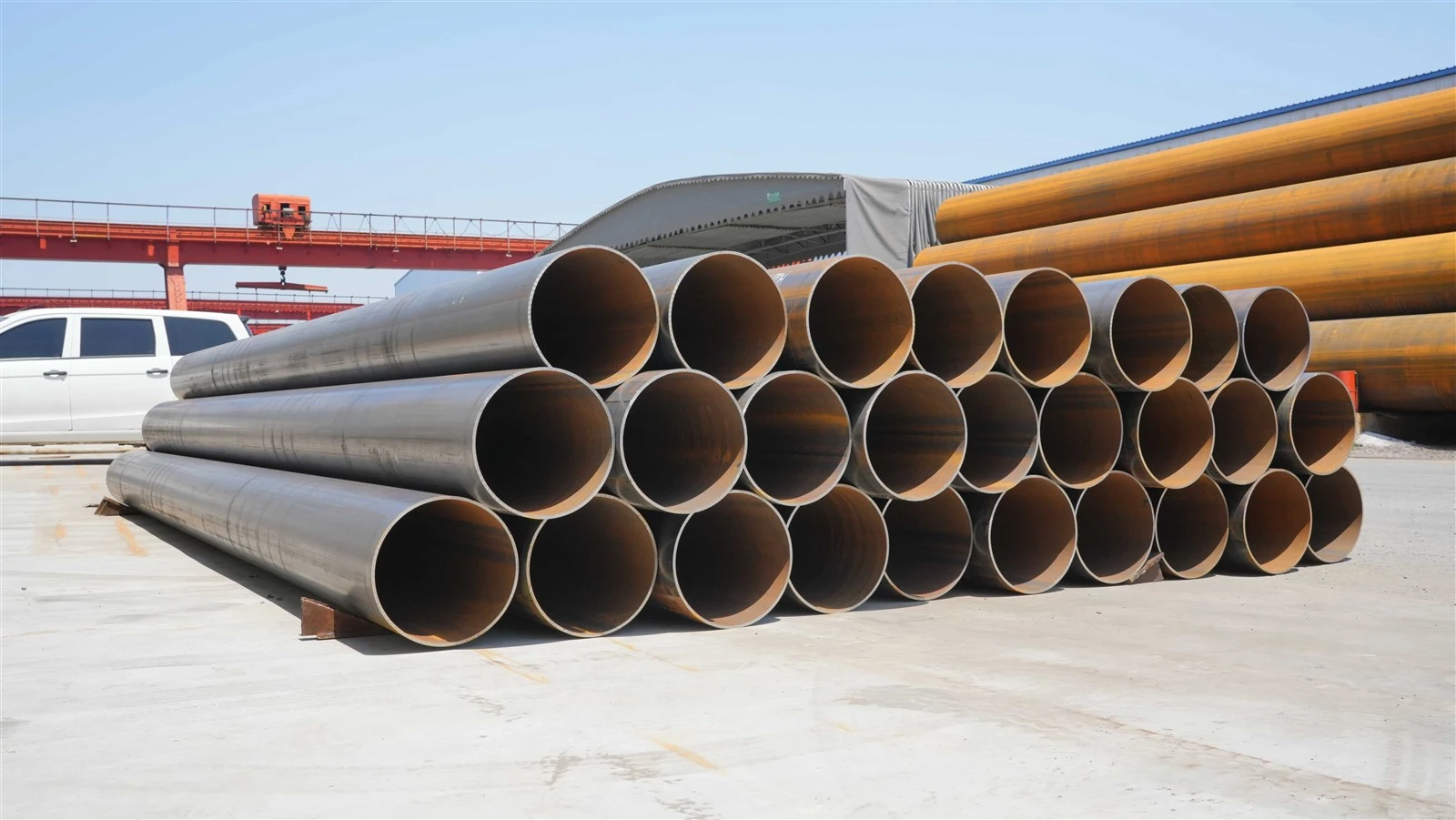
ERW and LSAW Pipes: Tailored for Structural Demands
Both ERW and LSAW steel pipes contribute significantly to structural applications, each with specific strengths:
ERW Steel Pipes in Structures
ERW (Electric Resistance Welded) steel pipes are produced by cold-forming a steel coil into a cylindrical shape and then welding the edges longitudinally using electric resistance. This process results in pipes with:
•Consistent Wall Thickness: Ensures uniform stress distribution and predictable structural behavior.
•Excellent Surface Finish: Often preferred for exposed architectural elements due to its smooth appearance.
•Cost-Effectiveness: Efficient manufacturing makes them an economical choice for many structural components.
•Wide Range of Sizes: Available in various diameters and wall thicknesses, suitable for columns, trusses, and bracing in medium to large structures.
Typical Structural Applications for ERW Pipes:
•Building Frames: Columns, beams, and bracing for commercial buildings, warehouses, and multi-story car parks.
•Trusses and Space Frames: Lightweight yet strong elements for roofs of exhibition halls, gymnasiums, and airport terminals.
•Scaffolding and Temporary Structures: High strength and ease of connection make them ideal for construction support.
•Handrails and Architectural Elements: Their smooth finish and formability are valued in aesthetic applications.
LSAW Steel Pipes in Structures
LSAW (Longitudinal Submerged Arc Welded) steel pipes are manufactured from steel plates that are first formed into a cylindrical shape and then welded longitudinally using the submerged arc welding process. This method is particularly suited for larger diameters and thicker walls, offering:
•Superior Strength and Rigidity: Ideal for heavy-duty applications requiring high load-bearing capacity and resistance to buckling.
•Large Diameter and Thick Wall Capability: Can be produced in very large sizes, making them suitable for massive structural elements.
•Excellent Weld Integrity: The SAW process produces deep-penetrating, high-quality welds that are highly reliable under extreme stress.
•High Fracture Toughness: Crucial for structures in seismic zones or those subjected to dynamic loads.
Typical Structural Applications for LSAW Pipes:
•Bridge Piers and Arches: Providing robust support for long-span bridges.
•Stadium Roofs and Canopies: Forming the primary structural elements for large, clear-span structures.
•Offshore Platforms and Marine Structures: Used for jacket legs, piles, and other components requiring high strength and corrosion resistance in harsh marine environments.
•Large Industrial Buildings: Columns and main trusses for heavy industrial facilities, power plants, and hangars.
Comparative Structural Suitability
|
Feature/Application |
ERW Steel Pipes |
LSAW Steel Pipes |
|
Diameter Range |
Medium to Large (e.g., 2" to 24") |
Large to Very Large (e.g., 16" to 64"+) |
|
Wall Thickness |
Medium to Thick |
Thick to Very Thick |
|
Strength & Rigidity |
Good, suitable for many structural elements |
Excellent, ideal for heavy-duty and critical load-bearing |
|
Manufacturing Process |
Continuous, high-frequency resistance welding |
Batch, JCOE or UOE forming with submerged arc welding |
|
Cost-Effectiveness |
Generally more economical for mid-range sizes |
Cost-effective for large diameters and heavy-duty applications |
|
Typical Structures |
Commercial buildings, trusses, scaffolding, architectural elements |
Stadiums, bridges, offshore platforms, heavy industrial structures |
Huayang's Contribution to Structural Excellence
Hebei Huayang Steel Pipe Co., Ltd. is a leading manufacturer of both ERW and LSAW steel pipes, serving the global structural engineering market. Our commitment to quality and precision ensures that our pipes provide the foundational strength for a wide array of iconic and essential structures.
Our structural pipe offerings include:
•Diverse Product Range: Manufacturing ERW pipes up to 24 inches and LSAW pipes up to 64 inches in diameter, with various wall thicknesses and lengths to meet specific project demands.
•High-Grade Materials: Utilizing high-quality steel coils and plates, often conforming to standards like ASTM A500, EN 10210, EN 10219, and other structural specifications.
•Advanced Manufacturing: Employing state-of-the-art HFW technology for ERW pipes and JCOE forming for LSAW pipes, ensuring superior dimensional accuracy, weld integrity, and mechanical properties.
•Rigorous Quality Control: Implementing comprehensive testing protocols, including non-destructive testing (NDT), mechanical property tests, and dimensional inspections, to guarantee the highest quality and safety standards.
•Custom Fabrication: Offering services such as cutting, beveling, and surface treatments (e.g., priming, galvanizing) to facilitate easier integration into complex structural designs.
In conclusion, the versatility of ERW and LSAW steel pipes is fundamental to the advancement of large-scale steel structures. From the intricate trusses of an airport terminal to the massive piers of a suspension bridge, these pipes provide the essential strength, durability, and design flexibility required by modern structural engineering. By choosing high-quality ERW and LSAW pipes from manufacturers like Hebei Huayang Steel Pipe Co., Ltd., architects, engineers, and construction firms can confidently build structures that are not only robust and safe but also aesthetically striking and sustainable. Huayang's dedication to precision manufacturing and stringent quality control positions it as a key partner in shaping the skylines and infrastructure of tomorrow.


