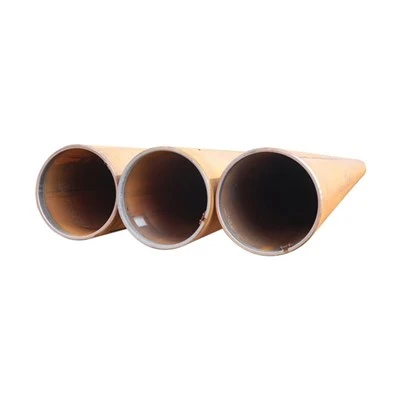
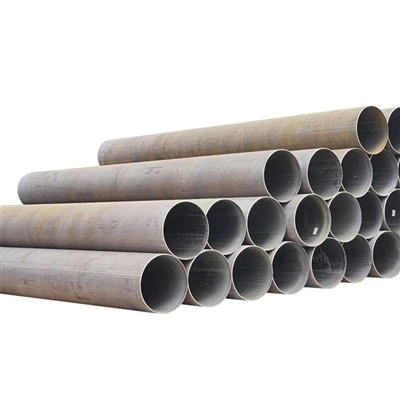
Within the manufacturing system of ERW (Electric Resistance Welded) steel pipes, welding processes, equipment levels, and inspection methods are all essential. However, what truly determines the "quality baseline" and "stability" of the product is often the most underestimated one-raw materials. It can be said that a considerable number of quality issues with ERW steel pipes do not arise during the welding process but are already hidden at the raw material stage.
This article will systematically explain how raw material stability affects the welding quality, dimensional accuracy, and long-term service performance of ERW steel pipes from multiple perspectives.
I. ERW Steel Pipes Place Higher Demands on Raw Material Consistency
ERW steel pipes are produced from hot-rolled steel coils through cold forming and high-frequency electric resistance welding. Compared with seamless steel pipes, the weld quality of ERW steel pipes relies more heavily on the consistency of the base metal, especially the stability of the chemical composition and mechanical performance of the steel coils.
If the performance of steel coils fluctuates significantly within the same batch, even with completely consistent production parameters, the weld state and forming quality of the final finished products may vary noticeably. This is why ERW steel pipes emphasize raw material stability not merely compliance with minimum standards.


II. Effects of Chemical Composition Fluctuations on Welding Quality
Among the chemical components of steel coils, carbon content and carbon equivalent play a decisive role in ERW welding performance.
When the carbon levels are elevated or the carbon equivalent fluctuates significantly, the weld and heat-affected zone are more prone to structural hardening during welding, increasing the risk of brittleness. Under the process conditions of high-frequency welding-characterized by instantaneous heating and rapid cooling-this impact is further amplified, which may lead to insufficient weld toughness and even cracking during subsequent pipe expansion, straightening, or service.
In contrast, steel coils with stable composition control are more likely to form a uniform and dense weld structure during welding, providing a guarantee for subsequent processes and service performance.
III. Forming Risks Caused by Unstable Mechanical Properties
The yield strength, tensile strength, and elongation of steel coils directly affect the forming process of ERW steel pipes.
If the yield strength of the same coil or batch of steel coils fluctuates too much, uneven stress on the edges is likely to occur during forming, manifested as unsynchronized forming of the left and right edges of the steel strip. This further leads to weld misalignment, overlapping, or unstable gaps. Once such problems occur, even if forced fusion is achieved by increasing welding power, it is difficult to fundamentally eliminate weld hidden dangers.
Stable mechanical properties can ensure uniform stress on the steel strip during continuous forming, providing a good "starting condition" for welding.
IV. Importance of Steel Strip Thickness and Flatness Stability
Beyond composition and mechanical properties, the thickness tolerance and flatness quality of steel coils are also crucial.
Excessive thickness fluctuations directly affect the matching degree of welding heat input. When the wall thickness is too thick, the original welding parameters may not achieve complete penetration; when the wall thickness is too thin, overheating or weld burrs are likely to occur. Poor flatness, such as waviness or sickle bend, will be amplified during the forming stage, increasing the difficulty of equipment adjustment and affecting production continuity.
For ERW steel pipes, raw materials are not "usable as long as they can," but must have good dimensional consistency and flatness quality to support stable production.
V. Relationship Between Raw Material Stability and Production Efficiency
From the factory's perspective, raw material stability not only affects quality but also directly relates to production efficiency and cost control.
When the performance of steel coils is stable, process parameters can be maintained in a mature range for a long time, with fewer equipment adjustments, low scrap rates, and a smooth production rhythm. On the contrary, if steel coils with significantly different performances are frequently replaced, it is necessary to continuously adjust forming and welding parameters, which not only increases operational difficulty but also makes quality fluctuations more likely.
Therefore, mature ERW steel pipe manufacturers tend to establish long-term and stable raw material supply systems rather than frequently changing steel coil sources.
VI. Procurement Stage Control Is Especially Critical
For end users or traders, raw material issues are often invisible, yet they inevitably manifest in finished product quality.
Experienced ERW steel pipe manufacturers usually conduct composition review and performance sampling inspection when steel coils enter the factory, and evaluate the adaptability of different steel mills and different heats based on historical production data. This front-end control is an effective means to reduce weld quality problems and dimensional deviations.
Essentially, raw material stability is a form of "preliminary quality control"-the earlier the investment, the lower the subsequent risks.
VII. Raw Materials Determine the Baseline of Quality
ERW steel pipe production is a systematic project, but the stable operation of the system largely depends on the basic link of raw materials. Even the most advanced equipment and strict inspection regimes cannot fully compensate for inherent material variability.
Therefore, when evaluating the professionalism of an ERW steel pipe manufacturer, whether it attaches importance to raw material management is often an underestimated but highly valuable indicator.
It is precisely through long-term emphasis on raw material stability and accumulated practical experience that manufacturers such as Huayang Steel Pipe, with many years dedicated to ERW pipe production, are able to maintain consistently high weld quality and overall performance across sustained production cycles.