


Seamless steel pipes are widely used in industries such as oil and gas, petrochemical, power generation, and mechanical engineering due to their high strength, pressure resistance, and uniform structure. Understanding how seamless pipes are manufactured and the dimensional standards that govern them is essential for engineers, buyers, and project managers.
In this article, we will explore the manufacturing process of seamless steel pipes, the dimensional standards used globally, and how Huayang Steel Pipe ensures product consistency and reliability across every order.
1. Overview: Why Seamless Pipes Matter
Unlike welded pipes, seamless pipes have no weld seam, which means they can withstand higher internal pressures and are more suitable for critical applications such as high-pressure pipelines, boilers, and offshore drilling.
At Huayang Steel Pipe, we produce seamless pipes that meet major international standards such as API 5L, ASTM A106, ASTM A53, and EN 10216. These pipes are available in various lengths and diameters to fit both structural and fluid transmission requirements.
For more details about standard pipe lengths, refer to our related article:
👉 Length Standard of Seamless Pipe

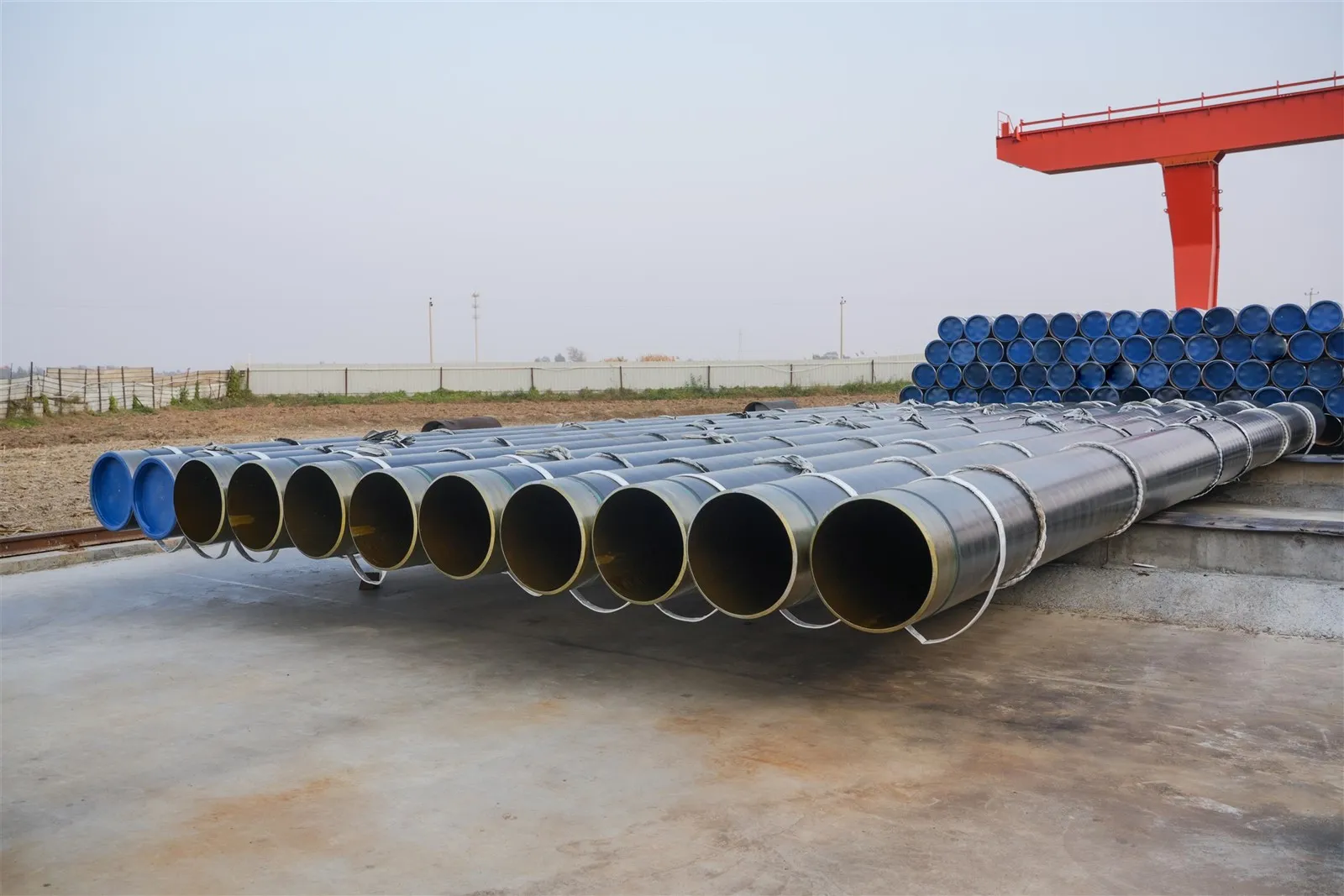
2. Step-by-Step Manufacturing Process
The manufacturing of seamless steel pipes is a highly technical process that involves several key stages - from raw material selection to finishing inspection. Below is a step-by-step overview of how seamless pipes are produced at Huayang Steel Pipe.
| Stage | Process Description | Purpose/Outcome |
|---|---|---|
| 1. Billet Selection | High-quality round billets are selected, usually made of carbon steel or alloy steel. | Ensures uniform material properties. |
| 2. Heating | Billets are heated in a rotary hearth furnace at around 1200°C. | Softens the billet for piercing. |
| 3. Piercing | The heated billet is pierced using a Mannesmann piercer to create a hollow shell. | Forms the initial hole in the billet. |
| 4. Elongation and Rolling | The shell passes through elongators or mandrel mills to achieve the desired wall thickness and diameter. | Controls pipe dimensions and smoothness. |
| 5. Sizing and Reducing | Pipes are rolled further to refine dimensions and roundness. | Ensures dimensional precision. |
| 6. Heat Treatment | Pipes undergo normalizing or quenching and tempering. | Enhances mechanical properties and toughness. |
| 7. Straightening and Cutting | Pipes are straightened and cut to specified lengths. | Prepares pipes for inspection and delivery. |
| 8. Non-Destructive Testing (NDT) | Ultrasonic or eddy current tests are conducted. | Detects internal or surface defects. |
| 9. Finishing & Marking | Pipes are beveled, painted, and marked with specifications. | Ensures traceability and surface protection. |
The Mannesmann piercing method remains the most common process for producing seamless pipes up to 24 inches in diameter. For larger diameters, the plug mill or stretch reducing mill process may be applied.
3. Heat Treatment and Surface Finishing
After rolling, heat treatment is critical for achieving the desired strength and ductility. Different grades require specific heat treatment cycles:
| Grade | Typical Heat Treatment | Resulting Property |
|---|---|---|
| ASTM A106 Gr.B | Normalized | Improved toughness |
| ASTM A335 P11 | Quenched and Tempered | High creep resistance |
| API 5L X65 | Normalized | Enhanced strength and weldability |
Surface finishing includes shot blasting, varnish coating, beveling, and end protection caps. These prevent corrosion and mechanical damage during handling and transport.
At Huayang Steel Pipe, all pipes are hydrostatically tested before shipment, ensuring that each one meets both customer specifications and international standards.
4. Dimensional Standards and Tolerances
Seamless pipes are produced according to global standards that define their outer diameter (OD), wall thickness, and length tolerances. Below are some common dimensional standards followed by Huayang Steel Pipe.
| Standard | Application | OD Range (mm) | Wall Thickness (mm) | Length Options |
|---|---|---|---|---|
| API 5L | Oil & Gas pipelines | 21.3–660 | 2.77–70 | 5.8m / 11.8m / R.L. |
| ASTM A106 / A53 | Pressure and mechanical use | 21.3–610 | 2.11–65 | 6m / 12m / Custom |
| EN 10216 | Boiler, pressure, and power use | 10.2–711 | 1.6–60 | 6m / 12m |
| GB/T 8163 | General structural use | 10–720 | 2–60 | 5–12m |
Note: R.L. = Random Length; C.L. = Custom Length
Each standard defines dimensional tolerances, such as ±0.5% for OD and ±10% for wall thickness. These tolerances ensure uniformity and easy compatibility with fittings and flanges during installation.
5. Dimensional Accuracy and Testing
Precision in wall thickness and outer diameter is crucial, especially for high-pressure or high-temperature environments. Huayang adopts automatic ultrasonic thickness gauges and laser-based OD measurement systems to maintain consistent accuracy.
In addition to mechanical tests, the following non-destructive tests (NDT) are performed:
Ultrasonic Testing (UT): Detects internal flaws.
Eddy Current Testing (ECT): Identifies surface cracks.
Hydrostatic Testing: Verifies pressure tightness.
Magnetic Particle Testing (MT): Checks for surface discontinuities.
Each pipe is stamped with a unique traceability number linked to the heat number and test certificate.
6. Dimensional Standards and Project Design
Dimensional standards play a critical role in pipeline design, flow capacity, and welding compatibility. Engineers must select pipe sizes based not only on pressure rating but also on length availability and fabrication requirements.
For example:
API 5L focuses on transportation pipelines for oil and gas.
ASTM A106 is preferred for high-temperature applications.
EN 10216 serves the European market for pressure systems.
At Huayang Steel Pipe, we maintain full compliance with these standards, enabling our products to be used confidently in projects across Asia, the Middle East, Africa, and South America.
7. Custom Cutting and Length Options
Although standard pipe lengths are typically 6m or 12m, Huayang also provides custom cutting services according to project needs. This flexibility minimizes waste and speeds up installation on-site.
Different projects require specific length tolerances:
Fixed Length (±10mm): Ideal for prefabricated systems.
Random Length (5–12m): Used for pipelines and long runs.
Exact Cut Length: For critical systems such as boiler tubes.
For a detailed discussion about length standards, check:
👉 Length Standard of Seamless Pipe
8. Quality Assurance at Huayang Steel Pipe
Every seamless pipe undergoes strict dimensional inspection, hydrotesting, and marking before shipment. Huayang's production system is ISO 9001 certified, ensuring consistency from raw material to final delivery.
Our quality philosophy centers around:
- Full traceability from billet to final pipe.
- 100% non-destructive testing before shipment.
- Compliance with API, ASTM, and EN standards.
- Detailed inspection reports provided for every order.
Huayang's seamless pipes have been successfully supplied to oil & gas fields, power plants, and water transmission systems in over 70 countries.
9. Conclusion
The manufacturing process and dimensional standards of seamless steel pipes form the foundation of their reliability and performance. By controlling each stage - from piercing to finishing - Huayang Steel Pipe ensures that every product meets strict technical and dimensional requirements.
Whether your project demands API 5L line pipes, ASTM A106 boiler tubes, or EN 10216 pressure pipes, Huayang delivers precision, strength, and consistency every time.


