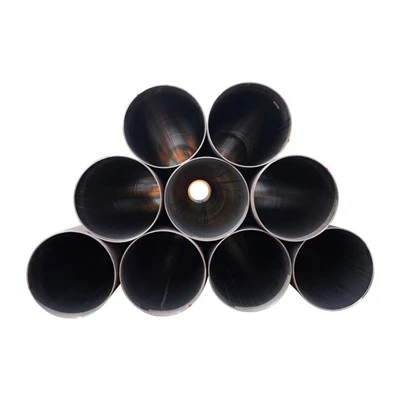
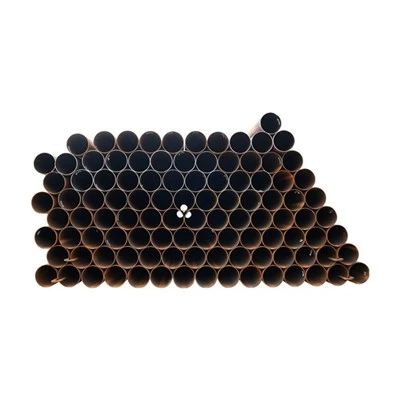
High Frequency Welded (HFW) steel pipes are widely used in structural, mechanical, and fluid transportation applications, not only because of their favorable mechanical properties but also due to the high level of manufacturing consistency achievable through modern HFW production lines. As engineering projects increasingly emphasize dimensional precision, repeatability, and large-scale standardization, the inherent process stability of HFW pipe manufacturing has become a key technical advantage that deserves closer examination.
Overview of the HFW Manufacturing Process
HFW steel pipes are produced by forming hot-rolled or cold-rolled steel strip into a tubular shape through a series of forming rolls, followed by high-frequency electrical resistance welding along the longitudinal seam. The edges of the strip are rapidly heated to a plastic state by high-frequency current and then forged together under pressure to form a solid-state weld. Unlike fusion welding, no filler metal is used, and the weld zone is created through metallurgical bonding under controlled thermal and mechanical conditions.
The continuous nature of the HFW process allows steel pipes to be produced at high speeds with minimal interruption. This continuous flow is a critical factor in achieving stable dimensional control, as each stage of forming, welding, and sizing operates within a tightly regulated parameter window. As a result, variations in pipe diameter, wall thickness, and straightness can be effectively minimized.
Dimensional Control in Forming and Sizing Stages
One of the most important technical strengths of HFW steel pipes lies in the precision of their forming and sizing stages. Modern HFW mills are equipped with multi-stand forming systems that gradually bend the steel strip into a round shape. This progressive forming approach reduces localized stress concentration and helps maintain uniform wall thickness around the circumference of the pipe.
After welding, the pipe passes through sizing rolls that calibrate the outer diameter to meet strict dimensional tolerances. These sizing systems are often supported by online measurement devices, such as laser diameter gauges, which provide real-time feedback to the control system. Adjustments can be made instantly to compensate for material variation or temperature changes, ensuring that the final product remains within specification.
The result is a steel pipe with excellent roundness, consistent diameter, and predictable dimensional behavior during installation. For projects involving large quantities of pipes, such as scaffolding systems, structural frameworks, or municipal pipelines, this consistency significantly reduces on-site adjustment and fitting time.
Weld Seam Stability and Its Impact on Geometry
The stability of the longitudinal weld seam plays a decisive role in the overall dimensional accuracy of HFW steel pipes. High-frequency welding concentrates heat precisely at the strip edges, limiting the width of the heat-affected zone and reducing distortion during cooling. Because the weld is formed under pressure rather than by molten metal solidification, shrinkage effects are minimal compared to traditional fusion welding methods.
Post-weld processes such as online seam trimming, weld bead removal, and controlled cooling further enhance geometric stability. In many modern mills, weld seam monitoring systems track parameters such as welding temperature, pressure, and alignment, ensuring that each pipe section exhibits uniform weld characteristics along its entire length.
This weld seam stability contributes directly to improved straightness and reduced ovality, which are critical factors in applications where pipes must align precisely with fittings, flanges, or mechanical assemblies.
Typical Dimensional Tolerances of HFW Steel Pipes
The dimensional accuracy achievable with HFW steel pipes can be summarized by typical industry tolerance ranges, as shown in the table below.


| Parameter | Typical Tolerance Range |
|---|---|
| Outer Diameter | ±0.5% or tighter depending on standard |
| Wall Thickness | ±8% to ±10% |
| Ovality | ≤ 50% of OD tolerance |
| Straightness | ≤ 1/1000 of pipe length |
| Length Tolerance | −0 mm / +20 mm |
These tolerance levels make HFW steel pipes particularly suitable for automated construction, modular fabrication, and prefabricated structural systems, where dimensional predictability is essential for efficient assembly.
Process Automation and Quality Repeatability
Another defining characteristic of HFW pipe manufacturing is the high degree of automation integrated into modern production lines. Key parameters such as forming pressure, welding power, line speed, and cooling rate are controlled through centralized systems, reducing reliance on manual intervention. This automation not only improves productivity but also ensures that quality remains consistent across long production runs.
From a quality engineering perspective, repeatability is often more valuable than achieving extreme mechanical performance. HFW steel pipes excel in this area, as their manufacturing process produces pipes with highly uniform properties batch after batch. For distributors, fabricators, and end users, this predictability simplifies inventory management, reduces inspection workload, and lowers the risk of unexpected dimensional deviations during use.
Engineering Implications for Downstream Processing
The dimensional consistency of HFW steel pipes offers clear advantages in downstream processing such as cutting, bending, threading, and coating. Pipes with stable geometry respond more uniformly to mechanical operations, reducing tool wear and minimizing scrap rates. In automated fabrication lines, consistent pipe dimensions enable higher processing speeds and more reliable equipment operation.
Additionally, surface uniformity achieved through controlled forming and welding improves the adhesion of coatings such as galvanizing, painting, or epoxy systems. This further enhances the overall quality and service performance of the finished product, particularly in applications requiring corrosion protection or aesthetic consistency.
Conclusion
From an engineering and manufacturing standpoint, the value of HFW steel pipes extends well beyond their basic strength and cost efficiency. Their real advantage lies in the stability of the production process and the high level of dimensional accuracy that can be consistently achieved. Through controlled forming, precise high-frequency welding, and advanced automation, HFW steel pipes deliver predictable geometry, excellent repeatability, and reliable performance across a wide range of applications.
As construction and industrial projects continue to prioritize standardization, efficiency, and quality control, the role of HFW steel pipes as a dimensionally stable and process-optimized product is expected to become even more significant in global steel pipe markets.