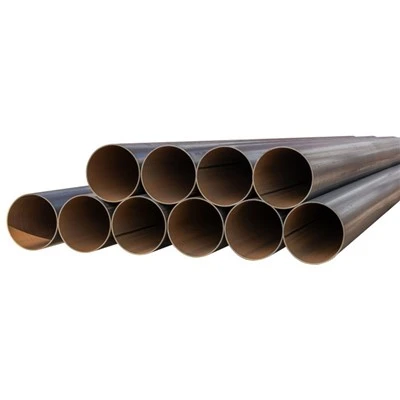
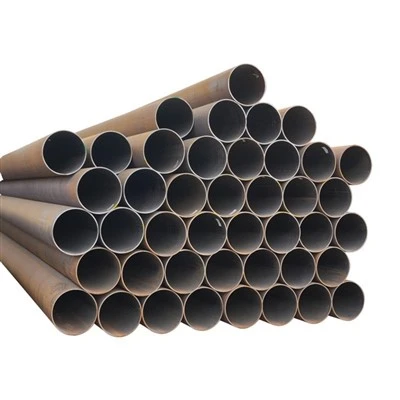
Large-diameter steel pipes are the backbone of critical infrastructure projects worldwide, from oil and gas transmission to water supply and structural applications. Among the various manufacturing methods, Longitudinally Submerged Arc Welded (LSAW) steel pipes are highly favored for their superior strength, excellent ductility, and ability to withstand high pressures and demanding environments. A key process that underpins the production of high-quality LSAW pipes, especially for larger diameters, is the JCOE forming process. This method is renowned for its precision engineering, ensuring the dimensional accuracy and structural integrity essential for reliable performance. So, what is the JCOE process in high-quality LSAW steel pipe manufacturing, and how does its precision engineering contribute to the superior characteristics of these pipes? Hebei Huayang Steel Pipe Co., Ltd., a leading manufacturer of LSAW steel pipes, elucidates the intricacies and advantages of the JCOE method.
The Evolution of LSAW Pipe Manufacturing
LSAW pipes are produced from single steel plates, which are first formed into a cylindrical shape and then welded longitudinally using the Submerged Arc Welding (SAW) technique. Historically, various forming methods have been employed, but for large-diameter, thick-walled pipes requiring exceptional precision, the JCOE process has become a benchmark.
Other common LSAW forming methods include UOE (U-ing, O-ing, and Expanding) and Roll Bending. While UOE is also highly effective, JCOE offers distinct advantages in terms of flexibility for varying diameters and wall thicknesses, and often results in superior roundness and straightness for certain applications.


Deconstructing the JCOE Process: A Step-by-Step Guide
The JCOE process derives its name from the sequence of operations: J-ing, C-ing, O-ing, and Expanding. Each step is meticulously controlled to transform a flat steel plate into a perfectly round, high-strength pipe.
Step 1: Edge Milling and Pre-bending
•Edge Milling: The first critical step involves precisely milling the longitudinal edges of the steel plate. This ensures a clean, uniform edge preparation essential for high-quality welding and dimensional accuracy. It removes any imperfections and creates the desired bevel for the weld joint.
•Pre-bending: The edges of the plate are then pre-bent to the exact curvature of the pipe ends. This is crucial to prevent flat spots at the weld seam and ensure a smooth, continuous curvature along the entire pipe circumference.
Step 2: J-ing - Initial Forming
•J-Press: The pre-bent plate is placed into a powerful J-press. The press applies controlled force along the length of the plate, progressively forming it into a 'J' shape. This initial forming step begins the cylindrical transformation.
Step 3: C-ing - Intermediate Forming
•C-Press: Following the J-ing, the plate moves to the C-press. Here, the forming continues, gradually closing the 'J' shape into a 'C' shape. This step further refines the curvature and brings the edges closer together, preparing for the final 'O' shape.
Step 4: O-ing - Final Forming
•O-Press: The 'C' shaped plate is then transferred to the O-press, where immense hydraulic pressure is applied to form the plate into a complete 'O' (cylindrical) shape. This is the most critical forming step, ensuring the pipe achieves its precise diameter and roundness. The edges are brought into close contact, ready for welding.
Step 5: Internal and External Submerged Arc Welding (SAW)
•Tack Welding: The edges are first tack welded to hold the 'O' shape.
•Internal Welding: The pipe is then moved to an internal welding station where the first pass of submerged arc welding is performed from the inside. SAW is known for its deep penetration, high deposition rates, and excellent weld quality.
•External Welding: After internal welding, the pipe is rotated, and the external weld pass is completed. This dual-pass welding technique ensures full penetration and creates a robust, high-strength longitudinal seam.
Step 6: Mechanical Expanding
•Expander Machine: The welded pipe is placed into a mechanical expander. A segmented die is inserted into the pipe and expanded hydraulically. This process cold-works the pipe, improving its dimensional accuracy (roundness and straightness), reducing residual stresses, and enhancing its mechanical properties (yield strength and toughness).
Step 7: Non-Destructive Testing (NDT) and Final Inspection
•Ultrasonic Testing (UT): The entire weld seam and pipe body are subjected to automated ultrasonic testing to detect any internal flaws or discontinuities.
•X-ray Inspection: Radiographic inspection (X-ray) is performed on the weld seam to verify its integrity and detect any cracks or porosity.
•Hydrostatic Testing: Each pipe undergoes a hydrostatic test, where it is filled with water and pressurized to a level exceeding its maximum operating pressure, ensuring its strength and leak-tightness.
•Dimensional Inspection: Final checks for diameter, wall thickness, length, straightness, and end bevels are performed.
Advantages of JCOE Precision Engineering
The JCOE process offers several distinct advantages that contribute to the superior quality of LSAW pipes:
•Exceptional Dimensional Accuracy: The step-by-step forming process allows for precise control over the pipe's diameter, roundness, and straightness, which is crucial for efficient field welding and fit-up.
•Superior Weld Quality: The precise edge preparation and controlled SAW process result in a high-integrity longitudinal weld seam with excellent mechanical properties.
•Enhanced Mechanical Properties: The cold expansion step improves the pipe's yield strength, toughness, and ductility, making it more resilient to operational stresses.
•Reduced Residual Stresses: Mechanical expansion helps to relieve residual stresses introduced during forming and welding, improving the pipe's resistance to stress corrosion cracking.
•Versatility: The JCOE process is highly adaptable to a wide range of pipe diameters and wall thicknesses, offering flexibility for diverse project requirements.
Hebei Huayang: Mastering JCOE for Unrivaled LSAW Quality
At Hebei Huayang Steel Pipe Co., Ltd., our state-of-the-art manufacturing facilities are equipped with advanced JCOE production lines. We combine cutting-edge technology with stringent quality control at every stage, from raw material selection to final inspection. Our experienced engineers and technicians meticulously oversee each step of the JCOE process, ensuring that every LSAW steel pipe we produce meets the highest international standards (e.g., API 5L, ASTM, EN) and exceeds client expectations.
By choosing Huayang's LSAW pipes manufactured via the JCOE process, you are investing in precision engineering, uncompromising quality, and the long-term reliability of your critical infrastructure projects. Partner with us for LSAW steel pipes that deliver strength, integrity, and peace of mind.
Key Stages and Benefits of the JCOE Process for LSAW Pipes
|
JCOE Stage |
Description |
Contribution to Pipe Quality |
|
Edge Milling |
Precise preparation of plate edges. |
Ensures clean, uniform weld joint, removes imperfections. |
|
Pre-bending |
Curving plate edges to pipe radius. |
Prevents flat spots at weld seam, ensures smooth curvature. |
|
J-ing, C-ing, O-ing |
Progressive hydraulic forming into cylindrical shape. |
Achieves precise diameter, roundness, and straightness. |
|
SAW Welding |
Internal and external submerged arc welding. |
Creates high-integrity, full-penetration longitudinal weld. |
|
Mechanical Expanding |
Cold-working the welded pipe. |
Improves dimensional accuracy, reduces residual stress, enhances mechanical properties. |
|
NDT & Testing |
Ultrasonic, X-ray, Hydrostatic, Dimensional Inspection. |
Verifies structural integrity, leak-tightness, and compliance. |
In conclusion, the JCOE process is a testament to precision engineering in the manufacturing of high-quality LSAW steel pipes. Its meticulous step-by-step forming, combined with advanced submerged arc welding and mechanical expansion, ensures that the resulting pipes possess exceptional dimensional accuracy, superior weld integrity, and enhanced mechanical properties. Hebei Huayang Steel Pipe Co., Ltd.'s mastery of the JCOE process guarantees that our LSAW pipes are built to withstand the most demanding conditions, providing reliable and durable solutions for critical infrastructure projects globally.