LSAW Steel Pipe Guide: Specs, Applications & Comparisons
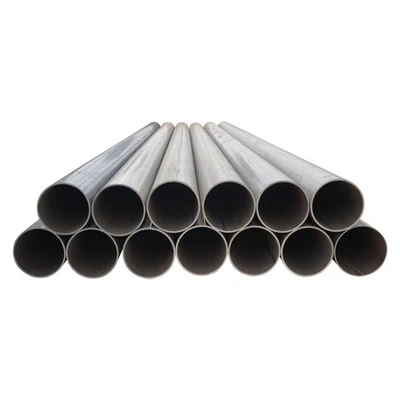
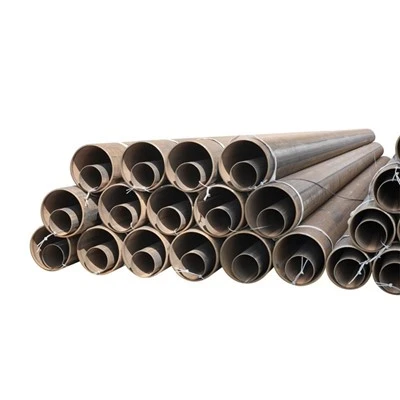
LSAW (Longitudinal Submerged Arc Welded) steel pipe is one of the most widely used products for high-pressure pipeline systems, offshore engineering, structural foundations, and industrial infrastructure. Compared with other welded steel pipes, LSAW pipe offers higher dimensional accuracy, superior weld quality, greater wall thickness capability, and excellent pressure-bearing performance. These advantages make it an ideal solution for projects involving oil and gas transportation, water transmission, marine engineering, and heavy industrial construction.
From a specification perspective, LSAW steel pipe is commonly manufactured in diameters ranging from 406.4 mm to 1422.4 mm, with larger sizes available for special projects. Wall thickness typically ranges from 6 mm to 50 mm, depending on design requirements. Products are produced according to international standards including API 5L, GB/T 9711, ASTM A671, ASTM A672, and EN specifications, with common steel grades such as L245, L360M, X52, X60, X65, and X70.
Compared with ERW steel pipe, LSAW products are better suited for large-diameter, thick-wall, and high-pressure applications. Compared with SSAW steel pipe, they provide better dimensional consistency and higher structural reliability, making them widely specified for long-distance transmission pipelines and critical engineering projects.
| Item | Description |
|---|---|
| Product | LSAW Steel Pipe |
| Manufacturing Method | JCOE / RBE + Double Submerged Arc Welding |
| Raw Material | Hot Rolled Steel Plate |
| Common Standards | API 5L, GB/T 9711, ASTM A671, ASTM A672 |
| Steel Grades | L245, L360M, X52, X60, X65, X70 |
| Diameter Range | Φ406.4–Φ1422.4 mm and above |
| Main Applications | Oil & Gas, Water Transmission, Marine Engineering, Structural Piling |
Understanding these specifications helps engineers choose suitable products while appreciating the manufacturing technologies behind their performance.
How to Choose the Right LSAW Steel Pipe for a Specific Project?
Selecting the proper LSAW steel pipe requires a clear understanding of project requirements, but that decision is only meaningful when the manufacturing process is capable of consistently producing high-quality products. Every stage of production directly influences the mechanical properties, dimensional accuracy, and long-term performance of the finished pipe.
Steel Plate Inspection and Edge Preparation
The production process begins with strict inspection of the steel plate. Chemical composition, mechanical properties, thickness, and internal quality are verified before production starts. Ultrasonic testing is commonly performed to detect internal defects and ensure the plate satisfies project specifications.
After inspection, precision edge milling prepares both sides of the plate to create a uniform welding groove. Accurate edge preparation ensures consistent weld penetration during submerged arc welding and reduces the possibility of welding defects.


Forming, Welding, and Mechanical Expansion
Once the plate has been prepared, it enters the forming stage. Depending on production equipment, manufacturers generally adopt either the JCOE forming process or Roll Bending Expansion (RBE) technology. Both methods gradually bend the steel plate into a cylindrical shape while maintaining excellent dimensional accuracy.
After forming, automatic submerged arc welding completes the internal and external longitudinal weld seams. During welding, the electric arc remains covered beneath a layer of granular flux, protecting the molten metal from atmospheric contamination while producing deep weld penetration and excellent metallurgical properties.
Comprehensive Inspection Guarantees Product Quality
After welding, many LSAW steel pipes undergo mechanical expansion. This process improves roundness, reduces residual stress, and enhances dimensional precision, allowing the finished pipe to better withstand high operating pressures.
Each pipe is then subjected to a comprehensive inspection program, including ultrasonic testing, radiographic examination, hydrostatic pressure testing, dimensional measurement, visual inspection, and, when required, coating inspection. Only products that successfully pass every quality control procedure are approved for shipment.
Why Does the Manufacturing Process Determine Pipeline Performance?
The performance of a pipeline depends not only on steel grade but also on manufacturing precision. High-quality steel can only achieve its intended mechanical properties when every production stage is carefully controlled.
Accurate plate forming minimizes residual deformation and improves roundness, reducing stress concentration during operation. Stable submerged arc welding produces consistent weld quality with excellent toughness and strength, while mechanical expansion further improves dimensional stability. Comprehensive inspection procedures ensure that every weld, dimension, and pressure-bearing characteristic satisfies international standards before delivery.
Modern automated production lines also improve manufacturing consistency across large production batches, making LSAW steel pipe particularly suitable for international pipeline projects requiring thousands of tons of identical products.
How Does Manufacturing Quality Affect Long-Term Project Reliability?
Infrastructure projects are expected to operate safely for decades under varying environmental conditions. Manufacturing quality therefore has a direct influence on maintenance costs, operational safety, and overall project life.
Pipelines manufactured with strict quality control experience fewer welding defects, improved corrosion resistance after coating application, better field welding compatibility, and more stable performance under pressure. High manufacturing consistency also simplifies installation because contractors receive products with uniform dimensions and predictable mechanical properties.
These advantages reduce project risks while improving construction efficiency and long-term operational reliability for pipeline owners.
Project Reference: Kuwait Oil Company Pipeline Project
A representative example demonstrating the importance of advanced manufacturing quality is the Kuwait Oil Company Pipeline Project, where Huayang Steel Pipe supplied approximately 3,400 tons of LSAW steel pipe manufactured according to API 5L PSL2 X52MS, with a specification of 508 × 9.53 mm.

The project required steel pipes capable of transporting crude oil under demanding operating conditions while maintaining excellent weld integrity, dimensional accuracy, and pressure resistance. Through advanced JCOE forming technology, automatic double submerged arc welding, comprehensive non-destructive testing, hydrostatic pressure testing, and strict production management, the supplied products successfully met all technical specifications and supported the reliable construction of the oil transmission system.
This project highlights how manufacturing precision and rigorous quality control directly contribute to the long-term success of major international energy infrastructure projects.