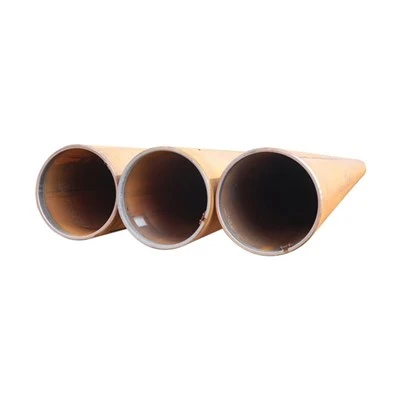
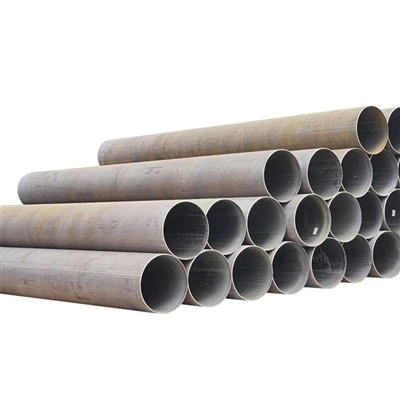
In the vast landscape of steel pipe manufacturing, Longitudinal Submerged Arc Welded (LSAW) pipes and Electric Resistance Welded (ERW) pipes stand out as two prominent types, each with distinct manufacturing processes, characteristics, and optimal applications. While both are crucial for various industrial sectors, understanding their fundamental differences is paramount for engineers, procurement specialists, and project managers to make informed decisions that ensure project integrity, cost-effectiveness, and long-term performance. This article provides a comprehensive comparison of LSAW and ERW steel pipes, highlighting their unique attributes and guiding their appropriate selection. Hebei Huayang Steel Pipe Co., Ltd. manufactures both LSAW and ERW pipes, offering a diverse portfolio to meet the specific demands of global infrastructure projects.
Understanding the Manufacturing Processes
The core differences between LSAW and ERW pipes stem directly from their manufacturing methods:
LSAW (Longitudinal Submerged Arc Welded) Pipes
LSAW pipes are produced from a single steel plate that is first cold-formed into a cylindrical shape. The longitudinal seam is then welded using the Submerged Arc Welding (SAW) process. Common forming methods include:
•JCOE (J-ing, C-ing, O-ing, Expanding): This multi-step process involves pressing the plate edges into a 'J' shape, then 'C' shaping, followed by 'O' shaping, and finally expanding the pipe to achieve precise dimensions and relieve internal stresses. This method is particularly suited for large-diameter, thick-walled pipes.
•UOE (U-ing, O-ing, Expanding): Similar to JCOE, but uses a 'U' press before the 'O' press.
The SAW process involves an arc submerged under a layer of granular flux, which protects the weld pool from atmospheric contamination, resulting in high-quality, deep-penetrating welds with excellent mechanical properties.
ERW (Electric Resistance Welded) Pipes
ERW pipes are manufactured from steel coils (skelp) that are continuously cold-formed into a cylindrical shape. The edges of the strip are then heated to a forging temperature by high-frequency electric current and pressed together to form a welded seam without the use of filler metal. This process is known as High-Frequency Welding (HFW), a subset of ERW. The weld seam is typically normalized or heat-treated to refine the grain structure and improve its mechanical properties.
Key Differences: A Comparative Analysis
|
Feature |
||
|
Manufacturing Process |
Cold-formed from steel plate; longitudinal seam welded by Submerged Arc Welding (SAW) using filler metal. |
Cold-formed from steel coil; longitudinal seam welded by Electric Resistance Welding (ERW/HFW) without filler metal. |
|
Raw Material |
Single steel plate |
Steel coil (skelp) |
|
Diameter Range |
Large diameters (typically 16 inches to 64 inches, or even larger) |
Smaller to medium diameters (typically 0.5 inches to 24 inches) |
|
Wall Thickness |
Thick walls (up to 100mm or more) |
Thinner to medium walls (typically up to 25mm) |
|
Weld Seam |
Single or double longitudinal seam (internal and external welds). High integrity, deep penetration. |
Single longitudinal seam. High-frequency induction heating ensures a strong, clean weld. |
|
Mechanical Properties |
Excellent strength, toughness, and fatigue resistance. Suitable for high-pressure, high-stress applications. |
Good strength and ductility. Suitable for medium-pressure applications. |
|
Applications |
High-pressure oil & gas pipelines, offshore structures, structural piling, large-diameter water transmission, power plants. |
Oil & gas gathering lines, water distribution, structural tubing, mechanical tubing, fire protection, agricultural irrigation. |
|
Cost-Effectiveness |
Higher unit cost due to plate material and complex forming/welding. Best for critical, large-scale projects. |
Generally lower unit cost due higher production speed and coil material. Cost-effective for mid-range applications. |
|
Inspection & Testing |
Extensive NDT (UT, X-ray), hydrostatic testing, mechanical tests (Charpy impact). |
NDT (UT), hydrostatic testing, eddy current, mechanical tests (flattening, bending). |


Applications and Selection Criteria
LSAW Steel Pipes: For the Toughest Demands
LSAW pipes are the go-to choice for projects demanding the highest levels of structural integrity, pressure resistance, and durability. Their ability to handle large diameters and thick walls makes them indispensable for:
•High-Pressure Oil and Gas Transmission: Especially for long-distance pipelines where extreme pressures and volumes are involved.
•Offshore Structures: Such as foundation piles for oil rigs, wind turbines, and marine platforms, where resistance to dynamic loads and corrosive environments is critical.
•Large-Diameter Water Transmission: For municipal water supply and wastewater systems requiring high flow rates and robust infrastructure.
•Heavy-Duty Structural Applications: In bridges, stadiums, and large industrial buildings where massive load-bearing capacity is required.
ERW Steel Pipes: The Versatile and Economical Solution
ERW pipes, particularly those manufactured with HFW technology, offer an excellent balance of performance and cost-effectiveness for a wide range of applications. Their continuous production process makes them ideal for:
•Mid-Range Oil and Gas Gathering Lines: For transporting oil and gas from wells to processing facilities.
•Water Distribution Systems: For municipal and industrial water networks.
•Structural Tubing: In construction for scaffolding, columns, and other structural elements where medium loads are present.
•Mechanical Tubing: For automotive components, furniture, and various machinery parts.
•Fire Protection Systems: For sprinkler systems and fire water mains.
•Agricultural Irrigation: For efficient water transfer in farming.
Making the Informed Procurement Decision
Choosing between LSAW and ERW steel pipes requires a thorough evaluation of several factors:
•Project Requirements: What are the diameter, wall thickness, and pressure ratings needed? Is it a high-stress, critical application?
•Application Environment: Will the pipe be exposed to extreme temperatures, corrosive media, or dynamic loads?
•Budget and Cost-Effectiveness: While LSAW has a higher unit cost, its longevity and performance in critical applications can lead to lower life-cycle costs. ERW offers an economical solution for less demanding scenarios.
•Standards and Specifications: Does the project require compliance with specific industry standards like API 5L PSL2, which often dictates the use of LSAW for certain high-pressure grades?
•Installation Considerations: The weight and handling requirements for large LSAW pipes differ significantly from smaller ERW pipes.
Hebei Huayang Steel Pipe Co., Ltd. prides itself on its ability to manufacture both LSAW and ERW steel pipes to the highest international standards. Our expertise ensures that clients receive the optimal pipe solution tailored to their specific project needs, backed by rigorous quality control and comprehensive technical support. By understanding the nuanced differences between these two pipe types, clients can confidently select the product that best aligns with their engineering demands and strategic objectives.
In conclusion, both LSAW and ERW steel pipes are vital components of global infrastructure, but they serve distinct purposes based on their manufacturing processes and resulting properties. LSAW pipes are the champions of large-diameter, thick-walled, high-pressure, and critical applications, offering unparalleled strength and integrity. ERW pipes provide a versatile, efficient, and cost-effective solution for a broad spectrum of medium-diameter, medium-pressure applications. An informed choice, guided by detailed project requirements and expert consultation, is key to successful and sustainable infrastructure development. Huayang Steel Pipe is committed to being your trusted partner in this decision-making process.