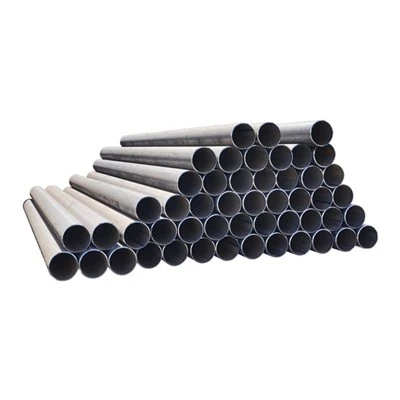
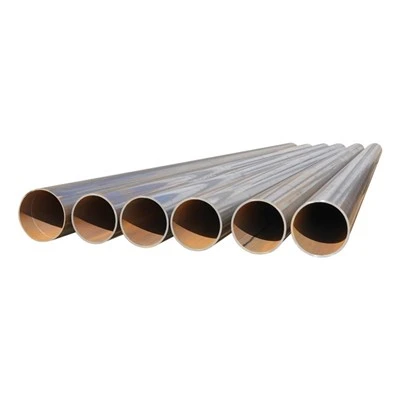
When purchasing LSAW (Longitudinal Submerged Arc Welded) steel pipe for large engineering projects, selecting the correct product specifications is one of the most important steps in ensuring pipeline safety, construction efficiency, and long-term operational reliability. Unlike ordinary steel pipe procurement, LSAW steel pipe projects usually involve strict requirements for diameter, wall thickness, steel grade, manufacturing standard, inspection level, and corrosion protection.
LSAW steel pipe is widely used in oil and gas transmission, LNG facilities, water infrastructure, offshore engineering, mining projects, petrochemical plants, and heavy industrial applications because of its excellent strength, high dimensional accuracy, and superior weld quality. Manufactured from steel plates through JCOE or Roll Bending Expansion (RBE) forming technology and double submerged arc welding, LSAW pipe can meet the requirements of large-diameter and high-pressure pipeline systems.
For international projects, understanding the key specifications before purchasing helps buyers avoid technical risks and select the most suitable product according to actual operating conditions.
| Key Specification | Importance in Purchasing |
|---|---|
| Steel Grade | Determines strength, toughness, and pressure resistance |
| Diameter and Wall Thickness | Influences flow capacity and structural performance |
| Manufacturing Standard | Ensures compliance with project requirements |
| Inspection Requirements | Guarantees product quality and reliability |
| Coating System | Provides corrosion protection and service life |
These five specifications form the foundation of a successful LSAW steel pipe procurement strategy.
LSAW Steel Pipe: In-Depth Product Review
LSAW steel pipe is manufactured by forming steel plates into a cylindrical shape and completing longitudinal weld seams through submerged arc welding technology. Compared with ERW steel pipe and SSAW steel pipe, LSAW products provide excellent performance in large diameters, thick wall sections, and high-pressure applications.
The production process normally includes steel plate inspection, edge milling, forming, internal and external submerged arc welding, mechanical expansion, non-destructive testing, hydrostatic testing, and dimensional inspection. Each step contributes to the final quality and reliability of the pipe.
Because of its manufacturing characteristics, LSAW steel pipe is especially suitable for critical projects where pipeline failure could lead to significant operational and economic consequences. Long-distance oil pipelines, natural gas transmission systems, LNG terminals, and offshore facilities commonly specify LSAW products due to their high safety requirements.
| Item | Description |
| Product | LSAW Steel Pipe |
| Manufacturing Technology | JCOE + Double Submerged Arc Welding |
| Raw Material | Steel Plate |
| Diameter Range | Φ406.4–Φ1422.4 mm and above |
| Wall Thickness | 6–50 mm |
| Standards | API 5L, ASTM A671, ASTM A672, GB/T 9711 |
| Applications | Oil & Gas, Water Transmission, Marine, Industrial Pipelines |
Understanding the product characteristics allows buyers to establish appropriate purchasing requirements before starting supplier evaluation.


What Are the Applications of LSAW Steel Pipes?
The application environment directly influences the specifications required during procurement. Different projects require different combinations of steel grade, wall thickness, inspection level, and coating protection.
Selecting Specifications Based on Industry Requirements
In oil and gas transmission projects, LSAW steel pipe is commonly manufactured according to API 5L requirements. High-strength grades such as X52, X60, X65, and X70 are frequently selected for pipelines operating under high pressure and long-distance transportation conditions.
For water transmission systems, corrosion resistance and hydraulic performance are usually the primary considerations. Internal epoxy coating and external anti-corrosion systems can improve service life while reducing maintenance requirements.
Marine engineering projects, including offshore platforms, port facilities, and bridge foundations, require steel pipes capable of resisting external environmental loads. These applications often require thicker wall sections and advanced coating systems such as 3PE or 3PP.
Industrial facilities such as refineries, LNG plants, chemical factories, and power stations may require LSAW steel pipe manufactured according to ASTM A671 or ASTM A672 specifications depending on service conditions.
Why Project Conditions Determine Specification Selection
The same diameter of LSAW steel pipe may require completely different specifications depending on where it is installed. Operating pressure, temperature, transported medium, soil conditions, marine exposure, and design life all influence final purchasing decisions.
Therefore, buyers should communicate complete project requirements with manufacturers instead of selecting products based only on dimensions or price.
Five Important Specifications to Consider Before Buying LSAW Steel Pipe
The first key factor is steel grade. Steel grade determines mechanical strength, yield strength, tensile strength, and toughness. Choosing the correct grade ensures that the pipeline can safely withstand internal pressure and external loading.
The second factor is diameter and wall thickness. Diameter affects transportation capacity, while wall thickness determines structural strength and pressure resistance. Incorrect selection may influence installation efficiency and operational safety.
The third factor is manufacturing standard. International standards such as API 5L, ASTM A671, ASTM A672, and GB/T 9711 define technical requirements for production, testing, and acceptance. Selecting the correct standard ensures compatibility with project specifications.
The fourth factor is inspection requirements. Large engineering projects often require ultrasonic testing, radiographic testing, hydrostatic pressure testing, impact testing, and third-party inspection to guarantee product reliability.
The fifth factor is surface protection. Coating systems such as FBE, 3PE, 3PP, and internal epoxy coating protect steel pipe against corrosion and extend service life in challenging environments.
How Does Supplier Capability Influence Purchasing Decisions?
Beyond product specifications, supplier capability is another important factor affecting project success. A qualified LSAW steel pipe manufacturer should have advanced production equipment, experienced technical teams, complete testing facilities, and international project experience.
Manufacturers with integrated production systems can control quality from steel plate inspection to final delivery. This approach improves product consistency, reduces communication problems, and ensures stable delivery for large-scale projects.
For overseas projects, export experience is equally important. Proper packaging, transportation planning, documentation support, and communication efficiency all contribute to successful project execution.
Project Reference: Oman Duqm MPD Ammonia Plant Project

A representative example of strict specification selection is the Oman Duqm MPD Ammonia Plant Project, where Huayang Steel Pipe supplied approximately 1,025 tons of LSAW steel pipe manufactured according to ASTM A671 Grade CC60 Class 12 S2, with large diameter specifications ranging from 660 mm to 1625 mm.
As a major refinery and chemical engineering project, the application required steel pipes with excellent mechanical performance, dimensional accuracy, and reliable weld quality. The large-diameter pipeline system placed strict requirements on manufacturing technology, inspection procedures, and material consistency.
Through advanced forming technology, automatic submerged arc welding, comprehensive non-destructive testing, hydrostatic testing, and strict quality management, the supplied LSAW steel pipes successfully satisfied the project's technical specifications.
This project demonstrates that selecting the correct specifications, including manufacturing standard, diameter range, inspection requirements, and quality control level, plays a critical role in ensuring the success of large industrial projects.