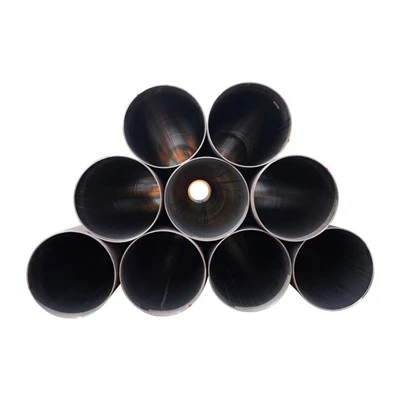
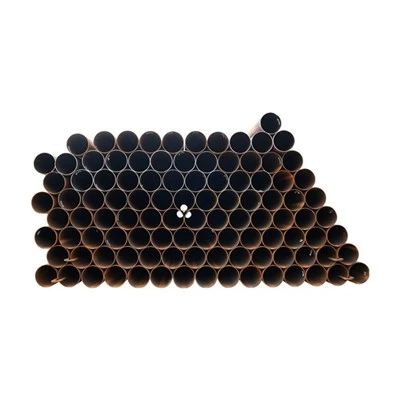
Electric Resistance Welded steel pipes are manufactured through a continuous process in which steel strip is gradually formed into a circular shape and welded along a longitudinal seam. Although the production process involves multiple stages such as forming, welding, sizing, and inspection, the quality of the raw material remains the foundation that determines the overall performance of the final pipe. Steel coils used in ERW pipe production must meet strict requirements in terms of chemical composition, surface condition, dimensional consistency, and mechanical properties. Variations in these factors can significantly influence weld seam strength, dimensional accuracy, mechanical behavior, and the long-term service reliability of the pipeline.
In modern pipe manufacturing, raw material control is considered an essential step in maintaining consistent product quality. Steel producers and pipe manufacturers work closely to ensure that coils delivered to the production line comply with established standards and specifications.
Influence of Raw Material Characteristics on ERW Pipe Manufacturing
Key Raw Material Quality Parameters
| Raw Material Factor | Typical Requirement | Influence on Production |
|---|---|---|
| Chemical composition | Controlled carbon and alloy levels | Ensures weldability and strength |
| Surface condition | Free from cracks and heavy defects | Maintains stable welding |
| Thickness uniformity | Consistent thickness across strip | Supports dimensional accuracy |
| Mechanical consistency | Uniform strength and ductility | Enables smooth forming process |
The chemical composition of steel coils directly affects the welding and mechanical performance of ERW pipes. Carbon is the primary strengthening element in carbon steel, but excessive carbon content may reduce weldability and increase the risk of cracking in the heat affected zone during welding. Controlled carbon levels help maintain a balance between strength and ductility, allowing the steel strip to be formed and welded without structural damage.
Surface condition also plays an important role in the production process. Surface defects such as cracks, inclusions, or heavy oxide scale can interfere with the high frequency welding process. Since the weld seam is formed directly from the edges of the steel strip, defects located near these edges may propagate into the weld zone and weaken the final joint.
Uniform thickness of the steel coil is essential for maintaining stable forming conditions. During ERW pipe production, the strip passes through a series of forming rolls that gradually bend the material into a circular cross section. If the thickness varies across the strip width or along the coil length, the forming pressure applied by the rolls may become uneven. Such variations can lead to ovality, wall thickness differences, or dimensional deviations in the finished pipe.
Mechanical consistency across the coil is equally important. If the yield strength or ductility varies significantly within the same coil, the steel may deform unevenly during forming. This can cause instability in the forming process and result in pipes that do not meet dimensional tolerance requirements.


Impact on Weld Seam Strength and Structural Integrity
Relationship Between Raw Material Quality and Weld Performance
| Raw Material Issue | Effect on Welding | Potential Result in Pipe |
|---|---|---|
| High carbon content | Hard heat affected zone | Increased crack risk |
| Surface inclusions | Interrupts metallurgical bonding | Weak weld seam |
| Edge defects | Misalignment during welding | Incomplete fusion |
| Thickness variation | Uneven heating and pressure | Inconsistent weld structure |
The weld seam is one of the most critical structural areas in an ERW pipe. Because the welding process relies on electrical resistance heating and mechanical pressure rather than filler metal, the metallurgical properties of the base material determine how effectively the edges bond together.
When carbon content exceeds recommended limits, the steel near the weld seam may harden excessively during cooling. This can produce brittle microstructures that are more susceptible to cracking under stress. Maintaining appropriate chemical composition helps ensure that the weld seam retains sufficient toughness and resistance to fracture.
Surface inclusions or impurities present in the steel can also interfere with weld seam formation. During welding, the strip edges are heated to a plastic state and compressed together. If non metallic inclusions are present at the interface, they may prevent complete bonding between the edges. These defects can remain hidden within the weld seam and later become failure points when the pipe is subjected to internal pressure.
Edge condition is another critical factor affecting weld quality. Burrs, waviness, or irregular trimming may prevent the edges from aligning perfectly during welding. Even small misalignments can lead to uneven pressure distribution during the forging stage of the welding process, resulting in inconsistent weld seam geometry.
Thickness variation within the steel coil may also influence welding behavior. Different thickness sections may heat at slightly different rates under high frequency current, which can cause variations in weld penetration and microstructure.
Effects on Dimensional Accuracy and Mechanical Properties
Raw material quality not only affects weld seam strength but also plays a significant role in determining the dimensional accuracy of ERW pipes. Pipes used in infrastructure systems must meet strict tolerances for diameter, roundness, and wall thickness in order to ensure proper installation and reliable operation.
When steel coils have uniform thickness and stable mechanical properties, the forming process becomes more predictable. The forming rolls can gradually bend the strip into a circular shape while maintaining consistent geometry. The resulting pipes exhibit good roundness, straightness, and wall thickness distribution.
If the raw material contains irregularities, the forming process may become unstable. For example, localized variations in mechanical strength may cause certain sections of the strip to resist bending more than others. This uneven deformation can produce pipe ovality or dimensional distortion that may complicate pipeline assembly.
Mechanical properties of the finished pipe are also influenced by the quality of the steel coil. Yield strength, tensile strength, and elongation depend on both the chemical composition and the rolling process used to produce the steel. Consistent raw material quality ensures that pipes meet the mechanical performance requirements specified by international standards.
Influence on Long Term Pipeline Reliability
The long term reliability of ERW pipelines is closely related to the quality of the raw materials used during manufacturing. Pipes installed in infrastructure systems often operate under varying loads, temperature changes, and environmental conditions for many years.
High quality raw materials help ensure strong weld seams, uniform microstructure, and stable mechanical properties throughout the pipe body. These characteristics contribute to improved resistance to fatigue, pressure fluctuations, and environmental stress.
If raw material quality is inconsistent, hidden defects may remain within the pipe structure. These defects may not immediately affect the pipe during installation but can gradually develop under repeated loading or corrosion exposure. Over time, such weaknesses may lead to leakage, deformation, or structural failure.
For this reason, ERW pipe manufacturers implement strict raw material inspection procedures before production begins. Steel coils are carefully evaluated for chemical composition, surface condition, dimensional accuracy, and mechanical properties to ensure that they meet the required specifications.
Importance of Raw Material Control in Modern Pipe Production
In modern ERW pipe manufacturing, advanced forming equipment and automated welding systems provide high production efficiency and precision. However, even the most advanced technology cannot compensate for poor raw material quality. The performance of the final pipe ultimately depends on the characteristics of the steel used at the beginning of the manufacturing process.
By selecting high quality steel coils and maintaining strict quality control procedures, manufacturers can produce ERW pipes with reliable weld seams, precise dimensions, and consistent mechanical performance. These factors ensure that ERW pipes remain a dependable solution for pipeline systems, structural engineering projects, and industrial infrastructure worldwide.