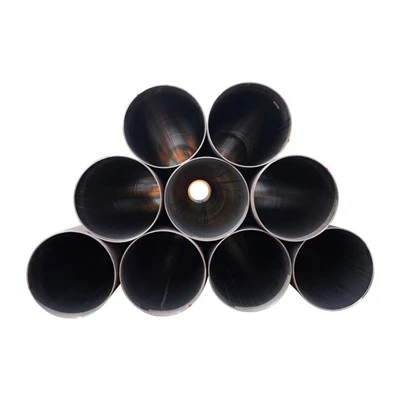
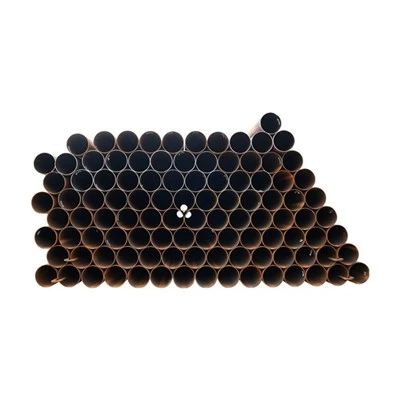
Longitudinal Submerged Arc Welded (LSAW) steel pipes are the backbone of critical infrastructure projects worldwide, particularly in high-pressure oil and gas transmission, and large-scale structural applications. The integrity and reliability of these pipes are non-negotiable, as any failure can lead to catastrophic environmental, economic, and safety consequences. Therefore, stringent quality control (QC) and advanced non-destructive testing (NDT) are not merely regulatory requirements but fundamental pillars of LSAW pipe manufacturing. Hebei Huayang Steel Pipe Co., Ltd., a leader in producing high-quality LSAW pipes, is dedicated to upholding the highest standards through a meticulous, multi-stage quality assurance program.
The Imperative of Quality Control in LSAW Pipe Manufacturing
The demanding environments in which LSAW pipes operate necessitate an uncompromising approach to quality. These pipes are often subjected to extreme pressures, corrosive media, varying temperatures, and dynamic stresses. Any defect, no matter how minor, can propagate over time, compromising the pipe's structural integrity and leading to premature failure. Effective quality control ensures that every LSAW pipe manufactured meets or exceeds the specified mechanical properties, dimensional tolerances, and weld integrity requirements.
At Hebei Huayang Steel Pipe Co., Ltd., our quality control philosophy is integrated into every phase of production, from raw material procurement to final product delivery. This holistic approach minimizes risks, enhances product performance, and ultimately provides our clients with the confidence that their projects are built with the most reliable materials available. Our commitment extends beyond mere compliance; we strive for continuous improvement in our QC processes to anticipate and address emerging industry challenges.
Key Stages of Quality Control in LSAW Production
The manufacturing of LSAW pipes involves several critical stages, each with its own set of rigorous quality checks to ensure a flawless end product.
Raw Material Inspection
The journey to a high-quality LSAW pipe begins with the selection and inspection of raw steel plates. Incoming materials undergo thorough chemical analysis, mechanical property testing (tensile strength, yield strength, impact toughness), and ultrasonic inspection to detect any internal laminations or defects. Only plates that meet our stringent specifications are approved for production.
Plate Edge Preparation and Forming
Before forming, the edges of the steel plates are precisely milled to ensure optimal weld preparation. During the forming process, the plates are gradually bent into a cylindrical shape. Continuous monitoring of the forming parameters, including curvature and alignment, is crucial to achieve the correct pipe geometry and minimize internal stresses.
Welding Process Control
The submerged arc welding (SAW) process is the heart of LSAW pipe manufacturing. Critical welding parameters such as current, voltage, travel speed, and flux composition are continuously monitored and controlled. Both internal and external welds are performed, and visual inspections are conducted after each pass to identify any surface imperfections. The use of advanced welding equipment and skilled operators ensures consistent weld quality.
Mechanical Expansion and Sizing
After welding, LSAW pipes typically undergo mechanical expansion. This process not only precisely sizes the pipe to its final dimensions but also improves its roundness and straightness, while simultaneously relieving residual stresses from welding. Dimensional checks, including outer diameter, wall thickness, and length, are performed rigorously at this stage.
Advanced Non-Destructive Testing (NDT) Techniques
Non-destructive testing plays a pivotal role in verifying the internal and external integrity of LSAW pipes without causing damage to the material. Hebei Huayang Steel Pipe Co., Ltd. employs a suite of advanced NDT methods to ensure comprehensive defect detection.
Ultrasonic Testing (UT)
UT is used to detect internal flaws, such as cracks, laminations, and inclusions, in both the weld seam and the pipe body. High-frequency sound waves are transmitted through the pipe, and any reflections indicate the presence of discontinuities. Our automated UT systems provide 100% coverage of the weld and a significant portion of the pipe body.
X-ray Radiography
X-ray inspection provides a visual record of the internal structure of the weld seam, allowing for the detection of defects like porosity, slag inclusions, and lack of fusion. This method is particularly effective for identifying volumetric flaws that might not be easily detected by other techniques.
Magnetic Particle Inspection (MPI)
MPI is primarily used to detect surface and near-surface discontinuities in ferromagnetic materials. A magnetic field is applied to the pipe, and magnetic particles are spread over the surface. Defects cause magnetic flux leakage, attracting the particles and making the flaws visible. This is often used on the weld ends and bevels.
Hydrostatic Testing
Hydrostatic testing is a mandatory final test for pressure-containing pipes. The pipe is filled with water and pressurized to a level significantly higher than its maximum operating pressure. This test verifies the pipe's ability to withstand internal pressure and confirms the absence of leaks, ensuring the pipe's fitness for service.


Hebei Huayang's Commitment to LSAW Quality
Hebei Huayang Steel Pipe Co., Ltd. is committed to delivering LSAW steel pipes that embody superior quality and reliability. Our state-of-the-art CNAS-certified laboratory conducts comprehensive physical and chemical analyses, ensuring material compliance. We hold multiple international certifications, including ISO 9001, ISO 14001, ISO 45001, API 5L, and API 2B, which attest to our adherence to global quality management systems and product standards. Our dedicated team of quality professionals and advanced testing equipment ensure that every LSAW pipe leaving our facility is of the highest caliber.
Key Quality Control and NDT Methods for LSAW Pipes
|
Inspection Stage |
Method |
Purpose |
Standards/Certifications |
|
Raw Material |
Chemical Analysis, Mechanical Testing, UT |
Verify material composition, strength, and internal integrity |
ISO 9001, API 5L |
|
In-Process |
Visual Inspection, Dimensional Checks |
Monitor forming, welding alignment, and initial weld quality |
ISO 9001 |
|
Weld Seam |
Ultrasonic Testing (UT), X-ray Radiography, MPI |
Detect internal/external weld flaws (cracks, porosity, inclusions) |
API 5L, EN 10217 |
|
Finished Pipe |
Hydrostatic Testing, Dimensional Checks, Visual Inspection |
Confirm pressure integrity, final dimensions, and surface quality |
API 5L, ASTM A671/A672 |
|
Overall System |
ISO 9001, ISO 14001, ISO 45001, CNAS |
Comprehensive quality, environmental, and occupational health & safety management |
Multiple International Standards |
By choosing Hebei Huayang Steel Pipe Co., Ltd., you are partnering with a manufacturer that places quality at the forefront of its operations. Our rigorous QC and NDT processes guarantee that our LSAW steel pipes provide the strength, durability, and peace of mind your critical projects demand. Contact us today to learn more about our LSAW pipe offerings and our unwavering commitment to excellence.