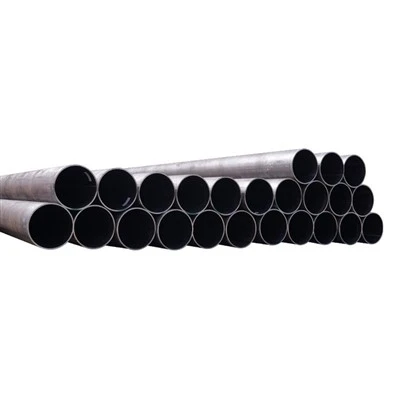
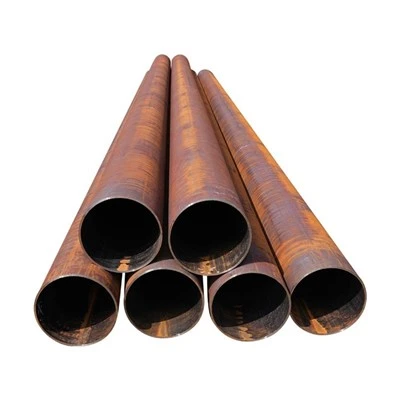
Importance of Connection Performance in Carbon Steel Pipe Structures
In steel structure buildings, the overall structural behavior is not governed solely by the strength of individual members, but by how effectively those members are connected. For systems utilizing carbon steel pipes as primary structural elements, connection design becomes a decisive factor influencing load transfer efficiency, structural stiffness, fatigue resistance, and long-term safety. As carbon steel pipes increasingly replace traditional open sections in long-span and high-load buildings, engineers must address the unique mechanical and geometric characteristics introduced by circular hollow members.
Unlike flat-sided profiles, carbon steel pipes present a continuous curved surface, which fundamentally changes the way forces are introduced, distributed, and transferred at joints. Whether used in columns, trusses, arches, or space frames, the performance of carbon steel pipe connections directly determines whether the inherent advantages of pipe geometry can be fully realized in steel structure applications.
Load Transfer Mechanisms in Carbon Steel Pipe Connections
Stress Flow Characteristics in Circular Members
Carbon steel pipes exhibit a highly uniform stress distribution along their circumference, which is one of their most valuable structural attributes. At connection zones, this uniformity can either be preserved or disrupted depending on joint configuration. Poorly designed connections may introduce localized stress concentrations that negate the advantages of the pipe section and become critical failure points.
In steel buildings using carbon steel pipe frameworks, axial forces, bending moments, and shear forces often act simultaneously at joints. Circular sections allow these combined forces to flow smoothly when connections are properly aligned with the pipe axis. This behavior is particularly beneficial in large-span roof structures, where load paths are complex and continuously changing under variable service conditions.
Influence of Wall Thickness and Diameter
The wall thickness and diameter of carbon steel pipes significantly influence connection performance. Thicker-walled pipes, such as LSAW carbon steel pipes produced from heavy plates, provide greater flexibility in joint design. They allow for deeper weld penetration, improved stress diffusion, and higher local bearing capacity at connection interfaces.
In contrast, thin-walled pipes may require additional reinforcement at joints to prevent local deformation or ovalization. As a result, structural designers often favor LSAW carbon steel pipes for major load-bearing connections in steel buildings, particularly where high axial forces or dynamic loads are expected.
Welded Connections for Carbon Steel Pipe Structures
Full-Penetration Welded Joints
Welding remains the most widely used method for connecting carbon steel pipes in steel structure buildings. Full-penetration welds are commonly applied at critical joints to ensure that the connection strength matches or exceeds the strength of the connected members. For carbon steel pipes, especially those with large diameters, achieving consistent weld quality is essential to maintain structural continuity.
LSAW carbon steel pipes offer a distinct advantage in welded connections due to their controlled wall thickness and stable material properties. The longitudinal weld seam of the pipe is typically positioned away from the highest stress zones at joints, allowing the circumferential connection welds to perform independently without interference from the pipe manufacturing seam.
Weld Fatigue and Long-Term Performance
In structures subjected to cyclic loading, such as stadium roofs or industrial buildings with moving equipment, weld fatigue becomes a key design consideration. Carbon steel pipes demonstrate favorable fatigue behavior when weld geometry is smooth and free from abrupt transitions. The circular shape reduces stress concentration factors at welded joints compared to angular sections.
The table below presents a general comparison of fatigue performance between carbon steel pipe joints and joints in open steel sections.
| Structural Section Type | Typical Joint Geometry | Stress Concentration Level | Fatigue Resistance | Common Applications |
|---|---|---|---|---|
| Carbon Steel Pipe | Circular welded joint | Low | High | Long-span roofs, trusses |
| H-Beam | Flange-to-web weld | Medium to High | Medium | Frames, platforms |
| I-Beam | Web-flange junction | High | Lower | Floor systems |
| Angle Section | Fillet welds | High | Lower | Secondary bracing |
This fatigue advantage makes carbon steel pipes particularly suitable for steel structures with long service lives and fluctuating load conditions.
Bolted and Hybrid Connections in Carbon Steel Pipe Systems
Flanged Pipe Connections
Bolted connections are frequently employed in steel buildings where modular construction, transportation constraints, or future disassembly are important. Carbon steel pipes can be equipped with welded flanges at their ends, creating a flat interface for bolted assembly. This method allows for precise alignment and rapid on-site installation while maintaining reliable load transfer.
The uniform thickness of LSAW carbon steel pipes simplifies flange design by ensuring consistent contact pressure across the bolted surface. This reduces the risk of bolt loosening under dynamic loads and improves long-term joint stability.
Hybrid Welded-Bolted Joints
In many steel structure buildings, hybrid connection systems combining welding and bolting are adopted. For example, carbon steel pipe members may be welded to node plates in the factory and bolted together on site. This approach balances fabrication quality with construction efficiency, particularly in large-scale projects where on-site welding conditions may be difficult to control.
Hybrid connections also allow engineers to manage load paths more effectively by assigning primary load transfer to welded interfaces while using bolts for positioning and secondary restraint.
Node Design in Space Frames and Truss Systems
Spherical and Plate-Based Nodes
Space frame and truss systems commonly use carbon steel pipes as chords and web members due to their excellent axial performance. At the intersections of multiple pipe members, node design becomes highly complex. Spherical nodes and thick plate nodes are often employed to accommodate multiple connections while maintaining geometric precision.
Carbon steel pipes connect naturally to spherical nodes through circumferential welds that distribute forces evenly. This type of node design minimizes eccentricity and reduces secondary bending moments, enhancing overall structural efficiency.
Local Reinforcement at Connection Zones
In highly loaded nodes, local reinforcement may be introduced to prevent excessive deformation of the carbon steel pipe wall. Reinforcement techniques include internal stiffener rings, external collars, or increased wall thickness in connection regions. LSAW carbon steel pipes allow such reinforcements to be integrated more easily due to their plate-based manufacturing process.
The table below outlines typical node reinforcement approaches used with carbon steel pipe structures.
| Node Type | Reinforcement Method | Structural Benefit | Typical Application |
|---|---|---|---|
| Plate Node | External collar | Improved load diffusion | Industrial frames |
| Spherical Node | Thickened pipe end | Reduced stress concentration | Space frames |
| Flanged Node | Internal stiffener ring | Enhanced bearing capacity | Modular buildings |
| Welded Node | Increased wall thickness | Improved fatigue resistance | Long-span roofs |


Connection Behavior Under Environmental and Dynamic Loads
Seismic Performance of Pipe Connections
In seismic design, the ability of connections to undergo controlled deformation without brittle failure is critical. Carbon steel pipe connections demonstrate strong seismic performance due to the ductility of the material and the absence of sharp corners. When designed according to capacity-based principles, these connections can dissipate energy effectively through plastic deformation.
LSAW carbon steel pipes, manufactured with strict control over chemical composition and mechanical properties, often meet higher toughness requirements. This enhances the reliability of welded joints under seismic loading, especially in cold climates or high-seismic zones.
Thermal Expansion and Structural Compatibility
Large steel buildings experience significant thermal movement, particularly in long-span roofs exposed to solar radiation. Carbon steel pipe connections accommodate thermal expansion more uniformly than connections involving open sections. The symmetrical geometry reduces differential movement within the joint, lowering the risk of cracking or bolt fatigue over time.
Engineering Implications for Steel Structure Design
The increasing use of carbon steel pipes in steel buildings has reshaped traditional connection design philosophies. Engineers must move beyond conventional beam-column joint concepts and adopt connection strategies that fully leverage the advantages of circular hollow sections. Properly designed carbon steel pipe connections enhance structural efficiency, extend service life, and improve constructability.
LSAW carbon steel pipes, with their superior dimensional control and mechanical reliability, provide a robust foundation for advanced connection systems. Their adaptability to welded, bolted, and hybrid joints makes them a versatile choice for modern steel structure buildings that demand both performance and flexibility.
As steel structures continue to evolve toward larger spans and more complex geometries, connection design will remain a critical area of innovation. Carbon steel pipes, supported by mature manufacturing technologies and well-established design standards, are positioned to play an increasingly central role in the future of structural steel construction.