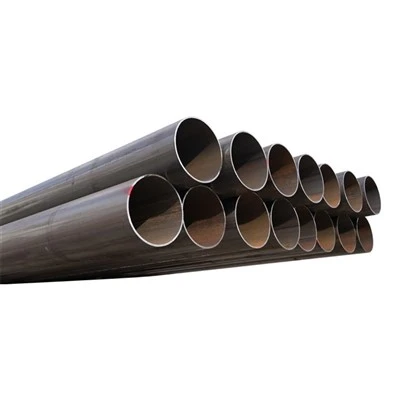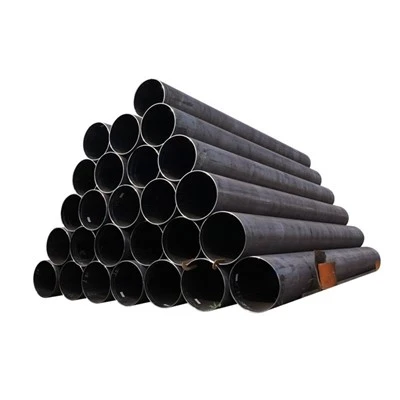
Onshore pipelines represent the backbone of global energy and industrial transportation systems. From crude oil and natural gas transmission to refined products, water, and industrial fluids, onshore pipeline networks extend across deserts, plains, agricultural land, and urban fringes. At the core of these systems, carbon steel pipes remain the most widely specified material due to their mechanical reliability, adaptability to construction environments, and long-term economic efficiency.
Compared with offshore pipelines, onshore pipelines are exposed to a broader range of geological, climatic, and human-related factors. These conditions place specific technical demands on pipe material selection, manufacturing quality, and construction control, all of which directly influence project safety and lifecycle performance.
Engineering Characteristics of Onshore Pipeline Systems
Operating Conditions and Environmental Exposure
Onshore pipelines operate under diverse conditions that vary significantly along the pipeline route. Internal pressures can range from moderate to high depending on the transported medium, while external loads arise from soil weight, traffic, agricultural activity, and seasonal temperature changes. Carbon steel pipes provide the necessary strength to resist internal pressure while maintaining sufficient ductility to accommodate external deformation without brittle failure.
In many onshore projects, pipelines traverse seismic zones, soft soils, or areas prone to ground settlement. Under such circumstances, the ability of carbon steel to undergo controlled plastic deformation becomes a key engineering advantage.
Why Carbon Steel Pipes Are Preferred for Onshore Pipelines
Mechanical Performance and Material Stability
Carbon steel pipes used in onshore pipelines are typically produced in accordance with standards such as API 5L, EN 10208, or ISO 3183. These standards define not only chemical composition and mechanical strength, but also toughness, weldability, and dimensional tolerances.
The predictable behavior of carbon steel under stress simplifies pipeline design calculations and reduces uncertainty during construction and operation. This stability allows engineers to optimize wall thickness and steel grade without resorting to overly conservative safety margins, which is particularly important in long-distance onshore pipelines where material volume has a significant cost impact.
Manufacturing Methods and Their Application in Onshore Projects
Selection Based on Diameter and Pressure
Onshore pipelines utilize carbon steel pipes manufactured through different processes depending on project requirements. ERW pipes are commonly applied in small to medium diameter pipelines where wall thickness and operating pressure remain within controlled limits. LSAW pipes are often selected for large-diameter, high-pressure transmission pipelines due to their superior wall thickness capability and enhanced weld inspection access. SSAW pipes may be applied in certain onshore projects where standards allow and operating conditions are less severe.
The choice of manufacturing method is not solely technical but also logistical. Onshore projects often involve long transportation distances from mill to site, making dimensional consistency and coating integrity critical considerations.
Table 1: Common Carbon Steel Pipe Applications in Onshore Pipelines
| Pipeline Type | Typical Diameter Range | Common Manufacturing Method | Engineering Rationale |
|---|---|---|---|
| Gathering Lines | Small to medium | ERW | Cost efficiency and availability |
| Transmission Lines | Medium to large | LSAW | High pressure and wall thickness |
| Distribution Lines | Small | ERW | Ease of installation |
| Industrial Onshore Lines | Varies | ERW or LSAW | Process-driven requirements |
This alignment between manufacturing method and application helps EPC contractors control both technical risk and project cost.
Construction Practices in Onshore Pipeline Installation
Welding, Trenching, and Backfilling
Onshore pipeline construction typically involves trenching, pipe stringing, field welding, non-destructive testing, coating repair, lowering-in, and backfilling. Carbon steel pipes are well suited to this sequence due to their consistent weldability and tolerance to handling stress.
Field girth welding is one of the most critical activities in onshore pipeline projects. Carbon steel's compatibility with established welding procedures allows for stable weld quality even under variable site conditions. After welding, joints are inspected using radiographic or ultrasonic methods to ensure compliance with project specifications.


Corrosion Control in Onshore Environments
External Corrosion Protection Systems
Onshore pipelines are exposed to soil environments with varying moisture levels, chemical composition, and resistivity. Carbon steel pipes rely on external coatings such as FBE, 2LPE, or 3LPE to isolate the steel from corrosive soil conditions. These coatings are supplemented by cathodic protection systems that further reduce corrosion risk during operation.
The compatibility of carbon steel with both coating systems and cathodic protection has been proven over decades of onshore pipeline operation, making it a low-risk choice from an asset integrity perspective.
Long-Term Integrity and Maintenance Considerations
Inspection and Repair Compatibility
Over the operational life of an onshore pipeline, inspection and maintenance activities are unavoidable. Carbon steel pipelines are compatible with a wide range of inspection technologies, including inline inspection tools, external surveys, and localized excavation for repair.
When defects or corrosion are detected, carbon steel allows for standardized repair methods such as sleeve installation or section replacement. This maintainability is a key reason why asset owners continue to favor carbon steel over alternative materials for onshore pipelines.
Table 2: Typical Integrity Concerns and Carbon Steel Responses in Onshore Pipelines
| Integrity Concern | Onshore Risk Scenario | Carbon Steel Performance |
|---|---|---|
| Soil Corrosion | Moist or aggressive soil | Coating and CP compatibility |
| Ground Movement | Settlement or seismic activity | Ductile deformation capacity |
| Mechanical Damage | Third-party interference | Adequate wall thickness |
| Pressure Cycling | Start-stop operations | Fatigue resistance |
| Aging Infrastructure | Long service life | Proven inspection and repair methods |
These characteristics support predictable long-term operation and manageable maintenance strategies.
EPC and Owner Perspectives on Material Choice
Balancing Constructability and Lifecycle Cost
For EPC contractors, onshore pipeline projects require materials that can be installed efficiently while meeting strict safety and quality standards. Carbon steel pipes offer familiarity in construction methods, predictable supply chains, and compliance with global codes.
From an owner's perspective, lifecycle cost is often more important than initial procurement price. Carbon steel pipelines, when properly designed and protected, deliver decades of service with manageable inspection and maintenance costs. This balance between upfront investment and long-term reliability reinforces carbon steel's position as the default choice for onshore pipelines.
Conclusion: Carbon Steel Pipes as the Foundation of Onshore Pipelines
Onshore pipeline systems operate in complex environments that demand robust, adaptable, and well-understood materials. Carbon steel pipes continue to meet these demands through a combination of mechanical strength, ductility, weldability, and long-term integrity performance.
For manufacturers such as Huayang Steel Pipe, supplying carbon steel pipes for onshore pipeline projects means supporting not only construction needs, but also the long-term safety and reliability of critical infrastructure. As onshore pipeline networks continue to expand and age, carbon steel pipes will remain a fundamental component of modern energy and industrial transportation systems.