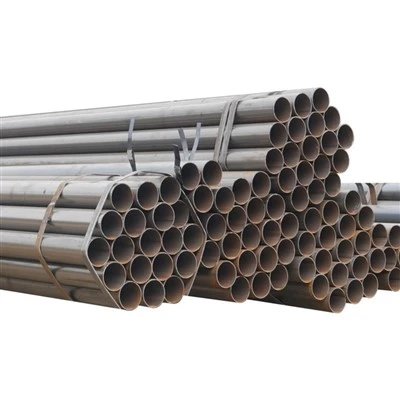
Why Do Modern Water Infrastructure Projects Require Large-Diameter Pipelines?
Population growth, urban expansion, and industrial development have significantly increased the demand for reliable water transportation systems. Modern water infrastructure projects often involve transferring large volumes of water across long distances from reservoirs, rivers, desalination plants, or treatment facilities to cities and industrial zones.
These projects require large-diameter pipelines capable of maintaining stable flow rates while ensuring long-term operational reliability. Because water transmission systems are expected to operate continuously for decades, selecting the right pipe material is one of the most important engineering decisions.
LSAW steel pipe has become a preferred solution for many large-scale water transmission projects due to its strength, dimensional precision, and ability to accommodate large diameters. Manufactured from steel plates through advanced submerged arc welding technology, LSAW pipes provide the performance needed for demanding infrastructure applications.
Their combination of structural reliability and engineering flexibility makes them well suited for major water transportation systems worldwide.
| Water Infrastructure Requirement | LSAW Steel Pipe Advantage |
|---|---|
| Large Water Volumes | Large-diameter production capability |
| Long Transmission Distances | High structural stability |
| Underground Installation | Compatible with anti-corrosion systems |
| Pumping Station Connections | Excellent pressure resistance |
| Long Service Life | Durable steel construction |
| Project Reliability | Precise manufacturing quality |
These features contribute to the growing use of LSAW steel pipes in water infrastructure development.


Why Are Large Diameters Important in Water Transmission?
One of the key advantages of LSAW steel pipes is their ability to be manufactured in large diameters while maintaining structural integrity and dimensional accuracy.
Large-diameter pipelines allow greater water flow capacity, reducing the need for multiple parallel lines and improving overall transportation efficiency. This is particularly important in regional water transfer projects where enormous volumes of water must be delivered daily.
LSAW manufacturing processes support the production of pipes with substantial diameters and wall thicknesses, making them suitable for high-capacity transmission systems.
The precise geometry of LSAW pipes also helps maintain efficient hydraulic performance, supporting smooth water flow throughout the pipeline network.
As water demand continues increasing globally, the importance of high-capacity pipeline infrastructure is expected to grow even further.
How Do LSAW Pipes Perform in Challenging Installation Conditions?
Water transmission pipelines often pass through difficult terrain, including mountainous regions, deserts, river crossings, and densely populated urban areas.
These conditions require pipe materials capable of withstanding both operational loads and installation stresses. LSAW steel pipes provide excellent mechanical strength, allowing them to perform reliably under a wide range of environmental conditions.
The high-quality steel plate used in LSAW manufacturing contributes to superior toughness and structural stability. This helps reduce the risk of deformation during transportation, installation, and long-term operation.
For buried pipelines, advanced anti-corrosion systems further enhance durability and help protect against environmental degradation.
These advantages make LSAW steel pipes particularly attractive for complex water infrastructure projects.
Why Is Corrosion Protection Critical for Water Pipelines?
Water transmission systems often operate underground or in environments where moisture exposure is unavoidable. Without effective protection, corrosion can gradually weaken the pipe structure and increase maintenance requirements.
LSAW steel pipes are commonly supplied with anti-corrosion coatings such as 3PE, FBE, and internal epoxy linings. These systems help protect both the external and internal surfaces of the pipeline.
Internal coatings can improve flow efficiency while preventing corrosion caused by transported water. External coatings provide protection against soil moisture, chemicals, and environmental exposure.
Together, these protective systems help maximize service life and improve the overall reliability of water transmission infrastructure.
How Does Huayang Steel Pipe Support Water Infrastructure Projects?
Huayang Steel Pipe manufactures LSAW steel pipes for water transportation, oil and gas transmission, offshore engineering, and municipal infrastructure projects.
The company offers customized production according to project requirements, including pipe diameter, wall thickness, steel grade, and anti-corrosion specifications. Products are manufactured in accordance with international standards such as API 5L, ASTM, EN, and ISO.
Comprehensive quality control procedures ensure reliable product performance throughout the manufacturing process. From steel plate inspection to final coating application, every stage is carefully monitored to meet engineering requirements.
Huayang's LSAW steel pipes have been supplied to numerous infrastructure projects worldwide, helping support efficient and sustainable water transportation systems.
Conclusion
LSAW steel pipe plays a vital role in modern large-diameter water transmission projects. Its strength, dimensional precision, and compatibility with advanced anti-corrosion systems make it an ideal solution for transporting large volumes of water safely and efficiently.
As global investment in water infrastructure continues to increase, LSAW steel pipes will remain a critical component of reliable and sustainable water transportation networks.