Why Do Industrial Fluid Systems Require High-Quality Steel Pipes?
Industrial facilities rely heavily on fluid transportation systems for daily operations. Water, steam, compressed air, chemicals, cooling fluids, and industrial gases must all be transported safely and efficiently through complex pipeline networks. In industries such as petrochemical processing, manufacturing, power generation, and municipal engineering, pipeline reliability directly affects production stability and operational safety.
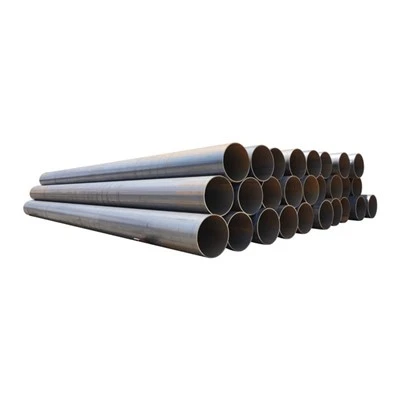
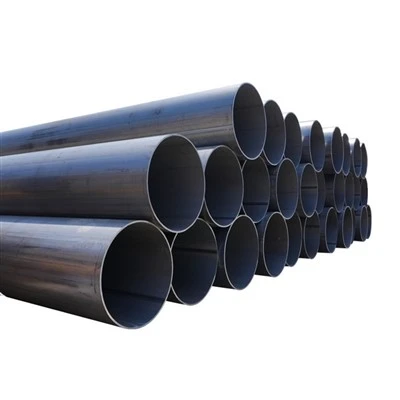
ERW steel pipe has become one of the most commonly used materials in industrial fluid transportation systems because of its stable mechanical properties, dimensional precision, and manufacturing efficiency. Produced through high-frequency electric resistance welding, ERW pipes provide a reliable weld seam while allowing high-speed large-scale production.
Modern industrial projects often require a balance between operational durability and project cost management. ERW steel pipes provide an effective solution for these requirements while remaining compatible with various anti-corrosion and surface treatment technologies.
| Feature | ERW Steel Pipe Performance |
|---|---|
| Weld Type | High-frequency electric resistance welding |
| Surface Finish | Smooth and consistent |
| Dimensional Accuracy | High |
| Steel Grades | ASTM, API, EN standard grades |
| Corrosion Protection | 3PE, FBE, galvanized |
| Industrial Applications | Water, gas, steam, chemicals |
These properties help ERW steel pipes perform efficiently in industrial transportation systems.
How Does ERW Pipe Improve Fluid Transportation Efficiency?
One important advantage of ERW steel pipe is its smooth internal surface. In fluid transportation systems, smoother pipe walls help reduce friction resistance during operation, improving overall transportation efficiency and reducing energy consumption in pumping systems.
Dimensional consistency also plays a major role in industrial pipeline performance. Accurate pipe diameter and wall thickness help maintain stable pressure control throughout the system while simplifying pipeline installation and welding operations.
In large industrial facilities, complex piping systems may extend across long distances and involve multiple operating conditions. Reliable pipe geometry and weld seam stability are therefore essential for maintaining safe and efficient operation over time.
As industrial systems become increasingly automated and energy-efficient, the demand for precise and reliable pipeline materials continues growing worldwide.


Why Is Corrosion Resistance Important in Industrial Pipelines?
Industrial pipeline systems are frequently exposed to humid environments, chemicals, temperature changes, and corrosive substances. Without proper corrosion protection, steel pipes may experience rust, wall thinning, leakage, and operational failure over long service periods.
To address these challenges, ERW steel pipes are often supplied with external anti-corrosion systems such as 3PE coating, FBE coating, and galvanization. These protective layers help isolate the steel surface from corrosive environments while improving overall durability.
For underground industrial pipelines, anti-corrosion protection is especially important because soil moisture and underground chemicals can significantly accelerate corrosion rates. Proper coating systems help extend pipeline service life and reduce maintenance costs for industrial operators.
The integration of anti-corrosion technologies with modern ERW manufacturing has greatly improved the long-term reliability of industrial pipeline systems.
How Does Modern Production Technology Improve ERW Pipe Quality?
Modern ERW manufacturing technology has evolved significantly over recent decades. Advanced automated forming systems and high-frequency welding equipment now allow manufacturers to produce pipes with stable weld seams and accurate dimensional tolerances.
After welding, ERW pipes undergo heat treatment, sizing, straightening, and quality inspection procedures to ensure compliance with engineering standards. Non-destructive testing methods such as ultrasonic inspection and hydrostatic testing help verify weld seam integrity and overall product quality.
These improvements have expanded the use of ERW steel pipes across increasingly demanding industrial applications.
Because the manufacturing process is highly efficient, ERW pipes can also be supplied quickly for large-volume infrastructure and industrial projects.
How Does Huayang Steel Pipe Support Industrial Pipeline Projects?
Huayang Steel Pipe manufactures ERW steel pipes for industrial fluid transportation, energy infrastructure, water systems, and construction engineering projects. The company produces pipes according to international standards including API 5L, ASTM, EN10219, and GB specifications.
Huayang provides customized production services according to project requirements, including steel grade, pipe dimensions, wall thickness, and anti-corrosion systems. Strict quality control procedures are applied throughout manufacturing to ensure reliable product performance.
The company's ERW steel pipes are exported globally for industrial, municipal, and energy infrastructure projects requiring stable and durable pipeline solutions.
Conclusion
ERW steel pipe plays an increasingly important role in industrial fluid transportation systems because of its manufacturing precision, efficient performance, and compatibility with anti-corrosion technologies. Its smooth surface, reliable weld seam, and cost-effective production process make it highly suitable for modern industrial infrastructure projects.
As industries continue emphasizing operational efficiency and long-term durability, ERW steel pipes will remain a key solution for safe and reliable industrial fluid transportation systems.