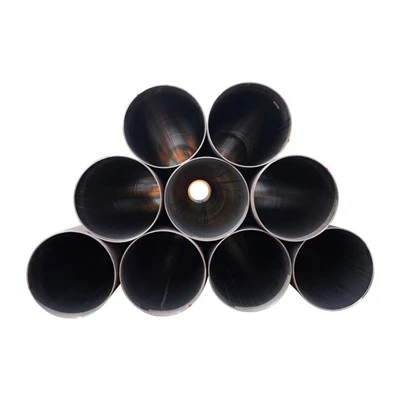
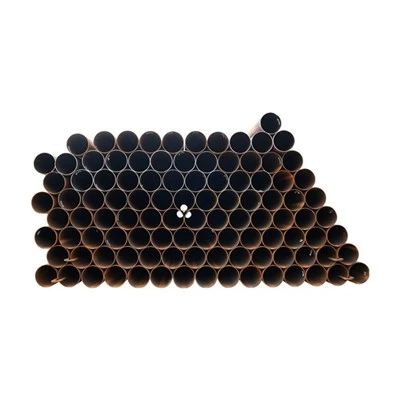
Black carbon steel pipes are a common and historically well-established steel pipe product used in industrial pipelines, building structures, and various fluid transport systems.Unlike galvanized steel pipes, they do not undergo surface galvanizing treatment and have a dark or black appearance, so they are usually referred to as black pipes or black carbon steel pipes in the industry. Although their appearance is simple, they have stable mechanical properties and a wide range of applications, and still occupy an important position in many engineering fields.
This article will systematically popularize and interpret black carbon steel pipes from aspects such as material characteristics, manufacturing processes, usage characteristics, and applicable scenarios, helping readers gain a more comprehensive understanding of this basic yet crucial steel pipe product.
1. What is a Black Carbon Steel Pipe?
Black carbon steel pipes are steel pipe products made from carbon structural steel or pipeline steel through welding or seamless forming processes. Their surfaces are not treated with galvanizing, anti-corrosion coatings, etc., and only retain the original state after rolling or welding, thus presenting a dark gray or black appearance.
From a material perspective, the carbon content of black carbon steel pipes is typically moderate to low, enabling them to have both good strength and certain ductility. They can not only bear structural loads but also be easily cut, welded, and processed later. This characteristic makes black carbon steel pipes highly versatile in the engineering field.
2. Common Manufacturing Methods of Black Carbon Steel Pipes
The manufacturing processes of black carbon steel pipes are mainly divided into two categories: welded steel pipes and seamless steel pipes. Welded black pipes are usually made of steel strips or steel plates through high-frequency welding or submerged arc welding processes. They have high production efficiency and a wide range of specifications, making them suitable for large-scale engineering use.
Seamless black carbon steel pipes are directly formed through processes like hot rolling and perforating, resulting in pipes with no weld seams and a more uniform overall structure. These pipes are usually used in applications where pressure performance and safety are critical. The different manufacturing methods affect both the performance and cost of black carbon steel pipes, which in turn influences their final application.
3. Material and Mechanical Properties of Black Carbon Steel Pipes
In terms of mechanical properties, black carbon steel pipes are known for stable strength and reliable load-bearing capacity. Their yield strength and tensile strength can be adjusted through material selection, which can not only meet the needs of general building structures but also be used in medium and low-pressure fluid transportation systems.
Since they do not contain a galvanized layer, black carbon steel pipes will not have the problem of zinc layer volatilization during welding and thermal processing, and their welding performance is more friendly. This is also one of the important reasons why they are widely used in industrial pipeline and equipment connections.
It is important to note that the corrosion resistance of black carbon steel pipes mainly depends on external protective measures, and the body itself does not have long-term corrosion resistance, which is particularly crucial in the material selection stage.
Application Fields of Black Carbon Steel Pipes
In practical engineering, black carbon steel pipes are widely used in industrial fluid transportation systems, such as steam, compressed air, industrial water, and other scenarios. In these environments, the pipelines are usually in indoor or under controlled conditions, the corrosion risk is relatively controllable, and the economic advantage of black pipes is fully reflected.
In the construction field, black carbon steel pipes are often used for scaffolding, steel structure supports, plant structural components, and other load-bearing or auxiliary components. Their good weldability and structural stability make them highly flexible during construction.
In fire protection systems and HVAC systems, black carbon steel pipes are also used as basic pipe materials, and can be painted or subjected to other protective treatments according to environmental conditions later to meet usage requirements.


5. Usage Differences Between Black Carbon Steel Pipes and Galvanized Steel Pipes
Compared with galvanized steel pipes, the biggest feature of black carbon steel pipes is that their surfaces are not subjected to anti-corrosion treatment. This gives them obvious cost advantages in dry, indoor, or short-term use environments, but in humid, buried, or long-term exposed environments, additional anti-corrosion design is required.
From a construction perspective, black carbon steel pipes are more convenient in cutting, welding, and secondary processing, and are suitable for projects that require frequent modifications or on-site welding. Galvanized steel pipes, on the other hand, are more suitable for use environments with high anti-corrosion requirements and limited maintenance conditions.
Therefore, there is no absolute advantage or disadvantage between the two, and they are each suitable for different engineering scenarios.
6. Corrosion Protection and Service Life of Black Carbon Steel Pipes
Since black carbon steel pipes do not have anti-corrosion capabilities, in practical use, they often need to be painted, coated, or subjected to internal and external anti-corrosion treatments to extend their service life. Common methods include brushing anti-rust paint, epoxy coating, or combining with external anti-corrosion layers.
Under the premise of reasonable protection and standardized use, black carbon steel pipes can also achieve a long service life, especially in indoor or non-corrosive medium transportation conditions, their comprehensive cost performance is very prominent.
7. Conclusion
As one of the most basic and mature steel pipe products, black carbon steel pipes have long occupied an important position in the industrial and construction fields due to their stable mechanical properties, good processing adaptability, and outstanding economic efficiency. As long as the service environment is fully considered during material selection and reasonable anti-corrosion measures are taken, black carbon steel pipes can fully meet various engineering needs.
In practical engineering applications, correctly understanding the performance boundaries of black carbon steel pipes and reasonably planning their usage scenarios are often more engineering valuable than simply pursuing surface protection.