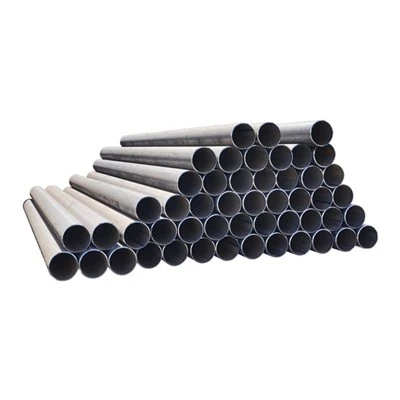
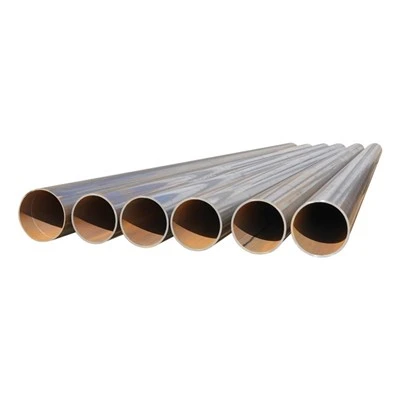
API 5L is one of the most widely recognized standards for line pipe used in the transportation of oil, natural gas, water, and other fluids in the energy industry. For LSAW steel pipe, API 5L provides strict requirements covering chemical composition, mechanical properties, dimensional tolerances, inspection procedures, and testing methods. Among the most important classifications within the standard are PSL1 and PSL2, two specification levels that directly influence product quality requirements and project applicability.
Many engineers and procurement teams understand that PSL2 generally involves stricter requirements than PSL1, but selecting the correct specification requires a deeper understanding of operating conditions, project standards, safety requirements, and long-term reliability. Choosing the appropriate specification level can improve pipeline performance while ensuring compliance with international engineering requirements.
| Item | API 5L PSL1 | API 5L PSL2 |
|---|---|---|
| Chemical Composition | Standard Requirements | Stricter Requirements |
| Mechanical Properties | Basic Requirements | Additional Requirements |
| Impact Testing | Generally Not Required | Required for Many Grades |
| Non-Destructive Testing | Limited Requirements | Expanded Requirements |
| Traceability | Standard | More Comprehensive |
| Typical Applications | Conventional Pipelines | Critical Energy Projects |
| Inspection Level | Standard Quality Control | Enhanced Quality Control |
Understanding these differences helps project owners choose specifications that match both technical requirements and budget expectations.
LSAW Steel Pipe: In-Depth Product Review
LSAW (Longitudinal Submerged Arc Welded) steel pipe is manufactured from steel plate using advanced forming technologies such as JCOE or Roll Bending Expansion (RBE), followed by automatic double submerged arc welding. This manufacturing method allows producers to achieve excellent weld quality, high dimensional accuracy, large diameters, and thick wall sections.
Because of these advantages, LSAW steel pipe is widely used in long-distance oil and gas pipelines, offshore engineering, LNG facilities, petrochemical plants, water transmission systems, and heavy industrial infrastructure. The product is especially suitable for projects requiring high pressure resistance, superior structural strength, and long service life.
When combined with API 5L specifications, LSAW steel pipe becomes one of the industry's preferred solutions for critical energy infrastructure. However, determining whether PSL1 or PSL2 is appropriate depends on the project's operating conditions and technical requirements.


Key Differences Between LSAW and DSAW Steel Pipes: A Detailed Comparison
The terms LSAW and DSAW are sometimes used interchangeably, but they do not describe exactly the same concept.
LSAW refers to Longitudinal Submerged Arc Welded steel pipe, describing the orientation of the weld seam. DSAW refers to Double Submerged Arc Welded steel pipe, describing the welding method used to produce both the internal and external welds.
Understanding the Relationship Between LSAW and DSAW
Most LSAW steel pipes are manufactured using double submerged arc welding, meaning many products can accurately be described as both LSAW and DSAW pipes. However, LSAW emphasizes the longitudinal seam configuration, while DSAW focuses on the welding process itself.
The combination of longitudinal seam geometry and double submerged arc welding provides excellent weld penetration, high mechanical strength, and reliable pressure resistance. These characteristics make API 5L LSAW pipes particularly suitable for high-pressure oil and gas transportation projects.
Why Manufacturing Consistency Matters
Regardless of whether the product is described as LSAW or DSAW, manufacturing consistency remains essential. Stable forming processes, precise welding parameters, comprehensive non-destructive testing, and strict dimensional control directly influence pipeline safety and long-term reliability.
Projects operating under demanding service conditions frequently specify PSL2 because it provides additional quality assurance through more rigorous inspection and testing requirements.
What Are the Main Technical Differences Between PSL1 and PSL2?
PSL1 represents the standard quality level within API 5L and is commonly specified for conventional pipeline applications. It provides reliable mechanical properties and quality requirements suitable for many water transmission systems, low-pressure pipelines, and general energy infrastructure.
PSL2 introduces additional requirements intended to improve product consistency and reliability. These requirements often include tighter limits on chemical composition, mandatory impact testing, stricter tensile property requirements, expanded non-destructive examination, and enhanced traceability throughout production.
Because of these stricter requirements, PSL2 products generally provide greater confidence in applications involving high operating pressure, harsh environments, or critical infrastructure.
Projects such as LNG terminals, offshore platforms, major oil transmission pipelines, and cross-country gas pipelines frequently specify PSL2 to meet higher safety and performance standards.
How Should Engineers Select PSL1 or PSL2?
The choice between PSL1 and PSL2 should always be based on engineering requirements rather than cost alone.
Projects with moderate operating conditions and standard performance requirements may find PSL1 fully adequate. Municipal water systems, general industrial pipelines, and certain structural applications often use PSL1 because it provides reliable performance with lower overall cost.
PSL2 is typically selected when safety margins, operating pressure, environmental conditions, and long-term reliability become more critical. Offshore projects, LNG facilities, sour service environments, and long-distance energy transmission pipelines frequently require PSL2 because of its enhanced testing and inspection requirements.
Carefully reviewing project specifications, operating conditions, and applicable regulations helps ensure the selected specification level provides both technical compliance and economic efficiency.
Project Reference: Nigeria LNG Receiving Station Project
A representative example demonstrating the importance of PSL selection is the Nigeria Akwa Ibom LNG Receiving Station Carbon Steel Welded Pipe Supply Project. For this project, Huayang Steel Pipe supplied approximately 977 tons of LSAW steel pipe manufactured according to API 5L X65 PSL2, together with ASTM A672 specifications, covering diameters from 457.2 mm to 863.6 mm.
As an LNG pipeline project, the system required high-strength steel, excellent weld integrity, strict inspection procedures, and reliable long-term performance. API 5L PSL2 was selected because the project demanded enhanced mechanical properties, comprehensive non-destructive testing, and greater manufacturing traceability.
Through advanced JCOE forming technology, automatic double submerged arc welding, hydrostatic testing, ultrasonic inspection, and rigorous quality management, the supplied products successfully met the project's demanding technical requirements and construction schedule.
This project illustrates how selecting the appropriate API 5L specification level contributes directly to pipeline safety and operational reliability.