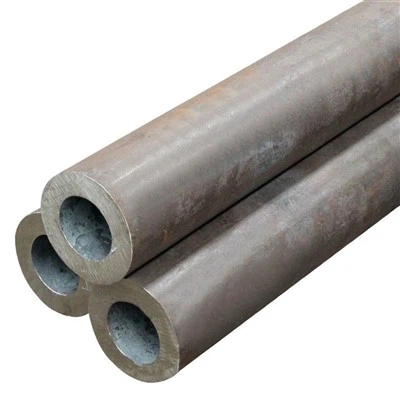
As a seasoned supplier of Longitudinally Submerged Arc Welded (LSAW) steel pipes, I've often been asked about the manganese content in these essential industrial products. Manganese is a crucial element in the composition of LSAW steel pipes, significantly influencing their properties and performance. In this blog, I'll delve into what the manganese content in LSAW steel pipes is, why it matters, and how it impacts the quality and application of these pipes.
Understanding Manganese in LSAW Steel Pipes
Manganese is one of the most important alloying elements in steel. In the context of LSAW steel pipes, it is added during the steel - making process to enhance several key properties. The manganese content in LSAW steel pipes typically ranges from 0.25% to 1.65%, depending on the specific grade and application requirements of the pipes.
The primary role of manganese in steel is to act as a deoxidizer and desulfurizer. During the steel - making process, oxygen and sulfur can be present as impurities. Oxygen can cause porosity in the steel, while sulfur can form iron sulfide, which is brittle and can reduce the ductility and toughness of the steel. Manganese reacts with these impurities, forming manganese oxide and manganese sulfide, which can be easily removed from the molten steel, thus improving the overall quality of the steel.


The Impact of Manganese Content on LSAW Steel Pipe Properties
Strength and Hardness
Manganese significantly contributes to the strength and hardness of LSAW steel pipes. It forms solid solutions with iron, which can strengthen the steel matrix. As the manganese content increases, the yield strength and tensile strength of the steel also increase. This is particularly important for LSAW steel pipes used in high - pressure applications, such as oil and gas pipelines. For example, pipes with a higher manganese content can withstand greater internal pressures without deforming or failing, ensuring the safety and reliability of the pipeline system.
Ductility and Toughness
While manganese increases strength, it also helps to maintain a certain level of ductility and toughness in the steel. Ductility is the ability of the steel to deform plastically without fracturing, and toughness is the ability to absorb energy before breaking. A proper balance of manganese content is crucial to ensure that the LSAW steel pipes can withstand bending, stretching, and impact forces during installation and operation. For instance, in cold - weather environments, pipes need to have sufficient toughness to resist brittle fracture.
Weldability
Manganese also has an impact on the weldability of LSAW steel pipes. Weldability refers to the ease with which the steel can be welded without forming defects such as cracks or porosity. A moderate manganese content can improve the weldability of the steel by reducing the tendency for hot cracking during the welding process. However, if the manganese content is too high, it can increase the hardness of the heat - affected zone during welding, which may lead to cold cracking. Therefore, controlling the manganese content is essential to achieve good weld quality.
Different Grades of LSAW Steel Pipes and Their Manganese Content
Q235b 406*6 LSAW Steel Pipe
The Q235b 406*6 LSAW Steel Pipe is a common grade of LSAW steel pipe. The Q235b grade typically has a manganese content ranging from 0.30% to 0.70%. This grade is widely used in general engineering structures, such as building frameworks and water pipelines. The relatively low manganese content in Q235b provides a good balance of strength, ductility, and weldability, making it suitable for a variety of applications.
L245 Straight Seam Steel Pipe
The L245 Straight Seam Steel Pipe is mainly used in the oil and gas industry. The L245 grade usually has a manganese content of about 0.40% - 1.20%. The higher manganese content in this grade helps to improve the strength and toughness of the pipes, enabling them to withstand the harsh conditions in oil and gas transportation, such as high - pressure, corrosive environments.
508 Steel Pipe
The 508 Steel Pipe is often used in large - diameter pipeline projects. The manganese content in 508 steel pipes can vary depending on the specific requirements of the project. Generally, it may range from 0.60% to 1.65%. The higher manganese content in 508 steel pipes is designed to meet the high - strength and high - toughness requirements for large - scale pipeline systems.
Quality Control of Manganese Content in LSAW Steel Pipes
As a LSAW steel pipe supplier, ensuring the proper manganese content in our products is of utmost importance. We implement strict quality control measures throughout the production process.
First, we carefully select the raw materials. High - quality iron ore and scrap steel with known chemical compositions are used as the base materials. During the steel - making process, we use advanced smelting techniques to accurately control the addition of manganese. Spectrometric analysis is carried out at regular intervals to monitor the manganese content in the molten steel.
After the steel is formed into pipes, we conduct further testing. Non - destructive testing methods, such as ultrasonic testing and magnetic particle testing, are used to detect any internal defects in the pipes. Chemical analysis is also performed on samples taken from the pipes to confirm that the manganese content meets the specified standards.
The Significance of Manganese Content for Customers
For customers, understanding the manganese content in LSAW steel pipes is crucial for making the right purchasing decisions. Different applications require different levels of strength, ductility, and toughness. By knowing the manganese content, customers can choose the most suitable grade of LSAW steel pipes for their specific projects.
For example, if a customer is planning a small - scale water pipeline project, a lower - grade pipe with a relatively low manganese content, such as Q235b, may be sufficient. On the other hand, for a large - scale oil and gas pipeline project, a higher - grade pipe with a higher manganese content, like L245 or 508, is necessary to ensure the long - term performance and safety of the pipeline.
Contact for Procurement and Negotiation
If you are interested in purchasing LSAW steel pipes and have questions about the manganese content or other aspects of our products, please feel free to contact us. We have a professional team that can provide you with detailed product information and technical support. We are committed to offering high - quality LSAW steel pipes that meet your specific requirements. Let's start a discussion about your project and find the best solution together.
References
- ASM Handbook Committee. ASM Handbook, Volume 1: Properties and Selection: Irons, Steels, and High - Performance Alloys. ASM International, 1990.
- Steel Structures Design Manual, American Institute of Steel Construction, 2005.
- API Specification 5L: Specification for Line Pipe, American Petroleum Institute, 2018.