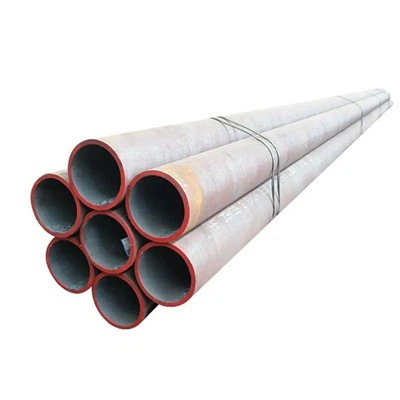
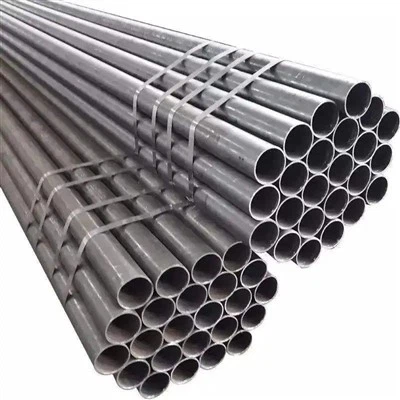
Cavitation is a significant concern in the operation of boilers, as it can lead to severe damage to boiler components, including seamless pipes. As a trusted supplier of Boiler Seamless Pipe, understanding the cavitation resistance of these pipes is crucial for ensuring the long - term and efficient operation of boilers.
Understanding Cavitation
Cavitation is a phenomenon that occurs when the local pressure in a liquid drops below the vapor pressure of the liquid, causing the formation of vapor bubbles. These bubbles then collapse when they move into a region of higher pressure. The collapse of these bubbles generates high - energy shockwaves that can cause damage to the surfaces they come into contact with. In the context of boiler seamless pipes, cavitation can lead to pitting, erosion, and eventually, structural failure of the pipes.
The formation of cavitation bubbles in boiler pipes can be attributed to several factors. One of the primary causes is the high - velocity flow of the working fluid. When the fluid flows at high speeds through the pipes, the pressure drop can occur in certain areas, leading to the formation of vapor bubbles. Additionally, sudden changes in the flow direction, such as at bends or valves, can also result in local pressure drops and cavitation.
Factors Affecting Cavitation Resistance of Boiler Seamless Pipe
Material Properties
The material of the boiler seamless pipe plays a vital role in its cavitation resistance. Pipes made from high - strength and corrosion - resistant materials are generally more resistant to cavitation. For example, stainless steel pipes have excellent cavitation resistance due to their high hardness and good corrosion resistance. The alloying elements in stainless steel, such as chromium and nickel, form a protective oxide layer on the surface of the pipe, which can withstand the impact of the cavitation shockwaves.
Carbon steel pipes, on the other hand, are more commonly used in boiler applications due to their relatively low cost. However, their cavitation resistance is relatively lower compared to stainless steel pipes. To improve the cavitation resistance of carbon steel pipes, surface treatments such as nitriding or coating can be applied. These treatments can increase the hardness and wear resistance of the pipe surface, reducing the damage caused by cavitation.
Surface Finish
The surface finish of the boiler seamless pipe also affects its cavitation resistance. A smooth surface finish can reduce the likelihood of cavitation bubble formation and growth. Rough surfaces can create local areas of low pressure, which are more prone to cavitation. Therefore, pipes with a high - quality surface finish are preferred in boiler applications. Manufacturers often use advanced machining and polishing techniques to achieve a smooth surface finish on boiler seamless pipes.
Design and Geometry
The design and geometry of the boiler seamless pipe can influence cavitation resistance. Pipes with a uniform cross - section and smooth flow paths are less likely to experience cavitation. Bends, elbows, and other flow - disturbing elements should be designed carefully to minimize pressure drops and flow disturbances. For example, using large - radius bends instead of sharp - angle bends can reduce the likelihood of cavitation.

Testing Cavitation Resistance
To ensure the cavitation resistance of boiler seamless pipes, various testing methods are available. One of the commonly used methods is the ultrasonic cavitation test. In this test, an ultrasonic transducer is used to generate cavitation bubbles in a liquid medium, and the pipe sample is exposed to the cavitation environment. The damage to the pipe surface is then evaluated by measuring the mass loss or the depth of the pits.
Another method is the flow - induced cavitation test. In this test, the pipe sample is installed in a flow loop, and the fluid is circulated at high speeds. The pressure and flow conditions are controlled to simulate the actual operating conditions of the boiler. The damage to the pipe is monitored over time, and the cavitation resistance of the pipe is evaluated based on the extent of the damage.
Importance of Cavitation Resistance in Boiler Applications
In boiler applications, cavitation resistance is of utmost importance. Cavitation damage to boiler seamless pipes can lead to several problems. Firstly, it can reduce the heat transfer efficiency of the boiler. The pitting and erosion caused by cavitation can roughen the inner surface of the pipes, which increases the thermal resistance and reduces the heat transfer rate. This can result in higher energy consumption and lower boiler efficiency.
Secondly, cavitation damage can lead to leaks in the boiler pipes. Once the pipes are severely damaged by cavitation, the integrity of the pipe wall is compromised, and the working fluid can leak out. This not only poses a safety hazard but also requires costly repairs and downtime for the boiler.
Our Boiler Seamless Pipe Offerings
As a supplier of Boiler Seamless Pipe, we offer a wide range of products to meet the diverse needs of our customers. Our Api 5l Boiler Pipe is manufactured to meet the strict standards of API 5L, ensuring high quality and reliability. It is suitable for various boiler applications, with good cavitation resistance and corrosion resistance.

Our X60 OCTG Pipe is a high - strength pipe that can withstand high - pressure and high - temperature conditions in boilers. It has excellent mechanical properties and cavitation resistance, making it a popular choice for demanding boiler applications.

In addition, our GR.B Casing Tube is designed to provide reliable support and protection for boiler pipes. It has good corrosion resistance and can help to extend the service life of the boiler system.
Conclusion
Cavitation resistance is a critical property of boiler seamless pipes. Understanding the factors that affect cavitation resistance, such as material properties, surface finish, and design, is essential for ensuring the long - term and efficient operation of boilers. As a supplier of Boiler Seamless Pipe, we are committed to providing high - quality products with excellent cavitation resistance. If you are in the market for boiler seamless pipes, we invite you to contact us for more information and to discuss your specific requirements. Our team of experts is ready to assist you in finding the most suitable pipes for your boiler applications.

References
- Tullis, J. P. (1989). Hydraulics of Pipelines: Pumps, Valves, Cavitation, Transients. John Wiley & Sons.
- Knapp, R. T., Daily, J. W., & Hammitt, F. G. (1970). Cavitation. McGraw - Hill.
- Incropera, F. P., & DeWitt, D. P. (2002). Fundamentals of Heat and Mass Transfer. John Wiley & Sons.