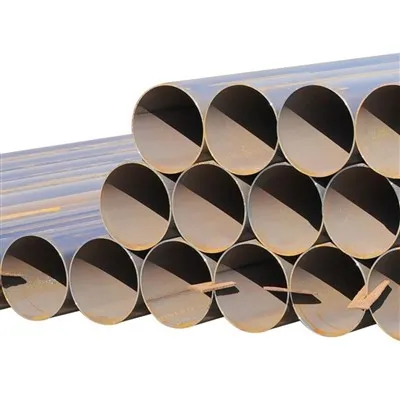
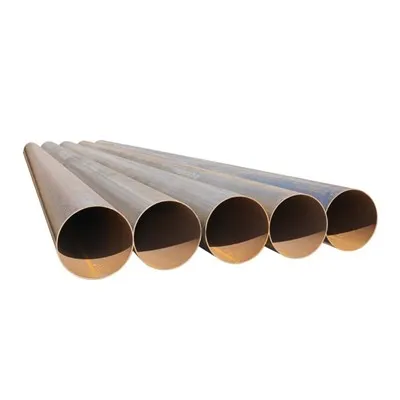
Longitudinal Submerged Arc Welded carbon steel pipe has become a critical structural and transmission material in modern large-diameter infrastructure projects. Unlike general welded pipe solutions, LSAW carbon steel pipe is typically selected when projects require high dimensional stability, controlled weld integrity, and predictable mechanical performance under sustained loading. In sectors such as cross-country oil and gas transmission, municipal trunk water systems, and industrial utility corridors, the engineering logic behind specifying LSAW carbon steel pipe is closely tied to scale, reliability, and lifecycle performance.
Manufacturing Characteristics and Structural Implications
Plate-Based Forming and Dimensional Stability
LSAW carbon steel pipe is produced from steel plate that is formed into a cylindrical shape and welded longitudinally using submerged arc welding. The use of plate instead of coil allows for strict control of wall thickness uniformity and chemical composition. This is particularly relevant in large-diameter applications where ovality tolerance, wall thickness consistency, and geometric accuracy directly influence installation efficiency and structural behavior.
For large infrastructure projects, dimensional stability reduces field fit-up issues and ensures more accurate stress modeling. Carbon steel plate used for LSAW production typically undergoes thermomechanical controlled processing, resulting in refined grain structure and balanced strength-to-ductility ratios. This structural consistency allows the pipeline to perform predictably under internal pressure, soil loading, and thermal expansion.
The table below summarizes typical dimensional capabilities of LSAW carbon steel pipe compared with other common welded pipe solutions.
| Pipe Type | Diameter Range | Wall Thickness Range | Dimensional Stability |
|---|---|---|---|
| ERW Carbon Steel Pipe | 76–610 mm | 2–20 mm | High in small diameters |
| LSAW Carbon Steel Pipe | 406–1626 mm | 6–40 mm | High in large diameters |
| Spiral Welded Pipe | 219–3000 mm | 5–25 mm | Moderate |
This dimensional range explains why LSAW carbon steel pipe is frequently used for trunk line systems where both diameter and wall thickness exceed typical ERW manufacturing limits.
Weld Integrity and Load Distribution
The submerged arc welding process used in LSAW manufacturing involves internal and external welding passes with controlled heat input and filler metal deposition. This results in deep penetration and strong metallurgical bonding along the seam. Because the seam is longitudinal, stress distribution under internal pressure is symmetrical relative to the pipe axis, simplifying structural calculations.
For infrastructure planners and structural engineers, predictable load distribution reduces uncertainty during design review. In high-capacity water transmission or high-pressure gas trunk lines, the weld seam must maintain mechanical properties comparable to base material. LSAW carbon steel pipes are subjected to ultrasonic testing, hydrostatic testing, and dimensional inspection to ensure seam performance under design pressure conditions.
Mechanical Performance in High-Capacity Transmission
Pressure Bearing Capability
Large-diameter infrastructure projects often require pipes capable of sustaining continuous internal pressure over long distances. Hoop stress is directly related to diameter, wall thickness, and internal pressure. As diameter increases, wall thickness must also increase to maintain allowable stress levels within material limits. LSAW carbon steel pipe is well suited for this requirement because plate-based production supports thick-wall configurations.
The following table illustrates the relationship between grade, thickness, and application environment for LSAW carbon steel pipe.
| Steel Grade | Yield Strength MPa | Typical Thickness mm | Typical Application |
|---|---|---|---|
| API 5L X52 | 360 | 6–18 | Water and medium pressure oil lines |
| API 5L X60 | 415 | 8–30 | Long-distance gas transmission |
| API 5L X65 | 450 | 10–35 | High-pressure trunk lines |
| API 5L X70 | 485 | 12–40 | Major export pipelines |
Higher strength grades allow for thinner walls at equivalent pressure or higher pressure at equivalent wall thickness, giving designers flexibility in balancing cost and safety margin.
Fatigue and Long-Term Reliability
In addition to static pressure, pipelines are subjected to cyclic loading caused by pressure fluctuation, temperature variation, and operational startup and shutdown cycles. Carbon steel exhibits good fatigue resistance when properly specified and welded. The controlled weld quality of LSAW pipe reduces the likelihood of defect-induced fatigue cracks.
For infrastructure projects with service lives exceeding 25 years, long-term reliability is a key evaluation criterion. The ability of LSAW carbon steel pipe to maintain structural integrity under repeated stress cycles supports its selection in projects where downtime or failure carries high economic and environmental consequences.
Installation Efficiency and Field Welding Considerations
Alignment and Fit-Up Performance
Large-diameter pipelines require accurate end preparation to ensure efficient field girth welding. LSAW carbon steel pipes are typically supplied with beveled ends machined to precise tolerances. Consistent roundness and wall thickness reduce alignment correction time in the field.
For EPC contractors managing large-scale pipeline spreads, reduced fit-up time directly influences construction schedule performance. Dimensional consistency lowers rework rates and improves welding productivity. These practical considerations often weigh heavily in procurement decisions.
Compatibility with Coating Systems
LSAW carbon steel pipe is commonly used in buried or partially exposed environments where corrosion protection is mandatory. The smooth external surface of plate-formed pipe is well suited for fusion bonded epoxy, three-layer polyethylene, or polypropylene coating systems. Proper surface preparation and coating adhesion extend operational life and reduce maintenance frequency.
In water transmission systems, internal epoxy lining may be applied to reduce friction losses and protect against corrosion. Carbon steel's mechanical robustness combined with modern coating technologies provides a cost-effective balance between strength and durability.

Economic and Strategic Considerations
Infrastructure investments are typically long-term capital projects where reliability outweighs short-term cost savings. While LSAW carbon steel pipe may have a higher manufacturing cost compared with smaller welded pipe types, its structural capacity and longevity justify its use in large-diameter applications.
Project owners evaluate not only material price but also risk exposure, inspection requirements, maintenance planning, and regulatory compliance. The consistent mechanical performance of LSAW carbon steel pipe simplifies compliance verification and reduces uncertainty during project approval processes.
From a strategic standpoint, selecting a pipe system that offers high pressure capacity, strong weld integrity, and dimensional precision supports stable infrastructure operation for decades. This reliability aligns with the long service life expectations of municipal utilities, energy corridors, and industrial distribution networks.
Conclusion
LSAW carbon steel pipe plays a fundamental role in modern large-diameter infrastructure projects where structural reliability, dimensional accuracy, and long-term performance are critical. Its plate-based manufacturing process supports thick wall configurations and high-strength grades, enabling safe operation under demanding pressure and environmental conditions.
By combining advanced submerged arc welding technology with controlled carbon steel metallurgy, LSAW pipe offers engineers a predictable and durable solution for trunk line systems. In projects where operational continuity and structural safety are paramount, LSAW carbon steel pipe remains a technically sound and economically rational choice within the broader carbon steel pipe industry.