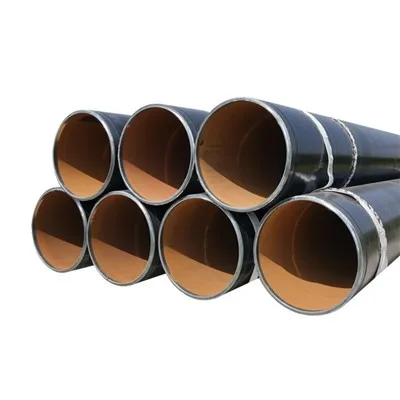
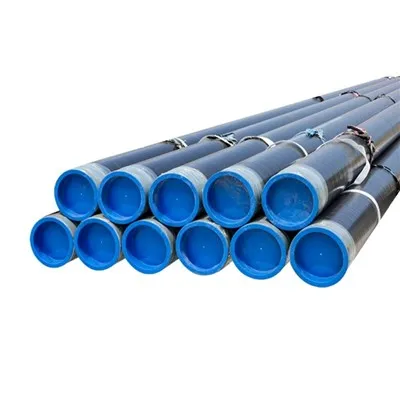
Electric Resistance Welded pipe, commonly known as ERW pipe, is one of the most widely manufactured forms of carbon steel pipe in the global market. While previous discussions may focus on welding methods or application differences, understanding ERW pipe specifications and models requires a closer look at dimensional standards, wall thickness series, grade classifications, and scheduling systems. Specifications define the technical framework that ensures compatibility across engineering systems, while models refer to the size and thickness combinations available for different operational demands. A clear understanding of these parameters allows engineers and buyers to select ERW carbon steel pipe accurately and efficiently.
Dimensional Specifications of ERW Carbon Steel Pipe
Nominal Pipe Size and Outside Diameter
ERW pipe dimensions are typically defined by Nominal Pipe Size, commonly abbreviated as NPS. The nominal size does not always correspond directly to the actual outside diameter, but it provides a standardized reference used internationally. For smaller sizes, particularly below NPS 12, the outside diameter remains fixed regardless of wall thickness, while wall thickness varies according to schedule classification.
For example, an NPS 4 pipe has an outside diameter of 114.3 mm, regardless of whether it is Schedule 40 or Schedule 80. This standardization ensures interchangeability of fittings and flanges across different pressure ratings.


Wall Thickness and Schedule System
Wall thickness in ERW carbon steel pipe is commonly defined by a schedule number such as SCH 10, SCH 20, SCH 40, SCH 80, and higher. The schedule system indicates relative wall thickness, with higher numbers representing thicker walls and greater pressure capacity.
The relationship between diameter and wall thickness directly affects allowable internal pressure. Design engineers rely on pressure formulas defined in piping codes to determine the appropriate schedule for a given operating condition. ERW manufacturing is particularly suitable for thin to medium wall thicknesses, making it highly competitive in distribution systems and structural uses.
The following table illustrates representative dimensional models of ERW carbon steel pipe.
| Nominal Pipe Size (NPS) | Outside Diameter (mm) | Schedule 40 Thickness (mm) | Schedule 80 Thickness (mm) |
|---|---|---|---|
| 2 | 60.3 | 3.91 | 5.54 |
| 4 | 114.3 | 6.02 | 8.56 |
| 6 | 168.3 | 7.11 | 10.97 |
| 8 | 219.1 | 8.18 | 12.70 |
| 12 | 323.9 | 10.31 | 17.48 |
These dimensional models demonstrate how wall thickness increases with schedule while outside diameter remains constant for each nominal size.
Grade Specifications and Material Standards
Chemical Composition Requirements
ERW carbon steel pipe specifications are closely linked to material grade standards such as ASTM A53, ASTM A106, and API 5L. Although A106 primarily covers seamless pipe, ERW pipe commonly complies with ASTM A53 and API 5L for pressure and pipeline applications.
Each standard defines maximum allowable percentages of carbon, manganese, phosphorus, and sulfur. Carbon content influences strength and hardness, while manganese improves toughness and hardenability. Controlled composition ensures weldability and consistent mechanical performance along the seam.
Mechanical Property Classification
Material grades are also categorized by mechanical properties, especially yield strength and tensile strength. In API 5L specifications, grades such as Grade B, X42, and X52 correspond to increasing minimum yield strength levels. Higher grades allow higher operating pressures or reduced wall thickness for the same pressure rating.
Mechanical testing requirements include tensile tests, flattening tests, and hydrostatic pressure tests. Non-destructive examination of the weld seam is typically mandatory to verify internal integrity. These inspection protocols ensure that ERW carbon steel pipe meets the performance criteria defined in project specifications.
The following table summarizes representative grade specifications for ERW pipe.
| Standard | Grade | Minimum Yield Strength (MPa) | Minimum Tensile Strength (MPa) | Typical Application |
|---|---|---|---|---|
| ASTM A53 | Grade B | 240 | 415 | Water and gas distribution |
| API 5L | Grade B | 245 | 415 | Oil and gas pipelines |
| API 5L | X42 | 290 | 415 | Medium-pressure transmission |
| API 5L | X52 | 360 | 460 | Higher-pressure pipeline systems |
These specifications define the mechanical boundaries within which ERW pipes operate safely.
Model Classification by End Type and Surface Condition
End Preparation Models
ERW pipe models can also be classified by end preparation. Common end types include plain end, beveled end, and threaded end. Plain ends are typically used for structural applications or welding connections. Beveled ends are prepared for butt welding in pressure piping systems. Threaded ends are commonly applied in low-pressure water and gas lines where mechanical assembly is preferred.
Selecting the correct end preparation is essential for installation efficiency and long-term sealing reliability. The model designation in procurement documentation often includes both size and end type to avoid ambiguity.
Surface Treatment and Coating Options
Surface condition represents another specification dimension. ERW carbon steel pipe may be supplied as black steel, galvanized, or coated with external anti-corrosion layers such as 3LPE or epoxy systems. Galvanized ERW pipe is widely used in plumbing and fire protection systems due to enhanced corrosion resistance. Coated pipes are common in buried pipeline applications where soil corrosion protection is critical.
Surface specification influences service life, maintenance frequency, and compliance with environmental exposure requirements.
Tolerance and Quality Control Specifications
Dimensional tolerances are clearly defined in standards governing ERW pipe production. Outside diameter tolerance, wall thickness variation, and straightness limits ensure compatibility with fittings and structural assemblies. Excessive deviation could lead to sealing issues or structural misalignment.
Quality control includes hydrostatic testing to verify pressure containment and ultrasonic or eddy current testing of the weld seam. Modern ERW production lines integrate inline inspection systems to maintain consistent product quality across large production volumes.
Conclusion
ERW pipe specifications and models encompass dimensional standards, wall thickness schedules, material grades, end preparations, and surface treatments. These parameters collectively determine the mechanical performance, installation compatibility, and long-term durability of carbon steel pipe systems.
By understanding how nominal size, schedule number, and grade classification interact, engineers can select ERW carbon steel pipe that meets precise design requirements. Clear specification alignment ensures safety, operational efficiency, and cost control across infrastructure, industrial, and structural applications.