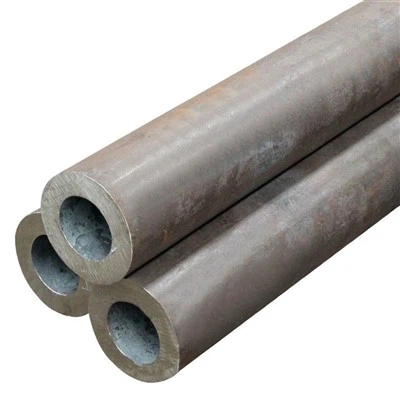
Hey there! As a supplier of Carbon 45 Degree Elbows, I often get asked about the elasticity modulus of these fittings. So, I thought I'd take a moment to break it down for you.


First off, let's talk about what the elasticity modulus is. In simple terms, it's a measure of how much a material will deform under stress. You can think of it like how much a rubber band stretches when you pull on it. A high elasticity modulus means the material is stiffer and won't deform as easily, while a low modulus means it's more flexible.
Now, when it comes to Carbon 45 Degree Elbows, the elasticity modulus is an important factor. These elbows are used in a variety of applications, from plumbing to industrial piping systems. They need to be able to withstand different levels of pressure and stress without cracking or breaking.
Carbon is a popular material for these elbows because it has some great properties. It's strong, durable, and relatively inexpensive. But the exact elasticity modulus of a Carbon 45 Degree Elbow can vary depending on a few things.
One of the main factors is the type of carbon used. There are different grades of carbon, and each one has its own unique properties. For example, high - carbon steel has a higher carbon content, which generally makes it stronger and stiffer. This means it will have a higher elasticity modulus compared to low - carbon steel.
The manufacturing process also plays a role. If the elbow is forged, it can have a more uniform structure, which can affect its elasticity modulus. Heat treatment is another important step. By heating and cooling the carbon in a specific way, manufacturers can change its internal structure and improve its mechanical properties, including the elasticity modulus.
Typically, the elasticity modulus of carbon steel used in 45 Degree Elbows is in the range of about 200 GPa (gigapascals). This value can give you an idea of how the elbow will perform under stress. For instance, if you're using the elbow in a high - pressure gas system, you'll want to make sure it can handle the forces without deforming too much.
Let's compare Carbon 45 Degree Elbows with other types of elbows. For example, the Gas 45 Degree Elbow is designed specifically for gas applications. While it may have similar mechanical properties to the carbon elbow, the materials used and the manufacturing process might be optimized for handling gas flow and pressure.
On the other hand, the 180 Degree Silicone Elbow has a much lower elasticity modulus. Silicone is a very flexible material, which makes it suitable for applications where some degree of movement or bending is required. But it wouldn't be a good choice for high - pressure or high - stress situations like a carbon elbow.
When you're considering using a Carbon 45 Degree Elbow for your project, it's important to understand the elasticity modulus and how it relates to your specific needs. You need to think about the pressure, temperature, and the type of fluid or gas that will be flowing through the elbow.
If you're in an environment with high temperatures, the carbon's properties can change. High temperatures can cause the carbon to expand, which might affect its elasticity modulus and overall performance. So, you need to take these factors into account when choosing the right elbow.
Another thing to consider is corrosion. Carbon steel can be prone to corrosion, especially in wet or acidic environments. Corrosion can weaken the elbow and change its mechanical properties, including the elasticity modulus. To prevent this, many carbon elbows are coated or treated to resist corrosion.
As a supplier, I've seen a wide range of applications for Carbon 45 Degree Elbows. Some customers use them in small - scale plumbing projects, while others need them for large - scale industrial operations. No matter the size of the project, getting the right elbow with the appropriate elasticity modulus is crucial.
If you're not sure which Carbon 45 Degree Elbow is right for you, don't worry. We have a team of experts who can help you understand the technical details and make the best choice. You can check out our Carbon 45 Degree Elbow page for more information about the products we offer.
In conclusion, the elasticity modulus of a Carbon 45 Degree Elbow is an important characteristic that determines its performance under stress. It can vary depending on the type of carbon, manufacturing process, and environmental factors. Whether you're a contractor, an engineer, or someone working on a DIY project, understanding this property will help you choose the right elbow for your needs.
If you're interested in purchasing Carbon 45 Degree Elbows for your project, I encourage you to get in touch. We can provide you with detailed product information, pricing, and any technical support you might need. Let's have a chat and see how we can help you with your piping requirements.
References:
- Materials Science and Engineering textbooks
- Industry standards for carbon steel pipe fittings