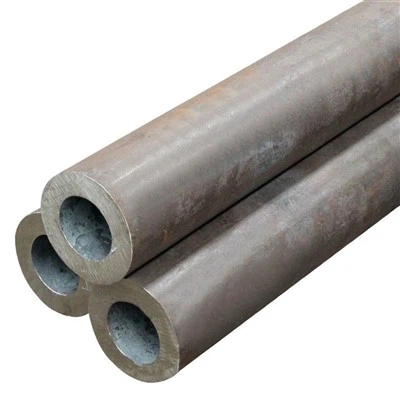
Pipe roughness is a critical factor that significantly influences oil flow within an oil line pipe. As a trusted Oil Line Pipe supplier, I have witnessed firsthand how pipe roughness can impact the efficiency and performance of oil transportation systems. In this blog, we will delve into the effects of pipe roughness on oil flow, exploring the underlying mechanisms and practical implications for the oil industry.
Understanding Pipe Roughness
Pipe roughness refers to the irregularities on the inner surface of a pipe. These irregularities can be caused by various factors, including manufacturing processes, corrosion, and the deposition of impurities. The roughness of a pipe is typically quantified using the relative roughness, which is the ratio of the average height of the surface irregularities (roughness height) to the pipe diameter.
The roughness of a pipe can have a profound impact on the flow of oil through it. When oil flows through a pipe, it experiences frictional resistance due to the interaction between the oil and the pipe wall. The rougher the pipe surface, the greater the frictional resistance, which can lead to increased pressure drop and reduced flow rate.
Effects of Pipe Roughness on Oil Flow
1. Increased Frictional Resistance
One of the primary effects of pipe roughness on oil flow is the increase in frictional resistance. As the oil flows over the rough surface of the pipe, it encounters numerous small obstacles that impede its movement. This results in a higher shear stress at the pipe wall, which in turn increases the frictional force between the oil and the pipe.
The increased frictional resistance leads to a higher pressure drop along the pipe. According to the Darcy - Weisbach equation, the pressure drop ((\Delta P)) in a pipe is proportional to the frictional factor ((f)), the length of the pipe ((L)), the density of the oil ((\rho)), the square of the flow velocity ((V^{2})), and inversely proportional to the pipe diameter ((D)):
(\Delta P = f\frac{L}{D}\frac{\rho V^{2}}{2})
The frictional factor (f) is strongly influenced by the pipe roughness. In general, as the pipe roughness increases, the frictional factor also increases, leading to a greater pressure drop. This means that more energy is required to pump the oil through the pipe, which can result in higher operating costs.


2. Reduced Flow Rate
The increased frictional resistance caused by pipe roughness can also lead to a reduced flow rate. According to the principle of conservation of energy, the pressure drop in the pipe must be balanced by the energy input from the pump. If the pressure drop is too high, the pump may not be able to maintain the desired flow rate.
In addition, the rough surface of the pipe can cause the oil to form a boundary layer with a higher viscosity near the pipe wall. This boundary layer can reduce the effective cross - sectional area available for flow, further restricting the flow rate.
3. Turbulence and Flow Instability
Pipe roughness can also promote the onset of turbulence in the oil flow. Turbulence is a chaotic flow regime characterized by irregular fluctuations in velocity and pressure. When the oil flows over a rough pipe surface, the surface irregularities can disrupt the smooth flow of the oil, causing it to transition from laminar to turbulent flow at a lower Reynolds number.
Turbulence can have several negative effects on oil flow. It can increase the frictional resistance and pressure drop even further, as well as cause additional wear and tear on the pipe and pumping equipment. Moreover, turbulence can lead to flow instability, which can result in vibration, noise, and potential damage to the pipeline system.
4. Deposition and Corrosion
The rough surface of the pipe provides more sites for the deposition of impurities and the formation of scales. These deposits can accumulate over time, further increasing the pipe roughness and reducing the flow area. In addition, the rough surface can also promote corrosion, as it provides a larger surface area for the interaction between the oil and the pipe material.
Corrosion can weaken the pipe wall, leading to leaks and potential safety hazards. It can also increase the pipe roughness, exacerbating the problems associated with frictional resistance and flow rate reduction.
Mitigating the Effects of Pipe Roughness
1. Pipe Selection
When selecting an oil line pipe, it is important to consider the pipe roughness. Pipes with a smoother inner surface, such as Api 5l Boiler Pipe and GR.B Casing Tube, can significantly reduce the frictional resistance and improve the flow efficiency. These pipes are typically manufactured using advanced processes that ensure a high - quality, smooth inner surface.
2. Pipe Coating
Applying a coating to the inner surface of the pipe can also help to reduce the pipe roughness and prevent corrosion. Coatings can provide a smooth, protective layer that reduces the frictional resistance and inhibits the deposition of impurities. There are various types of coatings available, including epoxy coatings, polyethylene coatings, and ceramic coatings, each with its own advantages and disadvantages.
3. Regular Maintenance
Regular maintenance of the pipeline system is essential to mitigate the effects of pipe roughness. This includes cleaning the pipes to remove any deposits and inspecting the pipes for signs of corrosion or damage. By keeping the pipes clean and in good condition, the pipe roughness can be maintained at a minimum, ensuring optimal oil flow.
Practical Implications for the Oil Industry
The effects of pipe roughness on oil flow have significant practical implications for the oil industry. Higher frictional resistance and pressure drop mean that more energy is required to pump the oil, which translates into higher operating costs. Reduced flow rate can limit the production capacity of oil fields and affect the overall efficiency of the oil transportation system.
In addition, the problems associated with turbulence, deposition, and corrosion can lead to increased maintenance costs, downtime, and potential safety hazards. Therefore, it is crucial for oil companies to carefully consider the pipe roughness when designing and operating their pipeline systems.
As an Oil Line Pipe supplier, we understand the importance of providing high - quality pipes that minimize the effects of pipe roughness. Our Oil Line Pipe is manufactured to the highest standards, with a smooth inner surface that ensures efficient oil flow. We also offer a range of pipe coating and maintenance services to help our customers optimize the performance of their pipeline systems.
Conclusion
Pipe roughness has a significant impact on oil flow in an oil line pipe. It can increase frictional resistance, reduce flow rate, promote turbulence and flow instability, and lead to deposition and corrosion. However, by selecting the right pipes, applying appropriate coatings, and conducting regular maintenance, these effects can be mitigated.
If you are in the oil industry and are looking for high - quality oil line pipes that can minimize the effects of pipe roughness, we would be delighted to assist you. Contact us today to discuss your specific requirements and explore how our products and services can help you optimize your oil transportation system.
References
- Moody, L. F. (1944). "Friction factors for pipe flow". Transactions of the ASME, 66(8), 671 - 684.
- White, F. M. (2011). Fluid Mechanics (7th ed.). McGraw - Hill.
- Shames, I. H. (1992). Mechanics of Fluids (3rd ed.). McGraw - Hill.