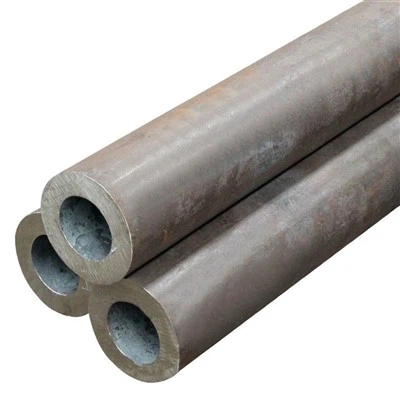
What are the standards for oil line pipe wall thickness?
As an established supplier of Oil Line Pipes, I've witnessed firsthand the critical role that wall thickness plays in the performance and safety of these pipes. In the oil and gas industry, where the transportation of crude oil, refined products, and natural gas is a daily operation, the integrity of the pipeline system is non - negotiable. The wall thickness of oil line pipes is not a random specification; it is determined by a series of well - defined standards and considerations.
1. Pressure Considerations
One of the primary factors influencing the wall thickness of oil line pipes is the internal pressure the pipe will be subjected to. The pressure inside an oil pipeline can vary significantly depending on the source of the oil, the distance of transportation, and the elevation changes along the pipeline route.
The pressure exerted by the flowing oil creates hoop stress in the pipe wall. Hoop stress is the circumferential stress that acts around the pipe's cross - section. To prevent the pipe from bursting under this stress, the wall thickness must be sufficient. The formula for hoop stress ($\sigma_h$) in a thin - walled cylinder (a reasonable approximation for many oil line pipes) is given by $\sigma_h=\frac{PD}{2t}$, where $P$ is the internal pressure, $D$ is the outer diameter of the pipe, and $t$ is the wall thickness.
For high - pressure applications, such as long - distance pipelines or those transporting oil from deep - sea wells, pipes with thicker walls are required. For example, in a high - pressure offshore pipeline, the internal pressure can reach several thousand pounds per square inch (psi). To withstand this pressure, the wall thickness might be several inches, depending on the pipe diameter.
2. Pipe Diameter
The diameter of the oil line pipe is another important factor in determining the wall thickness. Generally, larger - diameter pipes require thicker walls to maintain the same level of structural integrity as smaller - diameter pipes. This is because the hoop stress is directly proportional to the pipe diameter, as shown in the hoop stress formula mentioned above.
For instance, a small - diameter pipe with an outer diameter of 2 inches might have a wall thickness of 0.125 inches for a certain pressure rating. However, a larger - diameter pipe with an outer diameter of 24 inches would need a much thicker wall, perhaps 0.5 inches or more, to handle the same internal pressure.
3. Material Properties
The material from which the oil line pipe is made also has a significant impact on the required wall thickness. Different materials have different mechanical properties, such as yield strength and ultimate tensile strength. Pipes made from materials with higher strength can have thinner walls compared to those made from lower - strength materials, while still withstanding the same internal pressure.
Common materials for oil line pipes include carbon steel, stainless steel, and alloy steel. Carbon steel is widely used due to its relatively low cost and good mechanical properties. However, in corrosive environments, stainless steel or alloy steel pipes might be preferred. For example, if the oil being transported contains high levels of sulfur or other corrosive substances, a stainless steel pipe with a higher corrosion resistance might be used. The wall thickness of these pipes would be designed based on the strength and corrosion - resistance requirements of the specific material.
4. External Loading
In addition to internal pressure, oil line pipes are also subjected to external loads. These can include the weight of the soil or water above the buried pipeline, the forces exerted by earthquakes or other natural disasters, and the impact of moving vehicles or equipment near the pipeline.
When designing the wall thickness, engineers must consider these external loads to ensure that the pipe can withstand them without failure. For buried pipelines, the soil load is a major consideration. The weight of the soil creates a radial stress on the pipe wall. To resist this stress, the pipe wall needs to be thick enough. In areas prone to earthquakes, pipes may need additional wall thickness to withstand the seismic forces.
5. Industry Standards
There are several industry standards that govern the wall thickness of oil line pipes. These standards are developed by organizations such as the American Petroleum Institute (API), the American Society for Testing and Materials (ASTM), and the International Organization for Standardization (ISO).
API standards, such as API 5L, provide specifications for the manufacture and use of steel pipes for the oil and gas industry. API 5L classifies pipes based on their grade, which is related to the minimum yield strength of the steel. The standard also specifies the minimum wall thickness for different pipe sizes and grades. For more information on API 5L Boiler Pipe, you can visit Api 5l Boiler Pipe.
ASTM standards, on the other hand, cover a wide range of materials and products, including pipes. ASTM standards for oil line pipes define the chemical composition, mechanical properties, and dimensional tolerances, including wall thickness. You can find more details about ASTM Boiler Pipe at ASTM Boiler Pipe. Carbon Boiler Pipe also adheres to relevant ASTM and other industry standards, and you can learn more about it at Carbon Boiler Pipe.
ISO standards are internationally recognized and provide a common framework for the design, manufacture, and testing of oil line pipes. These standards ensure that pipes from different manufacturers around the world meet the same quality and safety requirements.
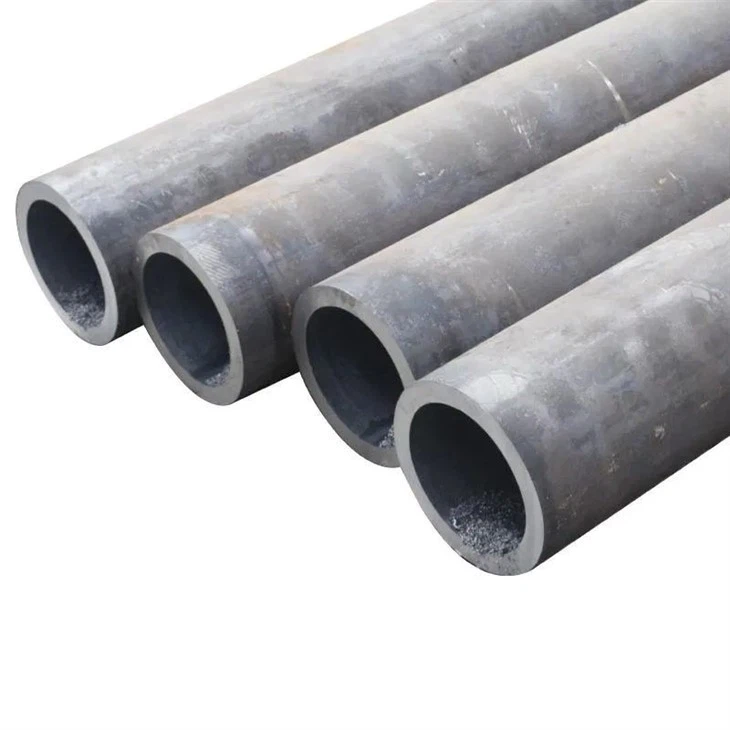

6. Corrosion Allowance
Corrosion is a major concern in the oil and gas industry. Oil and gas often contain corrosive substances such as water, sulfur compounds, and carbon dioxide. Over time, these substances can cause the pipe wall to thin, reducing its strength and integrity.
To account for corrosion, a corrosion allowance is added to the calculated wall thickness. The corrosion allowance is typically based on the expected corrosion rate of the pipe material in the specific environment. For example, in a highly corrosive offshore environment, the corrosion allowance might be 0.1 inches or more. This means that the initial wall thickness of the pipe is designed to be thicker than the minimum required for pressure and structural integrity, to ensure that the pipe remains safe and functional throughout its service life.
7. Safety Factor
A safety factor is also applied when determining the wall thickness of oil line pipes. The safety factor is a multiplier that accounts for uncertainties in the design process, such as variations in material properties, manufacturing tolerances, and the accuracy of load predictions.
Typical safety factors for oil line pipes range from 1.5 to 2.0. This means that the actual wall thickness of the pipe is 1.5 to 2 times the thickness calculated based on the minimum requirements for pressure and structural integrity. The safety factor provides an additional margin of safety, reducing the risk of pipe failure.
As an Oil Line Pipe supplier, we understand the importance of meeting these standards and considerations when providing pipes to our customers. We offer a wide range of pipes with different wall thicknesses to meet the diverse needs of the oil and gas industry. Whether you are looking for pipes for a small - scale onshore project or a large - scale offshore pipeline, we can provide you with high - quality pipes that meet all the relevant standards.
If you are in the market for Oil Line Pipes and want to discuss your specific requirements, we invite you to contact us for a detailed consultation. Our team of experts is ready to assist you in selecting the right pipes with the appropriate wall thickness for your project.
References
- American Petroleum Institute (API). API 5L Specification for Line Pipe.
- American Society for Testing and Materials (ASTM). Various ASTM standards related to steel pipes.
- International Organization for Standardization (ISO). ISO standards for oil and gas pipelines.
- Shigley, J. E., & Mischke, C. R. (2001). Mechanical Engineering Design. McGraw - Hill.