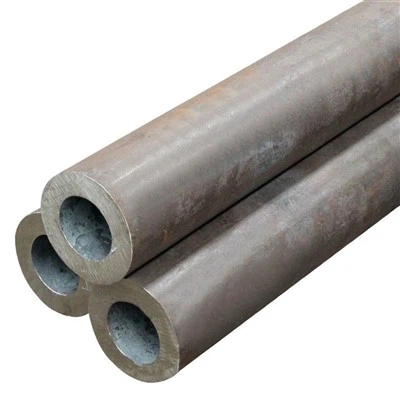
As a supplier of Electric Resistance Welded (ERW) steel pipes, I've witnessed firsthand the intricate relationship between the chemical composition of these pipes and their performance. ERW steel pipes are widely used in various industries, including construction, automotive, and oil and gas, due to their cost - effectiveness and relatively high production efficiency. In this blog, I'll delve into how different elements in the chemical composition of ERW steel pipes impact their mechanical properties, corrosion resistance, and weldability.
1. Carbon (C)
Carbon is one of the most fundamental elements in steel, and its content significantly affects the strength and hardness of ERW steel pipes. Generally, as the carbon content increases, the strength and hardness of the steel also increase. However, this comes at the cost of reduced ductility and weldability.
For low - carbon ERW steel pipes, typically with a carbon content below 0.25%, they are characterized by good ductility, formability, and weldability. These pipes are often used in applications where extensive bending, shaping, or welding is required, such as in the manufacturing of furniture frames or some general - purpose structural components. For instance, Q235B Weld Steel Pipe usually has a relatively low carbon content, which makes it suitable for a wide range of construction projects.
On the other hand, high - carbon ERW steel pipes, with a carbon content above 0.6%, possess high strength and hardness. They are commonly used in applications where wear resistance is crucial, like in the production of machine parts or high - stress structural elements. But the increased carbon content also makes them more brittle and difficult to weld. Special welding techniques and pre - and post - welding heat treatments are often required to ensure the quality of the welds.
2. Manganese (Mn)
Manganese is an important alloying element in ERW steel pipes. It helps to improve the strength and hardness of the steel by forming solid solutions with iron. Manganese also has a beneficial effect on the deoxidation and desulfurization of the steel during the manufacturing process.
Manganese can enhance the hardenability of the steel, which means that the steel can achieve a higher hardness and strength after heat treatment. In addition, it can reduce the formation of harmful iron sulfide (FeS) inclusions in the steel. FeS has a low melting point and can cause hot - shortness in the steel, leading to cracking during hot working. By combining with sulfur to form manganese sulfide (MnS), which has a higher melting point, manganese helps to improve the hot - working performance of the steel.
In many ERW steel pipes, a proper amount of manganese is added to balance the strength, ductility, and hot - working properties. For example, in EN10217 ERW Steel Pipe, the manganese content is carefully controlled to meet the specific requirements of different applications.


3. Silicon (Si)
Silicon is another element commonly found in ERW steel pipes. It is mainly used as a deoxidizer during the steel - making process. By removing oxygen from the molten steel, silicon helps to reduce the formation of oxide inclusions, which can improve the purity and quality of the steel.
Silicon also has a strengthening effect on the steel. It can increase the strength and hardness of the steel by solid - solution strengthening. However, excessive silicon content can reduce the ductility and toughness of the steel. Therefore, the silicon content in ERW steel pipes is usually controlled within a certain range.
In some high - strength ERW steel pipes, a small amount of silicon is added to enhance the strength while maintaining a reasonable level of ductility. This makes the pipes suitable for applications where high - strength and good formability are both required, such as in the construction of high - rise buildings or bridges.
4. Sulfur (S) and Phosphorus (P)
Sulfur and phosphorus are generally considered as harmful impurities in ERW steel pipes. Sulfur can form iron sulfide (FeS) inclusions in the steel, which, as mentioned earlier, can cause hot - shortness. Phosphorus, on the other hand, can increase the brittleness of the steel, especially at low temperatures, leading to cold - shortness.
In modern steel - making processes, strict measures are taken to reduce the sulfur and phosphorus content in ERW steel pipes. The allowable sulfur and phosphorus content in high - quality ERW steel pipes is usually very low. For example, in P235GH ERW Steel Pipe, which is used in pressure - vessel applications, the sulfur and phosphorus content is tightly controlled to ensure the safety and reliability of the pipes.
5. Chromium (Cr), Nickel (Ni), and Molybdenum (Mo)
In some high - performance ERW steel pipes, alloying elements such as chromium, nickel, and molybdenum are added to improve specific properties.
Chromium is mainly used to improve the corrosion resistance of the steel. It forms a passive oxide film on the surface of the steel, which can prevent further oxidation and corrosion. Chromium also enhances the hardenability and strength of the steel.
Nickel is often added to improve the toughness and ductility of the steel, especially at low temperatures. It can also enhance the corrosion resistance of the steel in certain environments.
Molybdenum can improve the strength, hardenability, and creep resistance of the steel. It is particularly useful in applications where the steel needs to withstand high temperatures and high stresses, such as in the oil and gas industry.
Impact on Performance
Mechanical Properties
The chemical composition of ERW steel pipes has a direct impact on their mechanical properties. As we've seen, elements like carbon, manganese, and silicon can increase the strength and hardness of the pipes, while elements like nickel can improve the toughness. The balance between these elements is crucial to achieving the desired mechanical properties for different applications.
For example, in a construction project, the ERW steel pipes used for structural support need to have sufficient strength and ductility to withstand the loads and forces. By carefully controlling the chemical composition, we can ensure that the pipes meet the required mechanical performance standards.
Corrosion Resistance
The presence of elements such as chromium and nickel can significantly improve the corrosion resistance of ERW steel pipes. In environments where the pipes are exposed to moisture, chemicals, or other corrosive substances, these alloying elements can form a protective layer on the surface of the pipes, preventing corrosion from occurring.
For instance, in the marine industry, ERW steel pipes with a certain amount of chromium and nickel are often used to resist the corrosive effects of seawater. This not only extends the service life of the pipes but also reduces the maintenance costs.
Weldability
The weldability of ERW steel pipes is also affected by their chemical composition. Elements like carbon, sulfur, and phosphorus can reduce the weldability of the steel. High - carbon steel, for example, is more difficult to weld than low - carbon steel. By controlling the content of these elements and adding appropriate alloying elements like manganese, the weldability of the pipes can be improved.
Good weldability is essential for many applications, as it allows for easy and reliable joining of the pipes during installation or manufacturing processes.
Conclusion
In conclusion, the chemical composition of ERW steel pipes plays a vital role in determining their performance. By carefully controlling the content of various elements, we can produce pipes with different mechanical properties, corrosion resistance, and weldability to meet the diverse needs of different industries.
As a supplier of ERW steel pipes, we have a deep understanding of the relationship between chemical composition and performance. We use advanced steel - making technologies and strict quality control measures to ensure that our pipes meet the highest standards. Whether you need pipes for construction, automotive, or other industries, we can provide you with the most suitable ERW steel pipes.
If you are interested in our ERW steel pipes or have any questions about their chemical composition and performance, please feel free to contact us for further discussion and procurement negotiation. We look forward to serving you.
References
- ASM Handbook Committee. (2004). ASM Handbook Volume 1: Properties and Selection: Irons, Steels, and High - Performance Alloys. ASM International.
- De Garmo, E. P., Black, J. T., & Kohser, R. A. (2003). Materials and Processes in Manufacturing. Wiley.