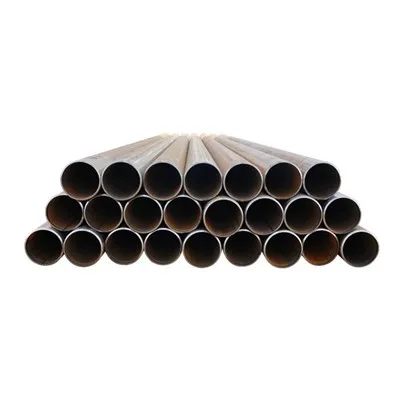
Overview of Materials in Natural Gas Pipeline Systems
Natural gas piping systems are designed to transport gas safely and efficiently over long distances and through complex environments. The selection of pipe material is a critical engineering decision that directly impacts safety, durability, and cost-effectiveness. Different materials are used depending on pressure levels, installation conditions, and regulatory requirements. Among these, carbon steel remains the dominant choice for transmission pipelines, while polyethylene and other materials are widely used in distribution networks. Manufacturers such as Hebei Huayang Steel Pipe Co., Ltd. focus on producing high-quality steel pipes that meet international standards for oil and gas applications.
| Material Type | Common Standards | Pressure Range | Typical Application |
|---|---|---|---|
| Carbon Steel | API 5L, ASTM A106 | High pressure | Long-distance transmission |
| Polyethylene PE | ISO 4437 | Low to medium pressure | Urban gas distribution |
| Stainless Steel | ASTM A312 | Medium pressure | Corrosive environments |
| Ductile Iron | EN 545 | Medium pressure | Municipal pipelines |
| Copper | ASTM B88 | Low pressure | Residential gas systems |
Carbon Steel as the Primary Material for Transmission Pipelines
Carbon steel is the most widely used material for natural gas transmission pipelines due to its high strength, durability, and cost efficiency. Pipes manufactured under standards such as API 5L are available in grades ranging from X42 to X80, each offering different levels of yield strength and toughness. These properties enable carbon steel pipes to withstand high internal pressures and external loads, making them suitable for cross-country and offshore gas transmission projects.
In addition to strength, carbon steel offers good weldability, which is essential for pipeline construction. Welding allows for continuous pipeline systems with minimal leakage risk. To enhance performance, carbon steel pipes are often combined with external coatings such as 3LPE and internal anti-corrosion linings. These protective measures extend service life and improve resistance to environmental factors such as soil corrosion and moisture exposure.
Polyethylene Pipes in Distribution Networks
Polyethylene PE pipes are widely used in urban gas distribution systems due to their flexibility, corrosion resistance, and ease of installation. Unlike steel pipes, PE pipes do not require additional corrosion protection, as they are inherently resistant to chemical and environmental degradation. This makes them particularly suitable for underground installations in urban environments.
PE pipes are typically used in low- to medium-pressure applications, as their mechanical strength is lower than that of steel. However, their flexibility allows them to absorb ground movement and reduce the risk of leakage. In addition, their lightweight nature simplifies transportation and installation, reducing overall project costs. As a result, PE pipes have become a standard choice for city gas networks and residential gas supply systems.
Stainless Steel and Specialized Applications

Stainless steel pipes are used in specific natural gas applications where corrosion resistance is a primary concern. These environments may include offshore platforms, chemical processing plants, or areas with high humidity and aggressive chemical exposure. Stainless steel contains chromium, which forms a passive oxide layer on the surface, providing excellent resistance to corrosion.
Although stainless steel offers superior durability, its higher cost limits its use to specialized applications rather than large-scale transmission pipelines. In most cases, carbon steel with appropriate protective coatings provides a more economical solution while still meeting performance requirements.
Mechanical and Performance Requirements of Materials
The materials used in natural gas piping must meet strict mechanical and performance requirements to ensure safe operation. Key properties include yield strength, tensile strength, toughness, and resistance to crack propagation. These properties are particularly important in high-pressure transmission pipelines, where failure can have serious consequences.
In addition to mechanical strength, materials must also exhibit good resistance to environmental factors such as corrosion, temperature variation, and soil stress. For steel pipes, this often involves a combination of material selection and protective systems. For plastic pipes such as PE, material formulation and manufacturing quality play a crucial role in determining performance.
| Property | Carbon Steel | Polyethylene | Stainless Steel |
|---|---|---|---|
| Strength | High | Moderate | High |
| Corrosion Resistance | Moderate with coating | Excellent | Excellent |
| Flexibility | Low | High | Moderate |
| Temperature Resistance | High | Moderate | High |
| Cost | Moderate | Low | High |
Material Selection Based on Application Conditions
The choice of material for natural gas piping depends on multiple factors, including pressure level, environmental conditions, installation method, and budget constraints. For high-pressure, long-distance pipelines, carbon steel is the preferred material due to its superior strength and reliability. In contrast, for urban distribution systems where flexibility and corrosion resistance are more important, polyethylene pipes are often selected.
In environments with high corrosion risk or special operational requirements, stainless steel or other specialized materials may be used. Engineers must carefully evaluate these factors to select the most appropriate material for each segment of the pipeline system. This ensures optimal performance while minimizing risks and costs.
Conclusion
Natural gas piping systems rely on a range of materials, each selected based on specific application requirements. Carbon steel dominates in transmission pipelines due to its strength and cost-effectiveness, while polyethylene is widely used in distribution networks for its flexibility and corrosion resistance. Stainless steel and other materials serve specialized roles in challenging environments.
Understanding the characteristics and limitations of each material is essential for designing safe and efficient pipeline systems. By combining appropriate material selection with advanced manufacturing and protection technologies, it is possible to achieve reliable long-term performance in natural gas transportation.