


Carbon steel pipe is one of the most widely used industrial materials, yet many buyers still ask: What Are the Different Types of Carbon Steel Pipes and How Do They Compare? Understanding the answer is essential for choosing the correct pipe for petroleum pipelines, structural projects, water transmission, and industrial processing systems. The topic "What Are the Different Types of Carbon Steel Pipes and How Do They Compare?" covers differences in manufacturing processes, applicable standards, mechanical performance, and cost considerations. In this article, we provide a comprehensive breakdown of these pipe categories and show how each type is used in modern engineering.
Selecting the right carbon steel pipe requires understanding not only the material itself but also how different manufacturing methods influence strength, corrosion resistance, weldability, and pressure capacity. For foundational knowledge of the material, readers may refer to our main guide What is Carbon Steel Pipe? which explains carbon content, classifications, and typical applications. With that background, this article focuses on comparing the major categories of carbon steel pipe to help you select the right type for your project.
How Are Carbon Steel Pipes Categorized? What Defines Each Type? Why Do These Categories Matter for Industrial Use?
Carbon steel pipes are categorized based on their carbon content, manufacturing process, and intended application. Each classification affects the pipe's mechanical properties, durability, and suitability for pressure systems.
Carbon Content Classification
Carbon steel is generally divided into three major categories:
| Type | Carbon Content | Characteristics | Common Uses |
|---|---|---|---|
| Low Carbon Steel | 0.05%–0.25% | Ductile, good weldability | Structural pipes, low-pressure water lines |
| Medium Carbon Steel | 0.25%–0.60% | Stronger, lower ductility | Machinery components, automotive parts |
| High Carbon Steel | 0.60%–1.00% | Very strong, hard, brittle | Springs, tools, high-wear applications |
Low-carbon steel is the most commonly used category for pipeline systems. It provides the right balance of strength, formability, and cost-effectiveness.
For more background on carbon levels and mechanical behaviors, you may refer to the main article What is Carbon Steel Pipe?
What Are the Key Differences Between Seamless, ERW, LSAW, and SSAW Carbon Steel Pipes?
Carbon steel pipes can be grouped into four major manufacturing types: Seamless, ERW, LSAW, and SSAW. They differ significantly in strength, weld seam characteristics, and ideal applications.
What Is Seamless Carbon Steel Pipe and Why Is It Used for High-Pressure Systems?
Seamless pipe is manufactured without any weld seam. A solid billet is pierced and rolled into a cylindrical shape, creating a uniform and continuous structure.
Key Advantages
- No weld seam, eliminating weakest structural point
- Excellent pressure-bearing capacity
- Good for high-temperature service
- Superior fatigue resistance
Common Applications
- Oil and gas transmission
- Boiler tubes
- High-pressure steam lines
- Hydraulic systems
Why choose seamless pipe?
Because seamless pipes do not contain weld defects, they are preferred where reliability under pressure is critical.
What Is ERW Pipe and When Is It More Cost-Effective Than Seamless Pipe?
ERW pipe, also known as Electric Resistance Welded pipe, is made by cold-forming steel coil and welding the edges together via electrical resistance.
Advantages
- Excellent dimensional accuracy
- Lower cost than seamless
- Smooth internal surface
- Suitable for medium pressure systems
Applications
- Water and gas distribution
- Fencing and structural use
- Low-to-medium pressure pipelines
- Mechanical tubing
Despite having a weld seam, modern ERW technology ensures high seam integrity and consistent performance.
What Are LSAW Pipes and Why Are They Used for Long-Distance Oil and Gas Transmission?
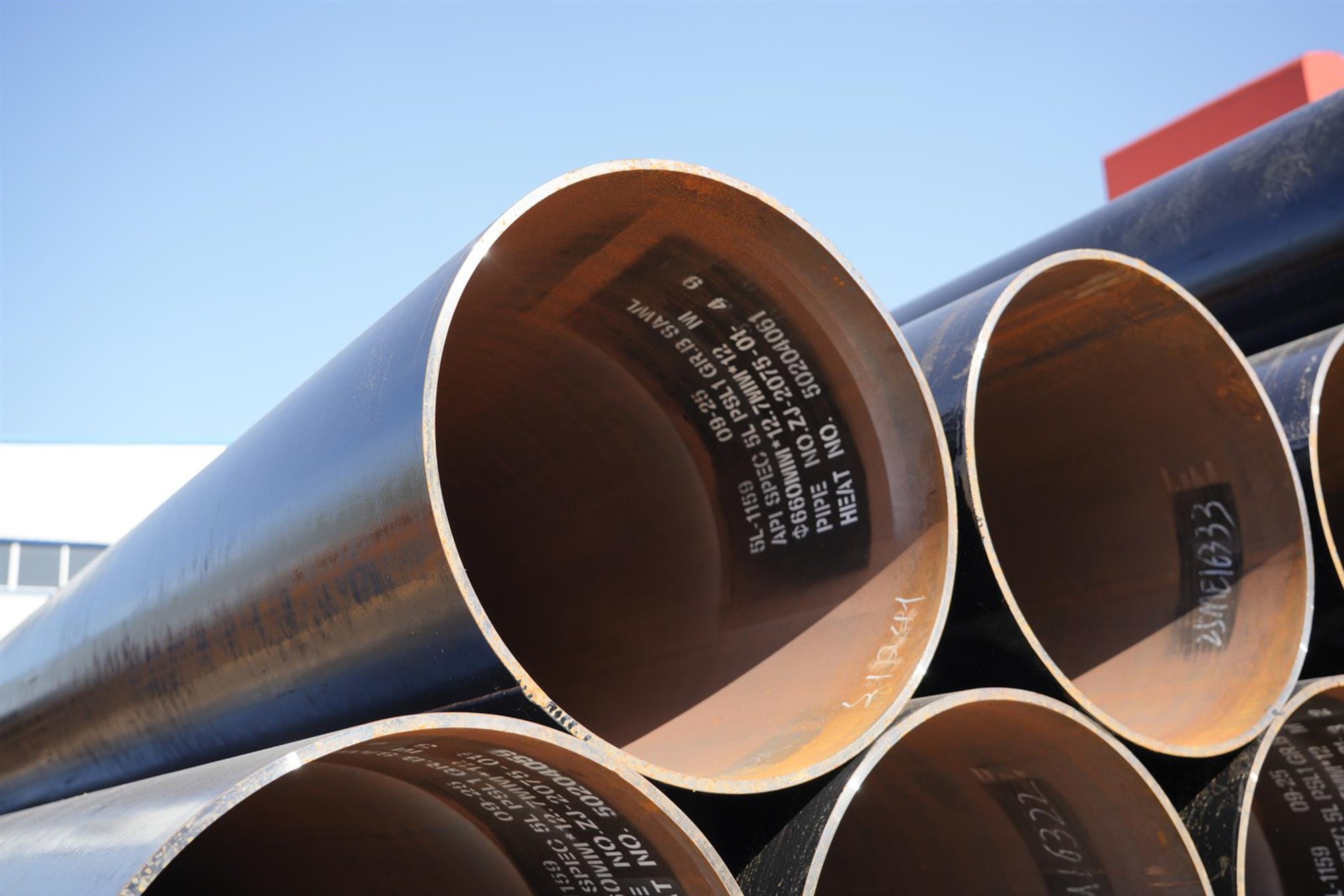
LSAW (Longitudinal Submerged Arc Welded) pipe is produced by bending steel plates into shape and welding along the length.
Advantages
- Very high strength
- Consistent internal weld quality
- Suitable for large diameters
Applications
- Cross-country pipelines
- Offshore engineering
- Structural piles
LSAW pipes are often used in major pipeline infrastructure projects where diameter consistency and weld reliability are essential.
What Is SSAW Pipe and Why Is It Popular for Large-Diameter, Low-Pressure Uses?
SSAW (Spiral Submerged Arc Welded) pipe is produced by spiral-forming steel coil and welding continuously along a spiral path.
Advantages
- Cost-effective for large sizes
- Flexible diameter range
- Fast production speed
Applications
- Water transmission
- Structural piling
- Low-pressure pipelines
Its spiral seam provides good flexibility for diameter changes but is less suitable for high-pressure applications compared to seamless or LSAW.
Which Type of Carbon Steel Pipe Should You Choose for Oil, Gas, Water, and Structural Systems?
Selecting the right pipe depends on the system's pressure requirements, installation environment, cost constraints, and regulatory standards.
Oil and Gas Transmission: Which Pipe Performs Best Under Pressure and Temperature?
High-pressure and high-temperature pipelines require materials that ensure long-term stability.
Recommended types:
- Seamless for high-pressure and critical operations
- LSAW for long-distance, high-strength welded pipelines
Considerations:
- API 5L compliance
- Toughness for impact resistance
- Corrosion allowances
Water Supply and Low-Pressure Transmission: Is ERW or SSAW More Suitable?
For water, drainage, and low-pressure fluid systems, the goal is cost-efficiency and dimensional accuracy.
Recommended types:
- ERW for urban water supply
- SSAW for long-distance, low-pressure transmission
Structural Support: Which Pipe Offers Optimal Strength and Cost Efficiency?
For structural construction, mechanical load and weldability matter most.
Recommended types:
- ERW for uniform sizes and clean appearance
- LSAW for large-diameter piles
- SSAW for economical wide diameters
Why Do Different Standards Specify Different Pipe Types? How Do ASTM and API Requirements Affect Selection?
Engineering standards ensure safety, dimensional consistency, and performance reliability.
Common Standards for Carbon Steel Pipe
| Standard | Specification | Usage Focus |
|---|---|---|
| ASTM A53 | Seamless & welded | General structural and pressure service |
| ASTM A106 | Seamless | High-temperature service |
| API 5L | Seamless & welded | Pipeline transportation |
| ASTM A252 | Welded | Steel pipe piles |
| ASTM A333 | Seamless & welded | Low-temperature service |
Standards influence:
- Chemical composition
- Mechanical properties
- Heat treatment
- Pressure ratings
- Testing requirements
Understanding these specifications ensures correct pipe selection and safer installations.
Do Diameter and Schedule Influence Pipe Performance? How Does Wall Thickness Affect Pipe Strength?
Pipe schedule determines wall thickness, and wall thickness determines pressure resistance.
Sample Comparison of Schedules
| NPS | Schedule 40 (mm) | Schedule 80 (mm) |
|---|---|---|
| 2" | 3.91 | 5.54 |
| 4" | 6.02 | 8.56 |
| 6" | 7.11 | 10.97 |
Thicker pipes handle higher pressure but weigh more and cost more.
Therefore:
- High-pressure → seamless + higher Schedule
- Low-pressure → ERW / SSAW + standard Schedule
Conclusion: Comparing Different Types of Carbon Steel Pipes
Understanding What Are the Different Types of Carbon Steel Pipes and How Do They Compare? helps engineers and buyers choose correctly based on cost, performance, and project requirements. Seamless pipe excels in high-pressure applications; ERW is ideal for medium pressure and structural uses; LSAW and SSAW offer large diameters for infrastructure and water transmission. For definitions, material classifications, and background knowledge, remember to check the main guide What is Carbon Steel Pipe? which strengthens the overall understanding of steel pipe fundamentals.
Read More Articles
Testing And Quality Control - Ensuring The Reliability Of Welded And Seamless Steel Pipes
ASTM A106 Seamless Carbon Steel Pipes And Their Applications


