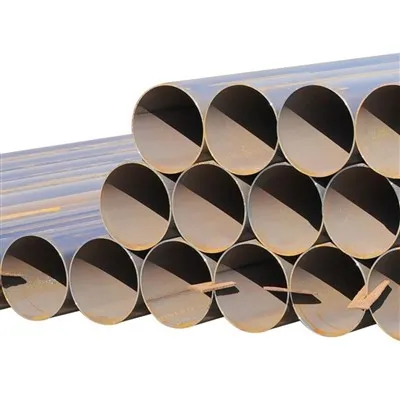
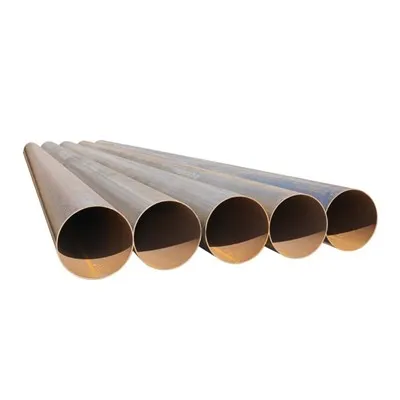
Mechanical properties and performance requirements form the technical foundation for evaluating steel pipes used in structural, pressure, and pipeline applications. While chemical composition defines the material's potential, it is mechanical performance that ultimately determines whether a pipe can safely withstand internal pressure, external loads, and long-term service conditions. Core technical indicators such as tensile strength, yield strength, elongation, hydrostatic testing, and nondestructive examination are used globally to verify compliance with engineering standards.
These indicators are not isolated parameters. Instead, they function together to define structural reliability, deformation behavior, and safety margins under real operating conditions. Understanding their interaction is essential for engineers, inspectors, and procurement professionals.
Tensile Strength and Yield Strength
Tensile Strength
Tensile strength, often referred to as ultimate tensile strength, represents the maximum stress a material can withstand before fracture during a tensile test. It reflects the material's resistance to breaking under axial loading. In pipe applications, tensile strength is critical for preventing rupture when internal pressure generates circumferential (hoop) stress.
Higher tensile strength generally allows pipes to operate at higher pressures or with reduced wall thickness. However, excessively high tensile strength without sufficient ductility may increase brittleness, which can compromise safety under impact or dynamic loading.
Yield Strength
Yield strength defines the stress level at which a material begins to deform plastically. Below the yield point, deformation is elastic and reversible. Beyond it, permanent deformation occurs. For pressure pipes, yield strength is particularly important because it determines the maximum allowable operating stress.
Design codes typically use yield strength as a primary basis for allowable stress calculations. For example, pipeline standards often specify that operating stress must not exceed a certain percentage of minimum yield strength to maintain a safety margin.
The table below summarizes typical strength ranges for carbon steel pipes used in structural and pipeline applications.
| Steel Grade Category | Minimum Yield Strength (MPa) | Minimum Tensile Strength (MPa) | Typical Application |
|---|---|---|---|
| General Structural | 235–275 | 370–450 | Building frameworks |
| Standard Line Pipe | 245–360 | 415–460 | Oil & gas pipelines |
| High-Strength Line Pipe | 415–485 | 520–570 | Long-distance transmission |
| Pressure Piping Steel | 240–355 | 415–510 | Industrial process systems |
This comparison shows how increasing yield strength enables use in higher-pressure or load-bearing applications.


Elongation and Ductility Requirements
Importance of Elongation
Elongation measures the percentage increase in length a specimen experiences before fracture during tensile testing. It indicates ductility, or the ability of a material to deform plastically without cracking.
In piping systems, adequate elongation is essential to absorb stress concentrations, accommodate thermal expansion, and resist sudden impact loads. Materials with insufficient elongation may fail abruptly without warning.
Standards often specify minimum elongation values to ensure pipes maintain a balance between strength and flexibility. As strength increases, elongation values may decrease slightly, but must remain above critical safety thresholds.
Balance Between Strength and Ductility
Engineering design requires a controlled balance. Increasing carbon content may raise strength but reduce elongation. Alloying and controlled rolling processes are used to enhance strength while maintaining acceptable ductility levels.
Hydrostatic Testing
Purpose of Hydrostatic Testing
Hydrostatic testing is a pressure verification method used to confirm pipe integrity. During testing, the pipe is filled with water and pressurized above its intended operating pressure. The test ensures that the pipe can withstand internal pressure without leakage or structural failure.
Water is used because it is incompressible and safer than compressed gas during testing. If failure occurs, the energy release is significantly lower compared to pneumatic testing.
Pressure Levels and Acceptance Criteria
Test pressure is typically calculated based on pipe diameter, wall thickness, and specified minimum yield strength. The pressure must be maintained for a defined period, during which no leakage or visible deformation is permitted.
The following table outlines key performance verification methods and their objectives.
| Performance Indicator | Test Method | Objective | Safety Contribution |
|---|---|---|---|
| Tensile Strength | Tensile test | Verify maximum load capacity | Prevent rupture |
| Yield Strength | Tensile test | Confirm elastic limit | Control allowable stress |
| Elongation | Tensile test | Assess ductility | Reduce brittle failure risk |
| Hydrostatic Test | Internal water pressure | Detect leaks & weakness | Ensure pressure containment |
| Nondestructive Testing | UT, RT, MPI | Detect internal/surface defects | Prevent hidden failures |
Hydrostatic testing provides direct validation of pressure resistance before pipes enter service.
Nondestructive Testing (NDT)
Ultrasonic and Radiographic Testing
Nondestructive testing methods are used to identify internal and surface defects without damaging the pipe. Ultrasonic testing detects internal flaws such as lack of fusion or inclusions in the weld seam. Radiographic testing uses X-rays or gamma rays to examine weld integrity.
For welded pipes, especially ERW pipes, weld seam inspection is particularly critical. Any discontinuity in the weld area can significantly reduce structural reliability.
Magnetic Particle and Eddy Current Testing
Surface defect detection methods such as magnetic particle inspection are applied to identify cracks or surface irregularities. Eddy current testing is often used for rapid inspection of weld zones in production environments.
NDT ensures product consistency and reduces the risk of in-service failure caused by undetected manufacturing defects.
Integrated Performance Requirements
Mechanical properties and performance tests are interrelated. Yield and tensile strength define load capacity. Elongation ensures ductility and resistance to sudden fracture. Hydrostatic testing confirms pressure containment capability. Nondestructive examination guarantees weld and material integrity.
Engineering standards integrate these parameters into acceptance criteria to ensure reliability under real operating conditions. Pipes used in pipelines, structural supports, or industrial pressure systems must comply with all relevant mechanical and testing requirements before installation.
Conclusion
Mechanical properties and performance requirements form the core technical criteria for evaluating steel pipes. Tensile strength and yield strength determine load-bearing and pressure capacity, while elongation ensures ductility and resistance to brittle failure. Hydrostatic testing validates pressure containment performance, and nondestructive testing detects hidden defects that could compromise safety. Together, these indicators establish a comprehensive verification framework that ensures structural integrity, operational reliability, and long-term service safety across a wide range of industrial applications.