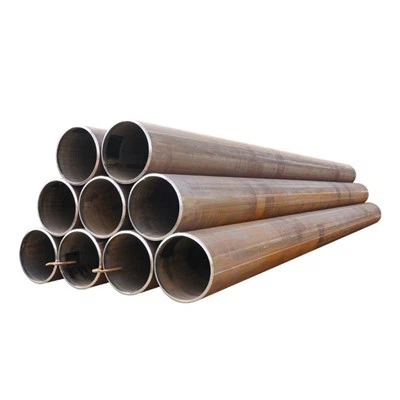
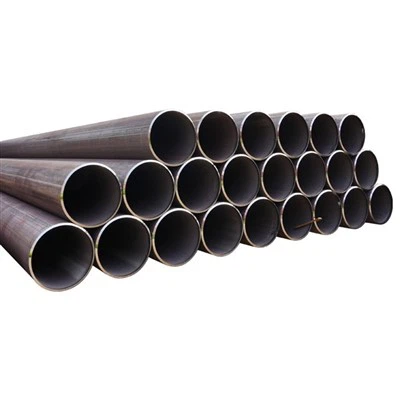
In modern industrial and infrastructure construction, steel pipes, as important structural and transmission materials, are widely used in energy, construction, municipal administration, machinery manufacturing, and other fields. Among them, ERW (Electric Resistance Welded) steel pipes have become a frequently used type of welded steel pipe in current engineering projects due to their high manufacturing efficiency, good dimensional stability, and outstanding cost-effectiveness. This article provides a systematic popular science interpretation of ERW steel pipes from aspects such as their structural characteristics, manufacturing principles, performance advantages, and typical engineering applications.
I. Basic Concepts and Manufacturing Principles of ERW Steel Pipes
ERW steel pipes use hot-rolled steel strips or coils as raw materials. The steel strip is gradually cold-formed into a circular tube shape through forming rolls, and then the edges of the tube blank are heated to a plastic state by resistance heat generated by high-frequency current. Welding is completed under extrusion force, ultimately forming a continuous weld steel pipe. No filler metal is used during the welding process, and metallurgical bonding is achieved relying on the thermoplasticity of the base metal itself.
Different from traditional submerged arc welding or manual welding, ERW welding belongs to high-frequency resistance welding, with a relatively concentrated heat-affected zone, fast welding speed, and stable weld formation. After welding, processes such as online internal and external burr removal, weld heat treatment, and dimensional sizing are usually carried out to ensure the steel pipe meets engineering requirements in terms of appearance, dimensions, and mechanical properties.
II. Structural and Performance Characteristics of ERW Steel Pipes
From a structural perspective, ERW steel pipes are classified as longitudinal welded steel pipes, with welds distributed linearly along the axial direction of the pipe body. Compared with spiral welded pipes, the longitudinal seam structure is more intuitive in stress analysis, non-destructive testing, and on-site installation.
In terms of performance, ERW steel pipes have the following prominent characteristics:
- High dimensional accuracy: ERW steel pipes adopt a continuous forming process, with stable control of pipe diameter and wall thickness, and excellent performance in ovality and straightness. They are particularly suitable for engineering scenarios requiring high dimensional consistency.
- Good surface quality of the pipe body: Due to the use of steel strip raw materials, the surface condition is uniform. After grinding, the weld transitions naturally with the base metal, facilitating subsequent anti-corrosion coating construction.
- Stable comprehensive mechanical properties: After reasonable weld heat treatment, the performance of the weld zone of ERW steel pipes is close to that of the base metal, which can meet the strength requirements of conventional pressure pipes and structural applications.
In addition, ERW steel pipes have high production efficiency and good raw material utilization rate. Under the same specification conditions, their manufacturing cost is usually lower than that of seamless steel pipes and some submerged arc welded steel pipes, which is also one of the important reasons for their wide application.
III. Typical Applications of ERW Steel Pipes in Engineering Fields
Based on the above structural and performance characteristics, ERW steel pipes have formed a mature application system in multiple engineering fields:
- Municipal and civil pipe networks: Often used in medium and low-pressure pipe network systems such as urban water supply, drainage, and gas transmission. Their stable dimensions and convenient joint processing make them suitable for mass laying and standardized construction.
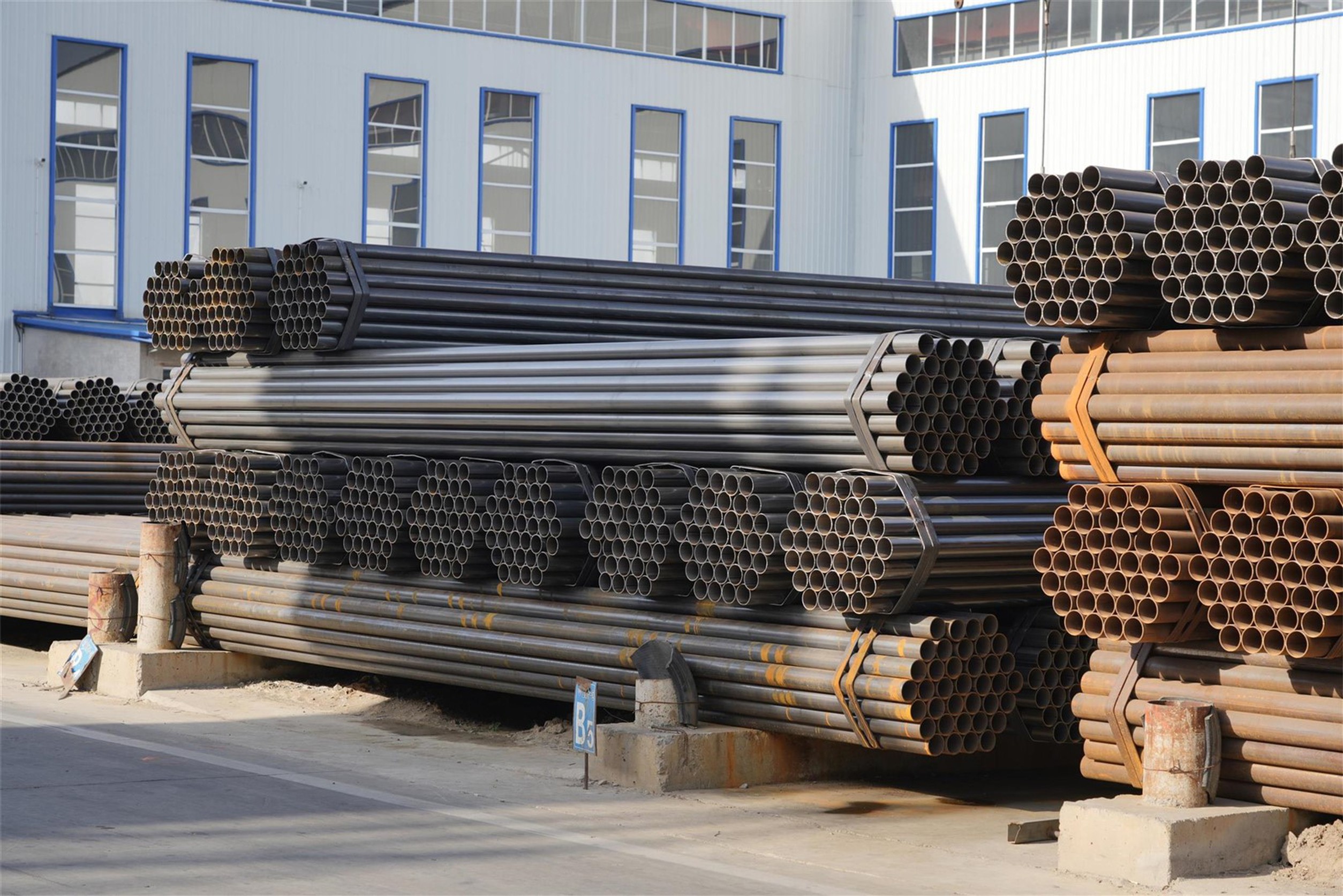
- Building structures: Widely used in steel structure workshops, scaffolding, columns, trusses, and various building support components. Longitudinal welded pipes perform stably in bearing axial pressure and bending moments, and can meet the dual requirements of building structures for safety and economy.
- Machinery manufacturing and engineering supporting: Often used as mechanical structural pipes, equipment support pipes, and transmission pipes. For example, in industries such as construction machinery, agricultural machinery, and vehicle manufacturing, which have high requirements for the consistency and machinability of steel pipes, ERW steel pipes have obvious advantages.
- Energy and industrial transmission: Also used in oil and gas gathering and transportation pipelines, industrial fluid transmission, and some chemical pipeline systems. Under the premise of reasonable material selection and standardized anti-corrosion, ERW steel pipes can meet the corresponding service life and safety standards.
IV. Rational Comparison Between ERW Steel Pipes and Other Steel Pipe Types
In engineering material selection, ERW steel pipes are often compared with seamless steel pipes and submerged arc welded steel pipes. Overall, ERW steel pipes are not a "comprehensive replacement" but a "reasonable supplement".
Compared with seamless steel pipes, ERW steel pipes have obvious advantages in cost and delivery cycle, but seamless steel pipes are still irreplaceable under extremely high pressure and extreme working conditions.
Compared with LSAW (Longitudinal Submerged Arc Welded) steel pipes, ERW steel pipes are more suitable for small and medium-diameter, mass-produced projects, while LSAW steel pipes are more commonly used in large-diameter, high-pressure, and long-distance transmission projects.
Therefore, in practical engineering, the appropriate type of steel pipe should be selected comprehensively based on factors such as medium properties, design pressure, service environment, and project budget.

V. Conclusion
Overall, ERW steel pipes occupy an important position in modern engineering construction due to their mature manufacturing process, stable product performance, and good economy. With the continuous advancement of manufacturing technology and testing methods, the quality stability and application scope of ERW steel pipes are also constantly expanding.
For purchasers and engineering designers, a full understanding of the structural characteristics and applicable scenarios of ERW steel pipes is an important prerequisite for achieving project safety, economy, and sustainability. Rational selection, standardized production, and scientific construction are still the keys to exerting the value of ERW steel pipes.