Introduction: Understanding the Role of ASTM Standards in Steel Manufacturing
In industrial projects involving piping systems, choosing the correct steel grade is a crucial decision that affects safety, performance, and longevity. Among the most commonly discussed specifications are ASTM A105 and ASTM A106, both established by the American Society for Testing and Materials (ASTM).
While these two standards share similarities in chemical composition and mechanical strength, they serve different applications and are manufactured using different production processes. Knowing their distinctions helps engineers and procurement specialists make informed material selections for fittings, flanges, and piping systems.
This article provides a detailed comparison between ASTM A105 and ASTM A106, including their definitions, chemical properties, manufacturing processes, and common applications-offering clarity for anyone sourcing high-quality carbon steel products from Huayang Steel Pipe.


What Is ASTM A105?
ASTM A105 is a specification for carbon steel forged fittings, flanges, and valves that are designed for high-temperature service. It is typically used for forged components rather than pipes, meaning the steel is heated and shaped under pressure into the desired form.
A105 steel is known for its excellent mechanical strength, toughness, and corrosion resistance, making it ideal for fittings that must endure both high pressure and fluctuating temperatures.
Key Characteristics of ASTM A105:
- Used for forged components (flanges, elbows, tees, couplings)
- Suitable for high-temperature service up to around 500°C (930°F)
- Commonly applied in oil refineries, power plants, and chemical processing systems
- Can be normalized or heat-treated to enhance mechanical properties
The material composition of ASTM A105 ensures that it maintains integrity even in severe thermal and pressure conditions.
What Is ASTM A106?
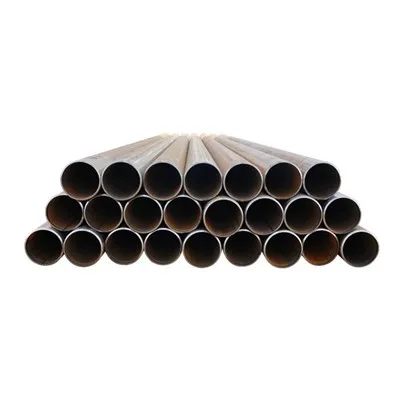
ASTM A106 (also known as ASME SA106) covers seamless carbon steel pipes suitable for high-temperature service. Unlike A105, which applies to forged components, A106 defines the standard for seamless pipe production through hot rolling or cold drawing processes.
A106 pipes are primarily used for transporting fluids and gases under high temperature and pressure. The most common grades under this standard are Grade A, Grade B, and Grade C, each offering different mechanical strength and tensile performance.
Key Characteristics of ASTM A106:
- Used for seamless pipes (not forged fittings)
- Designed for high-temperature fluid transport
- Applicable to refineries, boilers, and power plants
- Available in grades A, B, and C based on carbon content and tensile strength
Huayang Steel Pipe, a leading manufacturer of ERW and SAW carbon steel pipes, produces materials that comply with ASTM A106 standards-ensuring consistent performance and quality for global clients.
Chemical Composition Comparison: ASTM A105 vs ASTM A106
Although both A105 and A106 are carbon steels, slight differences in their chemical makeup affect their performance under heat and pressure.
| Element | ASTM A105 (%) | ASTM A106 Grade B (%) | Difference & Effect |
|---|---|---|---|
| Carbon (C) | ≤ 0.35 | 0.30–0.35 | Similar carbon range; A106 allows higher variation for strength tuning |
| Manganese (Mn) | 0.60–1.05 | 0.29–1.06 | Improves hardness and strength; A106 has more flexibility |
| Phosphorus (P) | ≤ 0.035 | ≤ 0.035 | Controlled to avoid brittleness |
| Sulfur (S) | ≤ 0.040 | ≤ 0.035 | Kept low for better weldability |
| Silicon (Si) | 0.10–0.35 | 0.10–0.35 | Enhances oxidation resistance |
| Copper (Cu), Nickel (Ni), Chromium (Cr), Molybdenum (Mo) | ≤ 0.40 total | ≤ 0.40 total | Trace elements for corrosion protection |
Observation:
Both materials share a close chemical structure. However, A106's broader range allows it to be more adaptable for pipe manufacturing under various service conditions, while A105 focuses on dimensional stability and toughness in forged applications.
Mechanical Properties Comparison
The mechanical performance of both grades determines their suitability for pressure, heat, and stress environments.
| Property | ASTM A105 | ASTM A106 Grade B |
|---|---|---|
| Tensile Strength (min) | 485 MPa (70 ksi) | 415 MPa (60 ksi) |
| Yield Strength (min) | 250 MPa (36 ksi) | 240 MPa (35 ksi) |
| Elongation (%) | 22 min | 30 min |
| Hardness (HB) | 187 max | 163 max |
| Temperature Range | Up to 500°C | Up to 450°C |
Interpretation:
- A105 exhibits higher tensile and yield strength, which makes it ideal for forged fittings that must resist high-pressure joints.
- A106, while slightly lower in strength, offers greater ductility and weldability, which are essential for seamless piping systems subjected to constant fluid flow.
Manufacturing Process Differences
The primary distinction between A105 and A106 lies in their manufacturing processes:
- ASTM A105 is produced through forging, where the steel is heated and shaped using mechanical pressure. This results in a fine-grained structure with exceptional mechanical strength and dimensional precision.
- ASTM A106 is manufactured as a seamless pipe via hot rolling or cold drawing, offering continuous uniformity and the ability to handle high-pressure transport applications.
| Feature | ASTM A105 (Forged) | ASTM A106 (Seamless) |
|---|---|---|
| Manufacturing Process | Forged | Hot Rolled / Cold Drawn |
| Typical Products | Flanges, Fittings, Valves | Seamless Pipes |
| Shape Control | Precise | Continuous |
| Weldability | Excellent | Very Good |
| Cost | Moderate | Slightly Higher |
| Primary Use | Piping connections | Fluid transmission lines |
Applications: Where Each Grade Performs Best
ASTM A105 Applications
- High-pressure flanges, elbows, tees, and valves
- Power generation and petrochemical industries
- Steam systems and high-temperature equipment
- Offshore and onshore oil platforms
A105's excellent forgeability and toughness make it ideal for connecting components that require both strength and pressure integrity.
ASTM A106 Applications
- Seamless pipelines for oil, gas, and steam
- Boiler tubes and superheater pipes
- Refineries, chemical processing, and heat exchangers
- High-temperature transportation of hydrocarbons
Because of its seamless nature and ability to sustain consistent pressure and heat, A106 is widely preferred in process piping and pressure systems.
Temperature and Pressure Ratings
Both A105 and A106 perform effectively under high temperatures, but A105 tends to tolerate slightly higher pressure loads, whereas A106 provides greater operational stability for continuous flow systems.
| Condition | ASTM A105 | ASTM A106 |
|---|---|---|
| Pressure Range | High-pressure flanged systems | Moderate to high-pressure flow lines |
| Max Temperature | 500°C (930°F) | 450°C (840°F) |
| Typical Application | Stationary fittings | Continuous pipelines |
| Thermal Fatigue Resistance | Excellent |
Good |
How to Choose Between ASTM A105 and A106
Choosing the correct material depends on project requirements, design pressure, and installation method:
| Selection Criteria | Recommended Material |
|---|---|
| Forged fittings, valves, flanges | ASTM A105 |
| Seamless pipes and long-distance pipelines | ASTM A106 |
| High temperature, static pressure | ASTM A105 |
| Continuous flow under variable temperature | ASTM A106 |
| Cost-effective, short pipeline | ASTM A105 |
| Large-scale industrial transport | ASTM A106 |
In summary, A105 is optimal for forged components, while A106 suits seamless piping applications that demand durability and uniformity.
Huayang Steel Pipe: Supplying ASTM-Compliant Carbon Steel Pipes
Huayang Steel Pipe, based in Cangzhou, Hebei, is one of China's largest manufacturers of ERW and SAW carbon steel pipes.
The company's production covers Φ73–Φ1422.4 mm diameters and 2.5–50 mm wall thickness, meeting ASTM, API, and EN standards.
Huayang ensures:
- Compliance with ASTM A106, A53, API 5L
- Strict mechanical and chemical testing
- Ultrasonic inspection, hydrostatic testing, and coating services
- Custom packaging and global export support
With over 20 years of experience, Huayang Steel Pipe provides reliable and cost-effective carbon steel pipe solutions for clients in oil & gas, construction, energy, and mechanical industries.
Conclusion: ASTM A105 vs A106 – Which Should You Choose?
The main difference between ASTM A105 and ASTM A106 lies in their production methods and applications.
If your project involves forged fittings or flanged connections, ASTM A105 offers the mechanical strength and toughness required.
However, if your system requires continuous high-temperature, high-pressure flow, ASTM A106 seamless pipe is the better choice.
For expert guidance and ASTM-compliant products, contact Huayang Steel Pipe - a trusted carbon steel pipe manufacturer delivering consistent quality and international-grade performance.