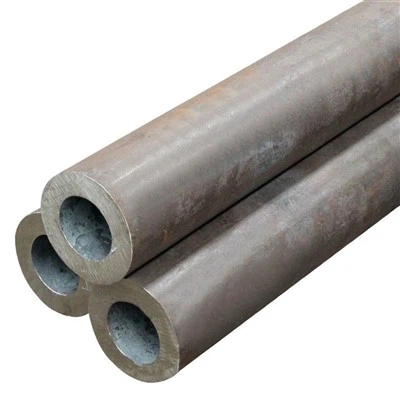
The hardness of ASTM boiler pipes is a crucial property that significantly impacts their performance and suitability for various applications. As a supplier of ASTM Boiler Pipes, I understand the importance of this characteristic and its implications for our customers. In this blog, we will delve into what the hardness of ASTM boiler pipes entails, why it matters, and how it relates to the overall quality of these essential components.
Understanding Hardness in ASTM Boiler Pipes
Hardness is a measure of a material's resistance to local deformation, typically caused by indentation, scratching, or abrasion. In the context of ASTM boiler pipes, hardness plays a vital role in determining their ability to withstand the harsh conditions they are exposed to during operation. These pipes are used in boilers, where they are subjected to high temperatures, pressures, and corrosive environments. A proper hardness level ensures that the pipes can maintain their structural integrity and functionality over an extended period.
There are several methods to measure the hardness of materials, and for ASTM boiler pipes, the most commonly used ones include the Brinell, Rockwell, and Vickers hardness tests. Each test has its own advantages and is suitable for different types of materials and applications.
- Brinell Hardness Test: This test involves pressing a hard, spherical indenter into the surface of the material under a specified load for a set period. The diameter of the resulting indentation is measured, and the Brinell hardness number (BHN) is calculated based on the load and the surface area of the indentation. The Brinell test is often used for materials with a relatively large grain size or for testing the hardness of thick sections of ASTM boiler pipes.
- Rockwell Hardness Test: The Rockwell test measures the depth of penetration of an indenter into the material under a minor load followed by a major load. The difference in penetration depth between the minor and major loads is used to determine the Rockwell hardness number. This test is quick, easy to perform, and is suitable for a wide range of materials, including ASTM boiler pipes. It is often used for production testing due to its speed and simplicity.
- Vickers Hardness Test: Similar to the Brinell test, the Vickers test uses a square-based pyramid indenter to create an indentation on the material's surface. The diagonal length of the indentation is measured, and the Vickers hardness number (HV) is calculated. The Vickers test is highly accurate and can be used for testing materials with a wide range of hardness values, including thin sections of ASTM boiler pipes.
Why Hardness Matters in ASTM Boiler Pipes
The hardness of ASTM boiler pipes is directly related to their mechanical properties and performance. Here are some key reasons why hardness is an important consideration:
- Wear Resistance: Boiler pipes are often exposed to abrasive substances, such as ash and sediment, which can cause wear and tear on the pipe surface. A higher hardness level provides better wear resistance, reducing the risk of premature failure due to abrasion.
- Corrosion Resistance: Hardness can also influence the corrosion resistance of ASTM boiler pipes. A properly hardened pipe is less likely to develop surface defects, such as pits and cracks, which can act as sites for corrosion initiation. Additionally, a harder surface can provide a better barrier against corrosive agents, extending the service life of the pipes.
- Strength and Ductility: The hardness of a material is closely related to its strength and ductility. A balance between hardness and ductility is essential for ASTM boiler pipes to withstand the high pressures and temperatures they are subjected to during operation. A pipe that is too hard may be brittle and prone to cracking, while a pipe that is too soft may not have sufficient strength to resist deformation.
- Joining and Fabrication: The hardness of ASTM boiler pipes can also affect their joining and fabrication processes. Pipes with the appropriate hardness level are easier to weld, bend, and machine, ensuring a high-quality end product.
Factors Affecting the Hardness of ASTM Boiler Pipes
Several factors can influence the hardness of ASTM boiler pipes, including the chemical composition of the material, the manufacturing process, and the heat treatment applied.
- Chemical Composition: The chemical composition of the steel used to manufacture ASTM boiler pipes plays a significant role in determining its hardness. Elements such as carbon, manganese, chromium, and nickel can increase the hardness of the steel by forming hard carbides and other alloying compounds. However, the addition of these elements must be carefully controlled to ensure a balance between hardness, strength, and ductility.
- Manufacturing Process: The manufacturing process used to produce ASTM boiler pipes can also affect their hardness. Seamless pipes, for example, are typically harder than welded pipes due to the absence of a weld seam, which can introduce variations in the material's structure and properties. Additionally, the hot rolling or cold drawing processes used to shape the pipes can also influence their hardness.
- Heat Treatment: Heat treatment is a critical step in the manufacturing of ASTM boiler pipes that can significantly affect their hardness. Processes such as quenching and tempering can be used to increase the hardness and strength of the pipes, while annealing can be used to reduce hardness and improve ductility. The specific heat treatment parameters, such as the heating temperature, cooling rate, and holding time, must be carefully controlled to achieve the desired hardness level.
Our Offerings as an ASTM Boiler Pipe Supplier
As a supplier of ASTM Boiler Pipes, we offer a wide range of products with different hardness levels to meet the diverse needs of our customers. Our Boiler Seamless Pipe is manufactured using high-quality steel and advanced manufacturing processes to ensure a consistent and reliable hardness level. We also offer Api 5l Boiler Pipe and API 5L Oil Tubing, which are designed to meet the specific requirements of the oil and gas industry.
Our pipes are tested and certified to meet the relevant ASTM standards, ensuring that they have the appropriate hardness and other mechanical properties for their intended applications. We also offer customized solutions, allowing our customers to specify the desired hardness level and other properties of the pipes based on their specific needs.


Contact Us for Your ASTM Boiler Pipe Needs
If you are in the market for high-quality ASTM boiler pipes with the appropriate hardness level, we invite you to contact us for more information. Our team of experts is available to answer your questions, provide technical support, and assist you in selecting the right pipes for your application. Whether you need a small quantity of pipes for a specific project or a large volume for ongoing production, we can meet your needs with competitive pricing and excellent customer service.
References
- ASTM International. (2023). ASTM Standards for Boiler and Pressure Vessel Pipes.
- ASM Handbook Volume 1: Properties and Selection: Irons, Steels, and High-Performance Alloys. ASM International.
- Welding Handbook, Volume 1: Welding Science and Technology. American Welding Society.