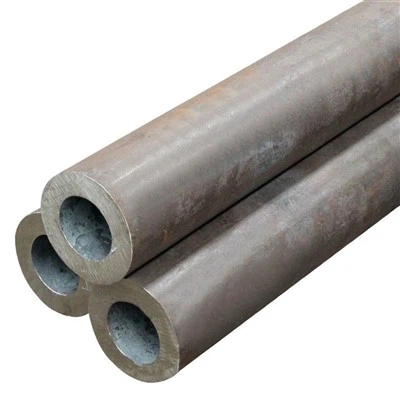
The performance of a Carbon 45 Degree Elbow is influenced by a multitude of factors, and one of the often - overlooked yet crucial elements is fluid density. As a supplier of Carbon 45 Degree Elbows, I have witnessed firsthand how fluid density can have far - reaching effects on the functionality and efficiency of these essential pipe fittings.
Understanding Fluid Density
Fluid density is defined as the mass of a fluid per unit volume. It is a fundamental property that varies depending on the type of fluid, temperature, and pressure. For instance, gases generally have lower densities compared to liquids. Water at standard temperature and pressure has a density of approximately 1000 kg/m³, while air has a density of about 1.2 kg/m³.
The density of a fluid plays a significant role in determining the behavior of the fluid as it flows through a Carbon 45 Degree Elbow. When a fluid moves through an elbow, it experiences a change in direction. This change in direction causes the fluid to undergo acceleration and deceleration, which in turn is affected by the fluid's density.
Impact on Pressure Drop
One of the most notable effects of fluid density on the performance of a Carbon 45 Degree Elbow is the pressure drop. Pressure drop refers to the decrease in pressure that occurs as a fluid flows through a pipe or fitting. Higher fluid density typically leads to a greater pressure drop across the elbow.
This is because denser fluids have more mass per unit volume, which means they require more energy to change direction. As the fluid passes through the 45 - degree bend of the elbow, the inertial forces acting on the fluid are greater for denser fluids. These inertial forces cause the fluid to exert more pressure on the walls of the elbow, resulting in a higher pressure drop.
For example, in a hydraulic system where a high - density oil is flowing through a Carbon 45 Degree Elbow, the pressure drop can be significantly higher compared to a system using a low - density hydraulic fluid. This increased pressure drop can have implications for the overall efficiency of the system. A higher pressure drop means that more energy is required to pump the fluid through the system, leading to increased operating costs.
Influence on Flow Patterns
Fluid density also affects the flow patterns within a Carbon 45 Degree Elbow. In a low - density fluid, such as a gas, the flow is more likely to be turbulent. Turbulent flow is characterized by chaotic and irregular movement of the fluid particles. This is because the low - density fluid has less resistance to mixing and is more easily influenced by the change in direction at the elbow.
On the other hand, high - density fluids, like liquids, tend to have more laminar flow patterns. Laminar flow is a smooth, orderly flow where the fluid particles move in parallel layers. However, even in laminar flow, the high density of the fluid can cause it to separate from the inner wall of the elbow, creating a region of recirculation. This recirculation can lead to increased wear and tear on the elbow, as well as reduced flow efficiency.
Erosion and Wear
The density of the fluid flowing through a Carbon 45 Degree Elbow can also impact the erosion and wear of the elbow. Denser fluids, especially those containing solid particles, can cause more severe erosion. The high - mass particles in a dense fluid have more kinetic energy, which allows them to impact the walls of the elbow with greater force.
Over time, this can lead to the thinning of the elbow walls, reducing its structural integrity. In extreme cases, it can even cause leaks or failures in the piping system. For example, in a mining operation where a slurry (a mixture of water and solid particles) is being transported through a Carbon 45 Degree Elbow, the high density of the slurry and the presence of abrasive particles can cause rapid erosion of the elbow.
Heat Transfer
Fluid density can also affect heat transfer in a Carbon 45 Degree Elbow. In applications where the fluid is being heated or cooled as it flows through the elbow, the density of the fluid plays a role in determining the rate of heat transfer.
Denser fluids generally have a higher heat capacity, which means they can absorb or release more heat energy per unit volume. This can be beneficial in heat - exchange applications, as it allows for more efficient transfer of heat. However, the increased density also means that the fluid may have a lower thermal conductivity, which can slow down the rate of heat transfer.


Comparison with Other Elbows
When comparing the performance of a Carbon 45 Degree Elbow with other types of elbows, such as the Gas 180 Degree Elbow or the 180 Degree Silicone Elbow, the effect of fluid density becomes even more apparent.
A 180 - degree elbow causes a more significant change in the fluid's direction compared to a 45 - degree elbow. This means that the pressure drop and flow disturbances are generally more pronounced in a 180 - degree elbow, especially for high - density fluids. The silicone material of the 180 Degree Silicone Elbow may also have different frictional properties compared to carbon, which can further affect the flow behavior of the fluid.
Considerations for Design and Selection
As a supplier of Carbon 45 Degree Elbows, I understand the importance of considering fluid density when designing and selecting the appropriate elbow for a specific application.
For applications with high - density fluids, it may be necessary to use elbows with a larger radius to reduce the pressure drop and minimize erosion. Additionally, the material of the elbow may need to be selected based on its resistance to wear and corrosion. In some cases, a lining or coating may be applied to the elbow to protect it from the erosive effects of the fluid.
Conclusion
In conclusion, fluid density has a profound effect on the performance of a Carbon 45 Degree Elbow. It influences pressure drop, flow patterns, erosion, wear, and heat transfer. As a supplier, I am committed to providing high - quality Carbon 45 Degree Elbows that are designed to withstand the challenges posed by different fluid densities.
If you are in need of a reliable Carbon 45 Degree Elbow for your application, I encourage you to reach out for a detailed discussion. Our team of experts can help you select the right elbow based on your specific requirements, including the fluid density and other operating conditions. Contact us today to start the procurement and negotiation process.
References
- White, F. M. (2006). Fluid Mechanics. McGraw - Hill.
- Incropera, F. P., & DeWitt, D. P. (2002). Fundamentals of Heat and Mass Transfer. Wiley.
- Miller, D. S. (1990). Internal Flow Systems. BHRA Fluid Engineering.