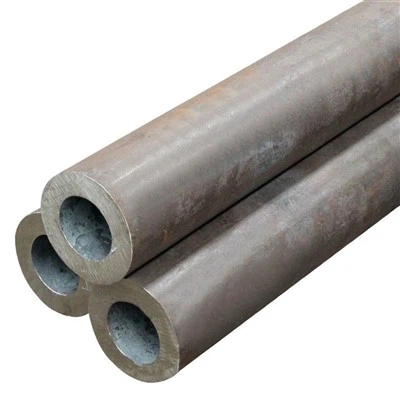
What are the factors affecting the axial strength of API 5L Oil Tubing?
As a supplier of API 5L Oil Tubing, I've witnessed firsthand the importance of understanding the factors that influence its axial strength. Axial strength is a critical property, as it determines the tubing's ability to withstand forces acting along its length, which is crucial in oil and gas extraction operations. In this blog, I'll explore the key factors that can have a significant impact on the axial strength of API 5L Oil Tubing.
Material Properties
The material from which the API 5L Oil Tubing is made is one of the most fundamental factors affecting its axial strength. API 5L standards specify different grades of steel, each with its own chemical composition and mechanical properties. The carbon content, in particular, plays a vital role. Higher carbon content generally leads to increased strength but can also reduce ductility. Alloying elements such as manganese, chromium, and nickel are often added to enhance the strength, toughness, and corrosion resistance of the steel.
For example, steels with higher levels of manganese can improve the hardenability and strength of the tubing. The presence of chromium and nickel can enhance the corrosion resistance, which is essential in harsh oil and gas environments. The manufacturing process also affects the material properties. Seamless tubing, for instance, often has more uniform material properties compared to welded tubing, resulting in better axial strength.
Wall Thickness
The wall thickness of the API 5L Oil Tubing is another crucial factor. A thicker wall provides more material to resist axial forces, increasing the overall strength of the tubing. However, increasing the wall thickness also adds weight and cost. Therefore, a balance must be struck between strength requirements and practical considerations such as transportation and installation.
Engineers need to carefully calculate the appropriate wall thickness based on the specific application, including the depth of the well, the pressure and temperature conditions, and the expected axial loads. In some cases, where the axial loads are extremely high, thicker-walled tubing may be required. Conversely, in applications with lower loads, thinner-walled tubing can be used to reduce costs without sacrificing too much strength.
Geometric Imperfections
Geometric imperfections in the API 5L Oil Tubing can significantly affect its axial strength. These imperfections can include ovality, out-of-straightness, and wall thickness variations. Ovality refers to the deviation of the tubing's cross-section from a perfect circle. An oval cross-section can cause stress concentrations when the tubing is subjected to axial loads, reducing its strength.
Out-of-straightness, or the tubing not being perfectly straight, can also lead to uneven distribution of axial forces. This can result in local stress concentrations and potentially cause premature failure of the tubing. Wall thickness variations, whether due to manufacturing processes or corrosion, can create weak points in the tubing, reducing its overall axial strength.
Corrosion and Erosion
Corrosion and erosion are major concerns in the oil and gas industry, and they can have a detrimental effect on the axial strength of API 5L Oil Tubing. Corrosion occurs when the steel reacts with the surrounding environment, such as acidic fluids or gases in the well. This can lead to the formation of rust and pits on the surface of the tubing, reducing its cross-sectional area and weakening its axial strength.
Erosion, on the other hand, is caused by the abrasive action of solid particles in the fluid flowing through the tubing. Over time, erosion can wear away the wall of the tubing, also reducing its strength. To mitigate the effects of corrosion and erosion, protective coatings and inhibitors are often used. However, these measures need to be carefully selected and maintained to ensure their effectiveness.
Loading Conditions
The loading conditions to which the API 5L Oil Tubing is subjected also play a significant role in determining its axial strength. In oil and gas wells, the tubing can be subjected to various types of loads, including axial tension, compression, and bending. Axial tension occurs when the tubing is pulled upward, such as during the extraction process. Compression loads can occur when the tubing is pushed downward, for example, when running the tubing into the well.
Bending loads can be caused by wellbore deviations or the interaction with other downhole equipment. The combination of these loads can be complex, and the tubing must be designed to withstand the most severe loading conditions. Fatigue loading, which occurs due to repeated cycles of loading and unloading, can also reduce the axial strength of the tubing over time.
Heat Treatment
Heat treatment is a process used to modify the material properties of the API 5L Oil Tubing. Different heat treatment processes, such as quenching and tempering, can be used to improve the strength, toughness, and hardness of the steel. Quenching involves rapidly cooling the tubing from a high temperature, which can result in a harder and stronger material. Tempering is then performed to reduce the brittleness introduced by quenching and improve the toughness.
Proper heat treatment can significantly enhance the axial strength of the tubing. However, if the heat treatment process is not carefully controlled, it can also lead to undesirable effects, such as cracking or uneven material properties. Therefore, strict quality control measures are necessary during the heat treatment process.
Joint Design
The design of the joints in the API 5L Oil Tubing is also important for its axial strength. The joints are the connections between individual lengths of tubing, and they need to be strong enough to transfer the axial loads from one section to the next. Different types of joints, such as threaded joints and welded joints, have different strengths and characteristics.
Threaded joints are commonly used in API 5L Oil Tubing due to their ease of installation and disassembly. However, the strength of threaded joints can be affected by factors such as thread form, thread pitch, and the quality of the threading process. Welded joints, on the other hand, can provide a more continuous and stronger connection, but they require skilled welders and proper welding procedures to ensure their integrity.
In conclusion, the axial strength of API 5L Oil Tubing is influenced by a variety of factors, including material properties, wall thickness, geometric imperfections, corrosion and erosion, loading conditions, heat treatment, and joint design. As a supplier of API 5L Oil Tubing, I understand the importance of considering these factors in the design and manufacturing process. We offer a wide range of products, including Carbon Round Boiler Pipe, GR.B Casing Tube, and Api 5l Boiler Pipe, to meet the diverse needs of our customers.


If you're in the market for API 5L Oil Tubing or have any questions about its axial strength, I encourage you to contact us for a detailed discussion. Our team of experts can provide you with the information and guidance you need to make the right choice for your project.
References
- API Specification 5L: Specification for Line Pipe, American Petroleum Institute.
- ASME Boiler and Pressure Vessel Code, American Society of Mechanical Engineers.
- “Materials Science and Engineering: An Introduction” by William D. Callister, Jr. and David G. Rethwisch.
- “Oil and Gas Pipelines: Design, Construction, and Maintenance” by E. Shashi Menon.